Hazard fire department begins hydrant testing across city limits
Hydrant testing began across Hazard and will run through July 10, with crews working in Christopher, Wabaco, Airport Gardens, Combs, Bonnyman and Typo.
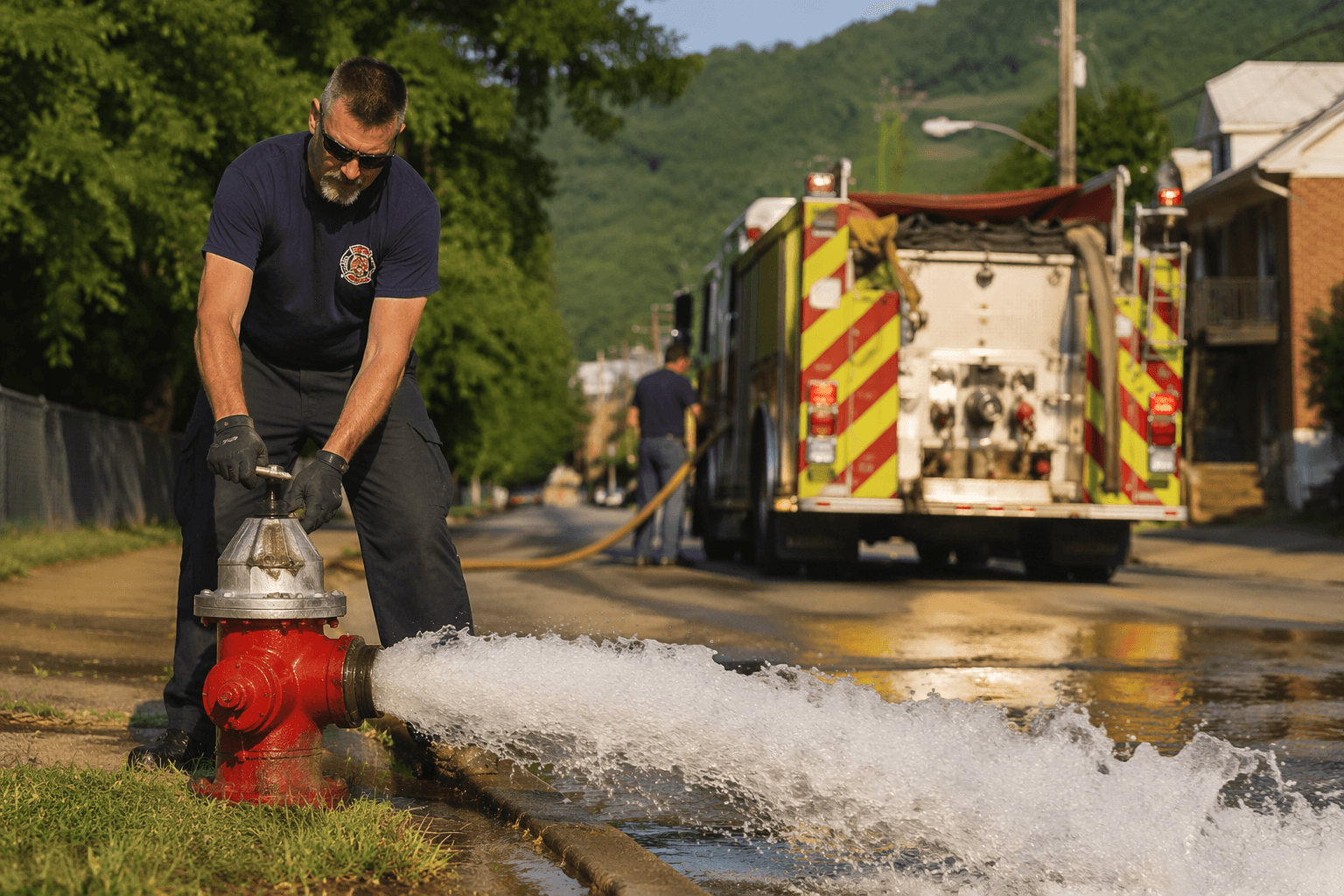
The Hazard Fire Department began its twice-a-year hydrant testing across the city limits and will continue the work through Friday, July 10, with crews moving through Christopher, Wabaco, Airport Gardens, Combs, Bonnyman and Typo.
The testing is designed to keep water lines flushed and to confirm that hydrants can deliver when a fire call comes in, a task the department ties directly to insurance rating requirements. In a county seat where fire protection and water service are closely linked, the checks are part of the city’s emergency readiness, not just routine maintenance.
Residents and businesses in the affected neighborhoods can see short-term water changes while the hydrants are opened and flushed. Discolored water, a slight taste change or air sputtering at faucets can happen during hydrant testing, and customers are commonly advised to run cold water until it clears and to avoid washing light-colored laundry until water service returns to normal.
The Hazard Fire Department says it was founded in 1884 and holds an ISO rating of four. It protects about 7,000 full-time residents and nearly 30,000 people during workday business hours, a footprint that stretches well beyond the city’s core into surrounding neighborhoods and commercial areas.
The department operates with 17 full-time firefighters and 29 paid on-call personnel. Of its 46 firefighters, seven are trained paramedics and 22 are Emergency Medical Technicians, a staffing mix that underscores how much the city relies on a small but highly trained force for both structure fires and medical emergencies.
Hazard describes itself as being founded in the heart of the Kentucky Coal Fields, and its role as the seat of Perry County gives the hydrant work added weight. When summer heat, fire risk and water demand rise at the same time, the city’s ability to verify pressure, flow and line cleanliness becomes a practical safeguard for homes, businesses and the crews who may need that water in an emergency.
This article was produced by Prism’s automated news system from verified source data, official records, and press releases, then run through automated quality and moderation checks before publishing. The system is built and supervised by the people who set the standards it runs under. Read our full AI policy.
Did this article answer your question?