Hazard traces roots to Elijah Combs and its coal-powered past
Hazard’s quickest history lesson is on Walnut Street, where Bobby Davis Museum & Park links Elijah Combs, coal, and the town’s living downtown.
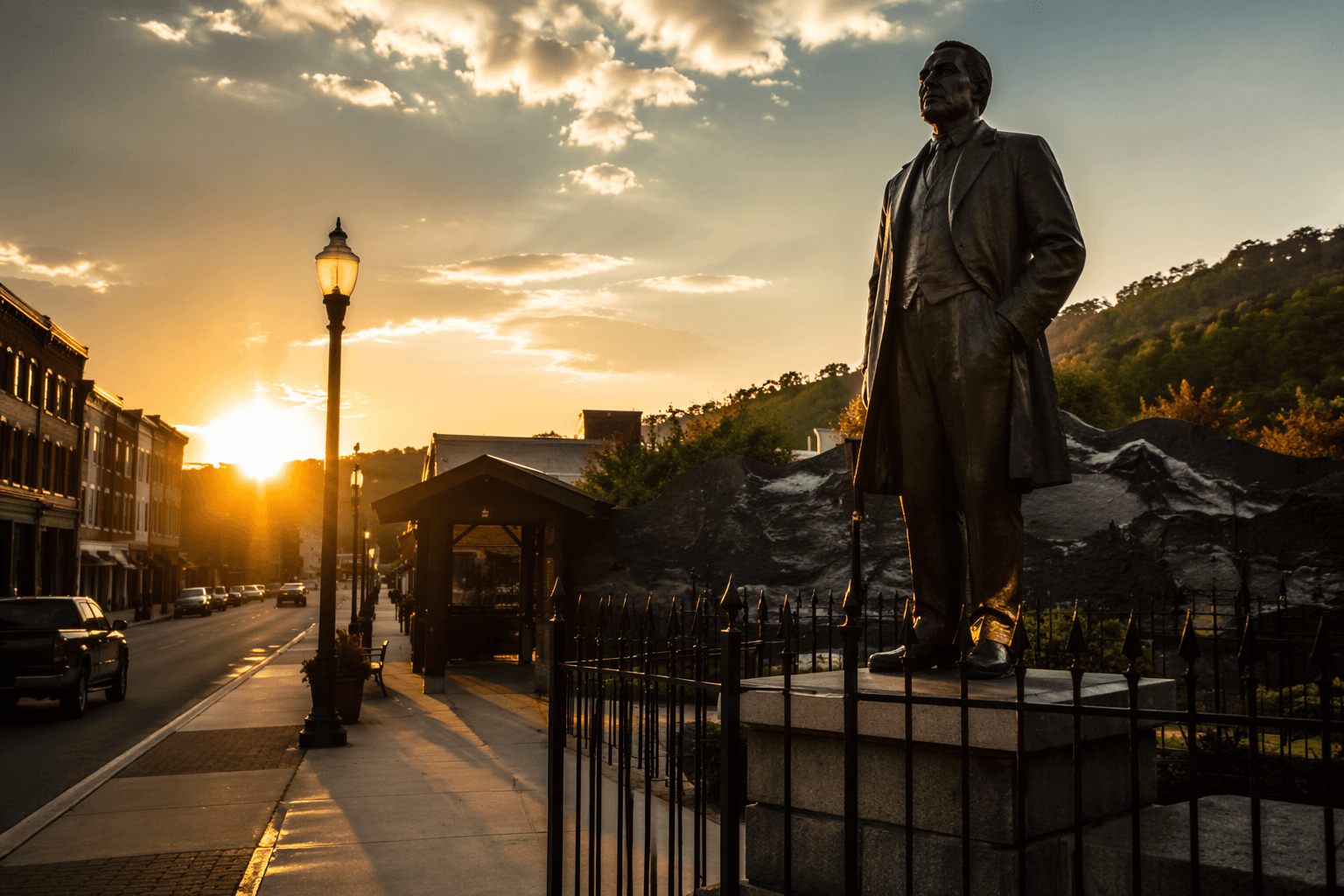
Hazard’s past is easiest to read in one short walk: from Walnut Street above downtown, through Bobby Davis Museum & Park, and into a city whose identity still runs through coal, veterans, and a compact central business district. The town began with Elijah Combs in 1795, was known as Perry Court House in the early 1820s, and became Hazard in 1884, named for Commodore Oliver Hazard Perry. Today, those layers sit side by side with a museum, a memorial park, and the streets and parks where Hazard still tells its own story.
From Elijah Combs to Perry Court House
The starting point for Hazard’s origin story is Elijah Combs, the first settler the city identifies for the area in 1795. Local history adds the details that make the founding story feel physical rather than abstract: Combs traveled from Virginia, built a temporary cabin on the North Fork of the Kentucky River, returned to Virginia, married Sarah Roark, and later built a two-story log house near the river. Genealogy records identify him as “General” Elijah Combs, born in Frederick County, Virginia, in 1770 and dying in Hazard in 1855.
That early settlement grew into the county seat known as Perry Court House in the early 1820s before the city was incorporated in 1884. Hazard’s name honors Commodore Oliver Hazard Perry, a reminder that the town’s identity was formalized long after the first cabin went up by the river. The sequence matters because it shows how Hazard moved from a frontier outpost to a named city without losing the imprint of that first settlement along the North Fork.
Coal, logging, and the economy that followed
Hazard’s streets were shaped again when the railroad arrived and the lumber boom took hold, then shifted once more as coal overtook logging. The city’s history page says that by the 1920s Hazard had become a major mining center, and that transition still defines how the town is understood in Perry County and beyond. What began as a river settlement became a place where industry, transport, and extraction rewrote the local economy.
That coal history is not confined to the past tense. Hazard marks it every September with the Black Gold Festival downtown, a civic signal that the city still treats coal as part of its public identity rather than as a closed chapter. A 2025 memorial in Triangle Park added another visible layer, honoring more than 280 Perry County coal miners who died on the job. The memorial also put a local question back on the table: how a county built on mining remembers sacrifice while thinking about what comes next.
The stop on Walnut Street that pulls the story together
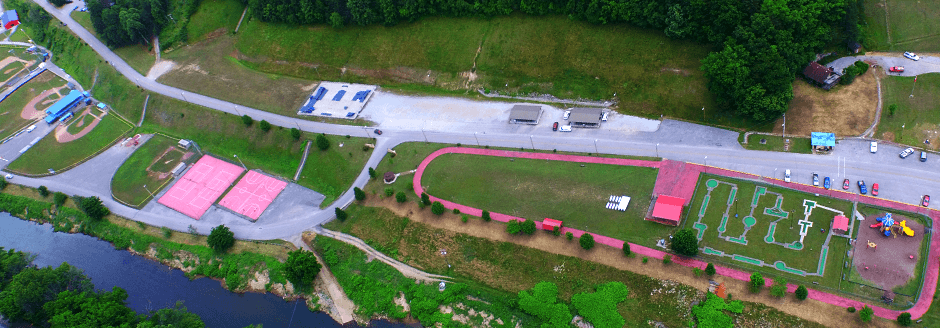
Bobby Davis Museum & Park is the fastest way to understand that mix of memory and daily life. The museum was founded by Lawrence Davis as a memorial to his son and other fallen World War II veterans, and the site overlooks downtown Hazard from Walnut Street. It is described by the city as a centerpiece, and that is not just ceremonial language: the park operates as a public space, a local history site, and a venue for community use all at once.
Martha Quigley, whom the city identifies as the museum’s curator and an expert on Hazard’s history, helps shape that interpretation. The park is not locked into a single exhibit or a single audience. It hosts games, food, music, and plays through the summer months, which turns the museum grounds into a place where families, visitors, and school groups encounter Hazard’s story without needing a formal tour.
The site also includes the Heritage Herb Garden, a smaller feature that broadens the park beyond monuments and museum pieces. In October, the park hosts “Cocktails in the Garden,” built around original recipes, and the grounds can be reserved for weddings and other special occasions. That mix of memorial, recreation, and event space makes the park useful in a way many history sites are not: it is both an archive and a working part of downtown life.
What the park says about Hazard now
Hazard’s scale is part of what makes Bobby Davis Museum & Park so effective as a civic lens. The U.S. Census Bureau’s 2020 count put the city’s population at 5,263, with 2,346 housing units and 7.4 square miles of land area. Its 2024 American Community Survey estimate placed median household income at $51,016. Those numbers frame Hazard as a small city with a tight geographic footprint, where a single public space can carry more historical and social weight than a sprawling district might elsewhere.
That scale also explains why a walk through the park and downtown can tell so much. Hazard’s city history page notes that the city and Perry County continue to work closely together, and that coal remains a progressive part of the local economy. In practice, that means the town’s public memory is still shaped by mining, even as the city also makes room for festivals, family events, and memorial spaces that are not limited to one industry.
How to read Hazard in one visit
Start on Walnut Street at Bobby Davis Museum & Park, where the overlook gives you a view of downtown and a direct line into the city’s memory. The site ties together the first settlement by Elijah Combs, the county-seat era of Perry Court House, the railroad and lumber years, and the coal boom that followed. From there, Triangle Park adds a more recent reminder of the toll of mining, while downtown Hazard shows how the town still uses public space for community events and seasonal gathering.
If you are trying to understand Hazard quickly, this route does the work that a longer archive visit would do elsewhere. It shows how a river settlement became a coal town, how a memorial park became a public square, and how a city of just 5,263 people keeps its identity legible through named places rather than slogans. In Hazard, the past is not separate from the present; it is built into Walnut Street, downtown festivals, and the view from the park above the city.
This article was produced by Prism’s automated news system from verified source data, official records, and press releases, then run through automated quality and moderation checks before publishing. The system is built and supervised by the people who set the standards it runs under. Read our full AI policy.
Know something we missed? Have a correction or additional information?
Submit a Tip