KY 80 Closure in Perry County: What Residents Need to Know
A break in the pavement has closed KY 80 at mile point 5.71 in Perry County following heavy rainfall and flooding on Jan. 1, 2026. This article explains the exact location, detour routes, safety measures, repair outlook, local impacts, and steps residents can take to stay informed and hold responsible agencies accountable.
1. Closure overview
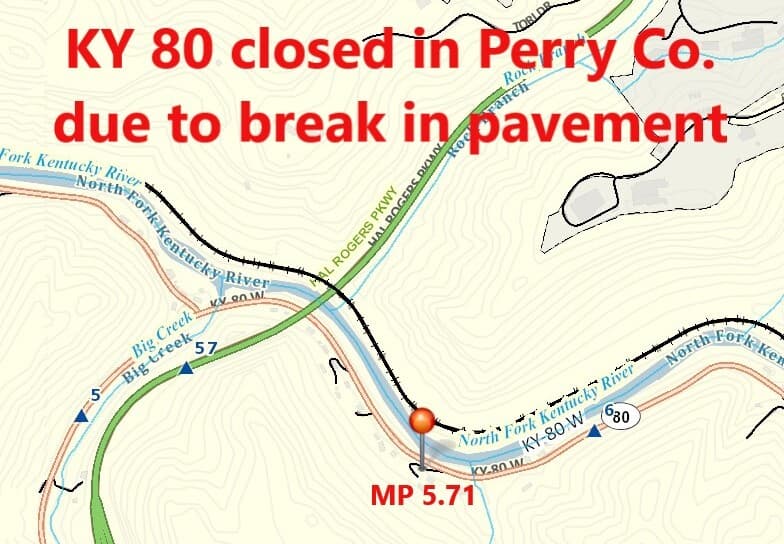
KY 80 has been closed at mile point 5.71 in Perry County after the pavement deteriorated to the point that the road is unsafe for travel. The Kentucky Transportation Cabinet Department of Highways has issued the closure and is managing on-site safety measures. Residents should regard the section as impassable until officials declare it safe.
2. Exact location and nearby reference points
The closure is between KY 2021 (Couchtown Road) and the bridge crossing the North Fork of the Kentucky River, providing a precise reference for travelers and local responders. That stretch serves local traffic between small communities and connects to larger corridors that carry commuters and commercial vehicles. Knowing the mile point and cross-streets helps drivers plan alternate routes and allows officials to coordinate signage and emergency access.
3. Cause of the failure
State officials attribute the break to heavy rainfall and flooding that occurred on Saturday, Jan. 1, 2026, which compromised the pavement and subgrade. Flooding can undermine road foundations quickly, producing sudden failures that are dangerous for motorists. Understanding the weather-related cause is important for assessing seasonal risks and needed resilience measures for local infrastructure.
4. Detour routing and travel implications
Drivers are being directed to use KY 451, the Hal Rogers Parkway, and KY 15 as the official detour around the closed segment of KY 80. That detour will add distance and travel time for many trips, particularly for daily commuters and commercial drivers who rely on the corridor. You should plan extra travel time and consider alternative schedules or routes while the closure remains in effect.
5. On-site safety measures: signage and barricades
Message boards, signs, and barricades have been placed to warn and physically prevent drivers from using the failed section, per the transportation release. These precautions reduce the risk of vehicle accidents and protect repair crews. If you encounter temporary signage beyond the published detour, follow posted instructions, these are intended to maintain safety around unstable pavement and flood-impacted terrain.
6. Repairs required and current timeline
Officials have indicated that significant repairs will be required to make the roadway safe again, and there is not yet a timetable for repair or reopening. Significant repairs can include subgrade stabilization, pavement replacement, drainage reconstruction, and bridge or embankment reinforcement depending on the extent of underlying damage. Because no schedule exists yet, residents and businesses should expect an extended period of disruption and monitor official updates for the repair plan and projected milestones.
7. Responsible agency and institutional accountability
The Kentucky Transportation Cabinet Department of Highways is the state agency responsible for the closure, traffic control, and the repair process on KY 80. Holding that agency accountable means tracking its communications, asking for a repair timetable, and seeking transparency on the scope and funding of the work. Local officials should coordinate with KYTC to ensure emergency access, maintenance of detour routes, and timely public briefings.

8. Local travel, economic, and daily-life impacts
The closure affects commuters, school transportation, deliveries, agricultural operations, and local businesses that depend on through traffic. Added travel time increases costs for households and businesses; small vendors and service providers may see fewer customers or longer supply chains. You should evaluate whether alternate suppliers, delivery scheduling, or temporary route adjustments can mitigate economic strain while repairs proceed.
9. Emergency services and school transportation considerations
Closure of a state route alters emergency response patterns and school bus routing; dispatchers and school districts will need to use the approved detour or other local roads to maintain service. Longer response times are a foreseeable risk, so emergency agencies must review mutual-aid arrangements and staging locations. Parents and residents should confirm revised bus stops and times with school officials and keep alternate emergency contacts updated.
10. Communication channels and staying informed
Monitor official communications from the Kentucky Transportation Cabinet Department of Highways and local government for updates on assessments, repair plans, and reopening timelines. Local news outlets, county announcements, and KYTC traffic advisories are the primary sources for authoritative information; rely on those rather than unverified social posts. If you need immediate clarification about closures or detours, contact KYTC or the county government office directly.
11. Policy implications and infrastructure resilience questions
This closure highlights broader policy questions about maintenance funding, drainage infrastructure, and climate resilience as heavy rainfall increasingly triggers road failures. Decisions on how quickly and to what standard to repair the road will reflect budget priorities at the state and local level and will have lasting consequences for safety and economic connectivity. Voters and policymakers should weigh whether existing maintenance programs and emergency-preparedness investments are adequate for recurring severe weather.
12. Civic engagement and practical next steps for residents
You can help shape the response by asking the Kentucky Transportation Cabinet Department of Highways and your county officials for a clear repair timeline, cost estimates, and plans to prevent similar failures. Attend county meetings, submit formal requests for information, and raise infrastructure priorities with elected representatives so repair strategy and funding are subject to public scrutiny. Staying engaged ensures repairs proceed transparently and that Perry County’s transportation needs remain visible to decision makers.
This article was produced by Prism’s automated news system from verified source data, official records, and press releases, then run through automated quality and moderation checks before publishing. The system is built and supervised by the people who set the standards it runs under. Read our full AI policy.
Did this article answer your question?