Perry County guide connects residents to key local services
One Perry County guide puts crisis lines, housing aid, food help, medical care, and rides in one place, giving families a faster first step when money or safety is tight.
If you need help in Perry County today, the fastest move is to open the community resource guide and match your need to the right section before the problem grows. That matters in a county that stretches across 339.7 square miles of land and includes Hazard, a separate 83.6-square-mile census area where many residents still have to travel for appointments, errands, and county business.
Start with the section that fits the emergency
The guide is built for the moments when people do not have time to search across half a dozen websites or offices. Its table of contents covers emergency and crisis contacts, abuse and domestic-violence resources, family and youth services, senior and veteran assistance, county agencies, food assistance, clothing and household items, housing and utility help, legal services, medical and health resources, mental health and substance-use support, teen services, and transportation.
For a family in trouble, that layout is the real value. If the need is immediate, the emergency and crisis pages are the place to begin; if safety at home is the issue, the abuse and domestic-violence section gives a different path; if the stress is financial, the housing, utility, food, and legal sections make it easier to move from panic to a plan. Kentucky 211 adds a second entry point, available 24/7 for help with bills, food, housing, mental health, transportation, legal and public safety needs, and other practical problems.
The guide brings local names to the front
The University of Kentucky version of the Perry County guide points residents to local organizations that are already part of the county’s safety net. It lists LKLP, Crossroads Crisis Center, Rebound Center, Hazard ARH Regional Medical Center, the Perry County Health Department, the Housing Development Alliance, and the Housing Authority of Hazard, along with substance-use hotline and treatment-locator information.
That combination matters because it shows where help actually lives. Medical care is not separated from public health, and crisis support is not separated from housing or substance-use recovery. In a county where one household may need all of those at once, the guide works best as a map, not just a directory.
Housing help is still shaped by the flood years
The housing section carries extra weight in Perry County because recovery from the July 26, 2022 Eastern Kentucky floods is still part of daily life. FEMA said Perry County was among the counties eligible for individual assistance after the flooding, and the agency opened a disaster recovery center in the county on August 9, 2022, followed by a mobile registration center in September 2022.
That history helps explain why housing resources remain a priority. In June 2024, the Housing Development Alliance said Melissa Neace became the 100th flood survivor to receive a home built or rehabilitated by the organization. The same report said more than 600 new homesites had been laid out and that 63 new homes and 270 rehabilitated homes had been completed across the region. For families still balancing rent, rebuilding, repairs, or displacement, the guide is not abstract policy material. It is a practical way to find the next available door.
Food, clothing, utilities, and the basics that keep a household steady
The guide does more than steer people toward crisis services. It also includes food assistance, clothing and household items, and housing and utility help, which is often where a household can stabilize before things spiral. Those sections matter for people who are working but still short on cash, for grandparents raising children on a fixed income, and for families trying to recover from a layoff, illness, or flood damage.
Kentucky Housing Corporation says county resource guides are meant to list agencies and organizations that provide emergency shelter, mental health services, mortgage and credit counseling, permanent housing, and educational assistance. In Perry County, that broader approach fits the reality on the ground: the need may start with groceries, but it can quickly become a question of keeping the lights on, finding child care, or making sure the house stays habitable.
Medical care and public health sit close to home
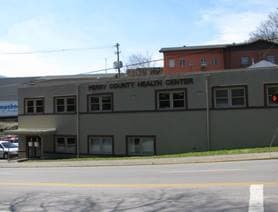
Residents looking for medical or public health help can use the guide to find Hazard ARH Regional Medical Center and the Perry County Health Department without having to sort through unrelated programs first. That matters for people managing chronic illness, children’s immunizations, prescription questions, or follow-up care after an emergency room visit.
The guide also helps connect the medical side of life with the social side. Transportation, housing, and food all shape whether a person can actually keep an appointment or follow a treatment plan. In a county where Hazard is the service hub but many people live farther out, that connection is often the difference between getting care and missing it.
Mental health, substance use, and youth services are not afterthoughts
The presence of mental health and substance-use support in the table of contents is just as important as the housing section. Perry County residents can use the guide to find Crossroads Crisis Center, Rebound Center, and the substance-use hotline and treatment-locator information included in the University of Kentucky version.
The guide also makes room for family and youth services, teen services, senior assistance, and veteran assistance, which helps households that are dealing with more than one generation at once. A parent looking for support for a teenager, an older adult trying to stay independent, and a veteran needing a local point of contact should not have to start from scratch each time. The guide gives them one place to begin.
Why one guide matters in a county this spread out
Perry County had 28,473 residents in the 2020 census, and Hazard had 5,008 in Census Reporter’s latest profile. Those numbers do not tell the whole story, but they do show why a centralized resource matters in a county where people may be driving between Hazard and outlying communities for work, school, medical visits, and county offices.
Perryville Hospital describes the Perry County Resource Guide as a free, comprehensive directory for healthcare, mental health, food assistance, housing, transportation, and more. That is exactly the kind of tool a resident can use under pressure: one document that shortens the search, names the local providers, and makes the next step clearer. In a place where the road to help can feel scattered across agencies, that kind of guide is not just convenient, it is part of the county’s survival infrastructure.
This article was produced by Prism’s automated news system from verified source data, official records, and press releases, then run through automated quality and moderation checks before publishing. The system is built and supervised by the people who set the standards it runs under. Read our full AI policy.
Did this article answer your question?