Perry County Historical Society preserves history through archives and sites
Perry County’s historical society is a working research hub, with an archive, inquiry pages, collections, the museum, and the Faherty House for genealogy and property questions.
Perry County’s history is organized less like a display case and more like a working set of civic tools. The Perry County Historical Society divides its site into Library & Archive, Research, Inquiries, Collections, and Museums & Sites, which means residents are not just being shown old objects, they are being given a path to records, artifacts, and place-based interpretation.
That structure matters because it tells users where to start. Someone tracing a family line, checking an old surname, trying to identify a photograph, or looking into a piece of land can move from curiosity to documentation through named parts of the society’s public-facing system.
How the historical society is set up
The most important thing about the society’s website is that it separates functions. Library & Archive suggests the preservation of documents and source material. Research and Inquiries point to a process for asking questions and getting help. Collections signals that the society is not only displaying objects, but organizing and maintaining them. Museums & Sites then connects that paper trail to physical places in the county.
That division is useful for residents because history questions rarely fit one box. A school project may need dates and names, a genealogy search may need family links, and a property question may begin with a map, a deed, or an old photo. By separating these categories, the historical society is making it easier to treat history as a usable resource rather than a static exhibit.
What the archive can do for residents
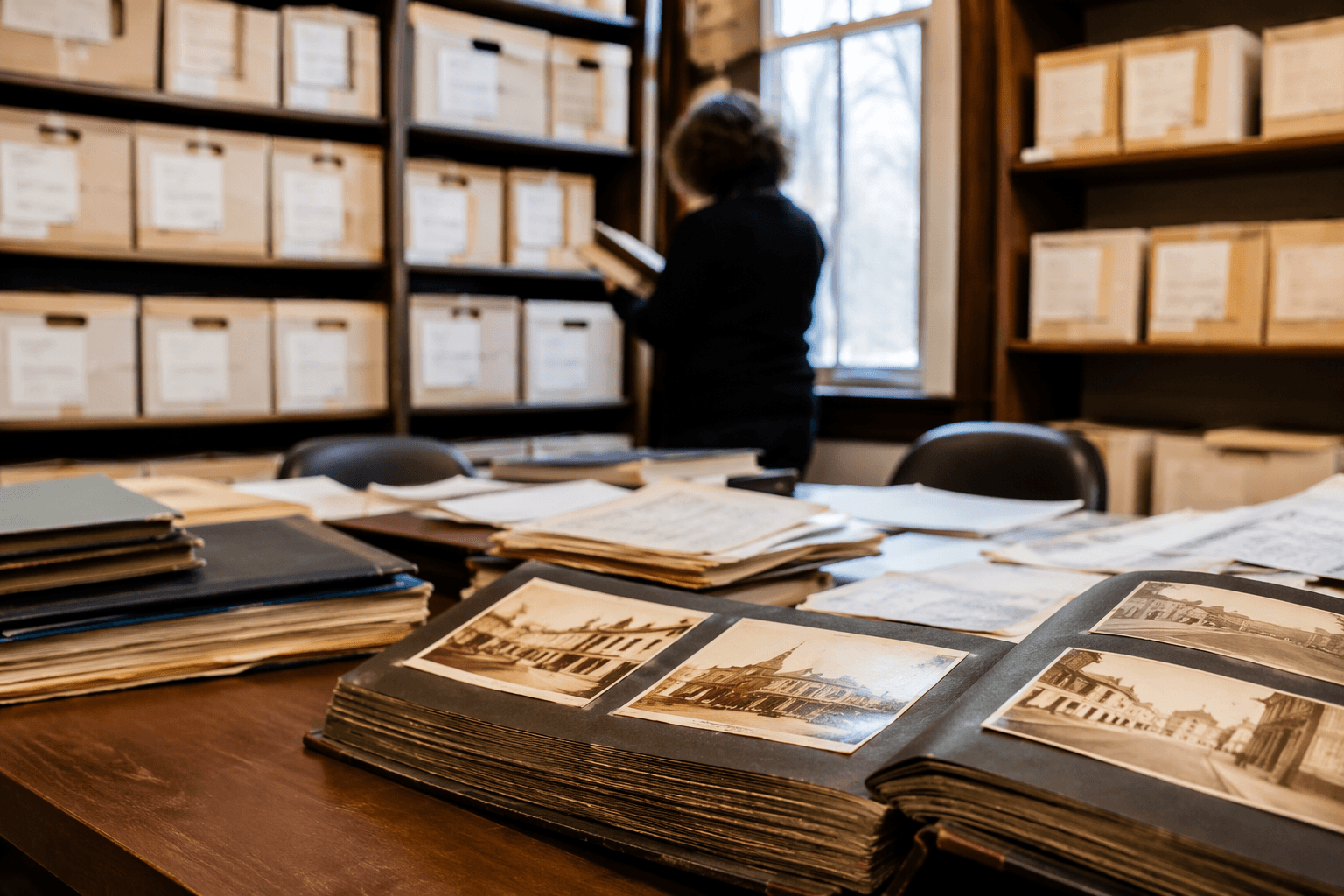
The archive side is where the society becomes practical. The society’s Research and Inquiries sections show that it expects people to come with specific questions, not just general interest. That makes the archive especially relevant for genealogy, old family names, local business histories, and questions about how a neighborhood or property changed over time.
For someone working on schoolwork, the archive can supply local context that a textbook will not. For someone researching a house or tract of land, it may provide the paper trail needed to understand ownership, naming, or long-term use. For descendants who live outside Perry County, the archive can be the difference between family memory and documented history.
The Kentucky Historical Society’s Martin F. Schmidt Research Library offers a useful statewide comparison: it is designed to help people researching family roots, books, class papers, or Kentucky history. Perry County’s archive pages fit that same public-service model. They show that local history institutions are not only for display, but for answering questions that residents and descendants still bring to the county.
The museum and the Faherty House
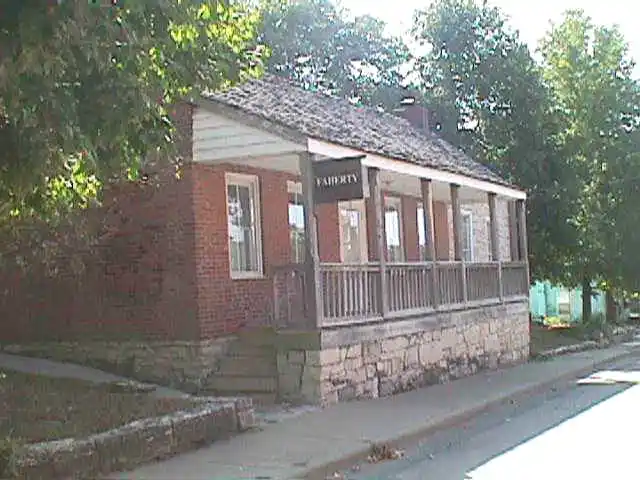
The Museums & Sites section anchors the society’s work in two named places, the Perry County Museum and the Faherty House. A museum gives the public a place to see artifacts and curated exhibits, while a historic house adds another layer: it preserves domestic and architectural heritage, the kind of setting that helps explain how people actually lived, worked, and built community.
That distinction is important. A museum can organize objects by theme or period; a house site can show scale, layout, and the realities of everyday life. Together, they turn abstract county history into something residents can locate in a building, a room, or a place name.
Related heritage references describe the Faherty House as the oldest recorded home in Perry County. Even more than that label, the name itself signals why the house matters: preserved houses give the county a tangible link to earlier generations, and they help interpret the local landscape as something shaped by families, labor, and settlement patterns over time.
Why this matters in Perry County now
Perry County was established in 1821, which means the county carries more than two centuries of records, names, buildings, and local memory. That history does not stay accessible on its own. It has to be organized, indexed, and tied to places residents can find.
If the society’s archive functions weaken, the loss is concrete. Family histories become harder to verify. Old photographs lose context. School projects have less local evidence to draw from. Property research becomes more difficult when the paper record is buried or incomplete. And if museum and site interpretation fades, the county loses the places that help explain how its communities took shape in the first place.
The broader value is civic, not sentimental. Perry County’s historical society is preserving more than stories about the past. It is maintaining the records, collections, and sites that let people prove relationships, study local change, and understand why the county looks the way it does today.
This article was produced by Prism’s automated news system from verified source data, official records, and press releases, then run through automated quality and moderation checks before publishing. The system is built and supervised by the people who set the standards it runs under. Read our full AI policy.
Did this article answer your question?