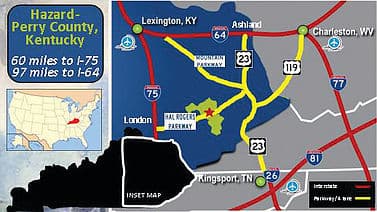
Perry County salt works supplied the region for 50 years
A hand-drilled salt well near Cornettsville kept Perry County supplied for 50 years, then vanished in a flood. The marker turns a roadside stop into an economy lesson.
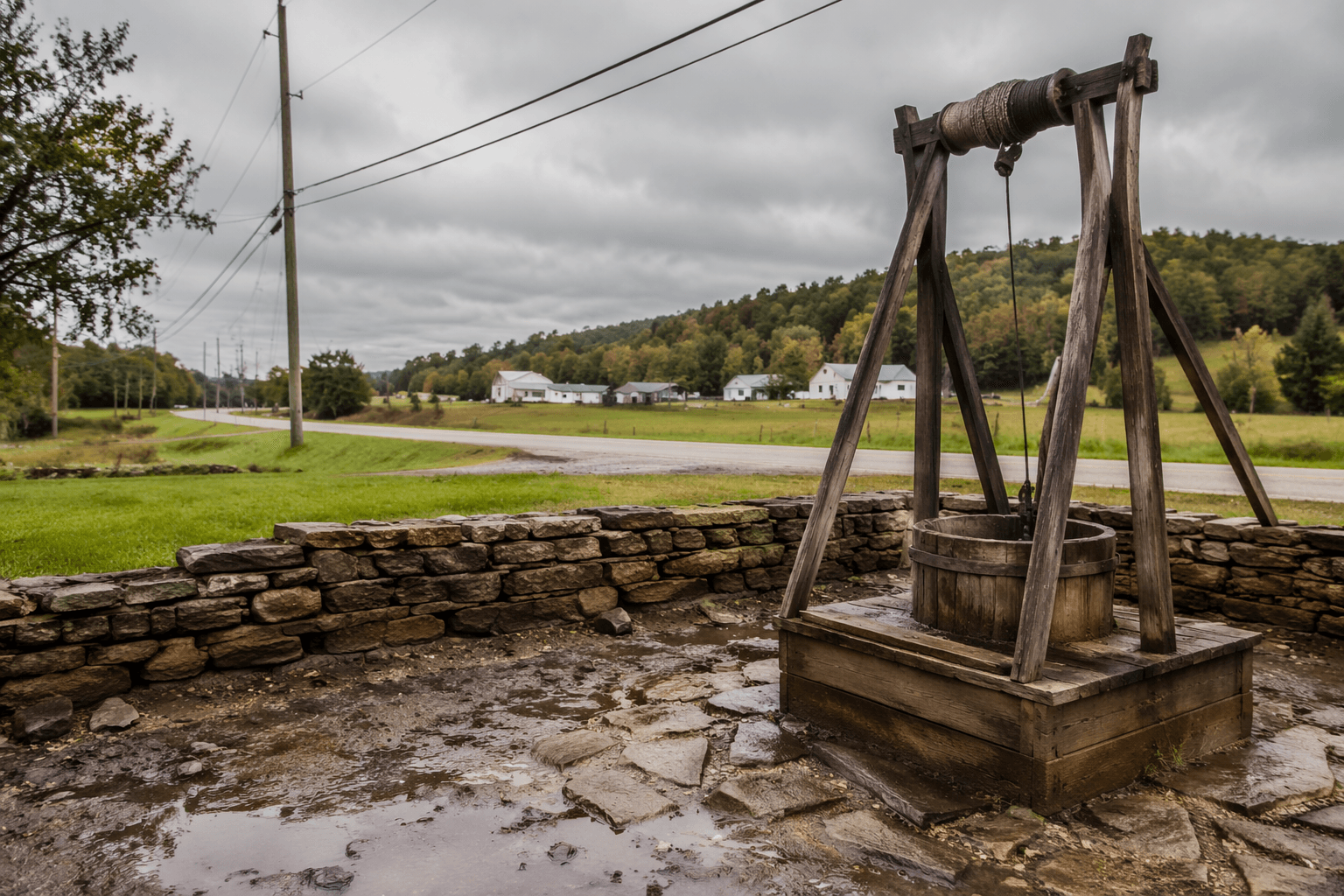
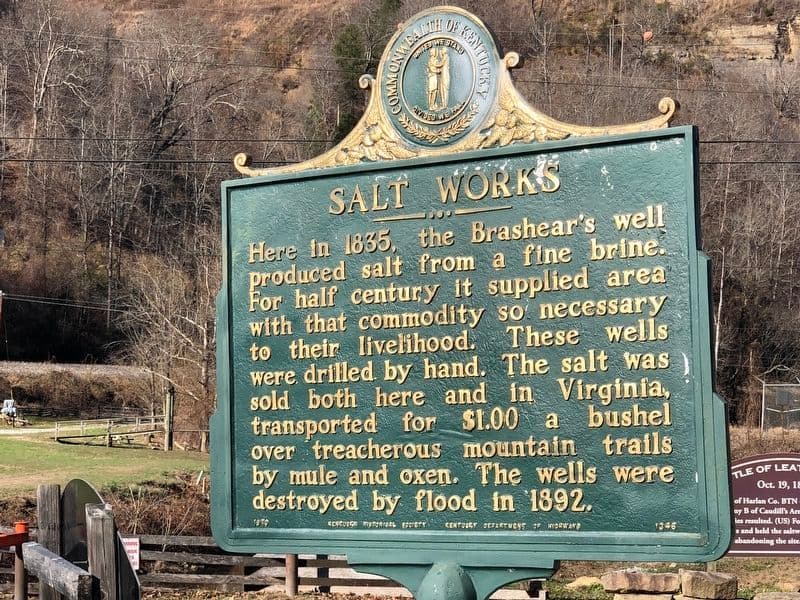
The Salt Works marker on KY 7, about 17 miles south of Hazard, points to a simple but important truth about Perry County’s past: a mountain county could still feed regional demand when it controlled a useful resource. In 1835, the Brashears’ well produced salt from a fine brine, and for roughly half a century that output helped supply an everyday commodity families and farms could not do without. The story is not nostalgia for its own sake. It is a lesson in how local enterprise, labor, and transportation once kept a remote place connected to the wider economy.
What the Salt Works actually did
Salt was not a luxury in the 19th century. It was a practical necessity for preserving food, sustaining households, and supporting farm life before refrigeration changed daily routines. The Perry County site mattered because it turned brine into something that could be sold, stored, and moved. The marker’s language is plain about that role: the well supplied the area for half a century with a commodity necessary to livelihood. That is why the site matters as an economic marker, not just a historical one.
The technology itself was basic and labor-intensive. The wells were drilled by hand, which gives a clearer sense of the work than any romantic description of frontier industry ever could. Each well required people willing to cut into the ground with their own labor, then manage a supply chain built around brine, fuel, and hauling. In a county where steep terrain shaped almost every activity, the fact that this operation lasted for decades says as much about persistence as it does about geology.
How Perry County salt reached other markets
The marker also shows that Perry County was not isolated in an economic sense. Salt from the Brashears’ well was sold both locally and in Virginia, and it moved over treacherous mountain trails by mule and oxen. The transportation cost, $1.00 a bushel, underscores how much labor was built into every sale. That price did not represent a modern freight network or a wagon road built for speed. It represented rough terrain, animal power, and a market that was willing to pay for a necessary product even when delivery was difficult.
That detail makes the Salt Works especially useful for understanding the county’s practical industries. Perry County’s early economy was not defined only by what was made, but by how goods moved. Salt had to be carried over mountain paths, which means the work tied together the well itself, the animals that hauled the load, and the people who knew the routes. In a place like Cornettsville, the business was local in origin and regional in effect.
Why the ending still matters
The wells were destroyed by flood in 1892, ending a run that had lasted about 50 years. That ending matters because it shows how vulnerable mountain industry could be to landscape events outside anyone’s control. A single flood could erase the physical works even after decades of usefulness, leaving only a marker and the memory of what the site once supplied.
That is why the Salt Works still speaks to present-day debates about self-sufficiency and resource use. Perry County’s history here is not about a museum piece frozen behind glass. It is about a community that used a local resource, turned it into trade, and depended on the ability to move goods through hard country. The same question still hangs over mountain economies now: which local enterprises can meet real needs, create useful jobs, and make the most of what the land actually provides? The Salt Works offers one old answer, and it is rooted in work, transport, and a product people could not do without.
This article was produced by Prism’s automated news system from verified source data, official records, and press releases, then run through automated quality and moderation checks before publishing. The system is built and supervised by the people who set the standards it runs under. Read our full AI policy.
Did this article answer your question?