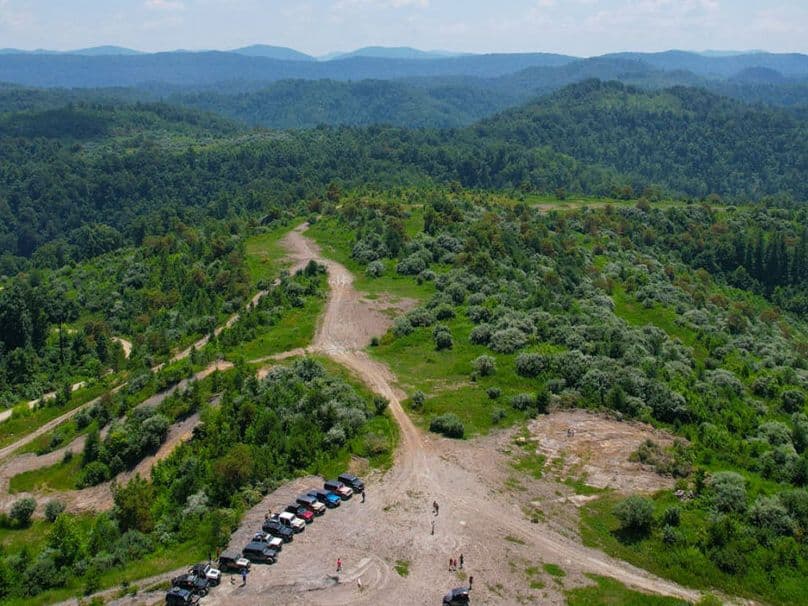
Wendell H. Ford Airport offers rural air service in Perry County
Wendell H. Ford Airport is Perry County’s small-airport lifeline, linking Chavies to medical flights, business travel, and emergency access when roads are unreliable.
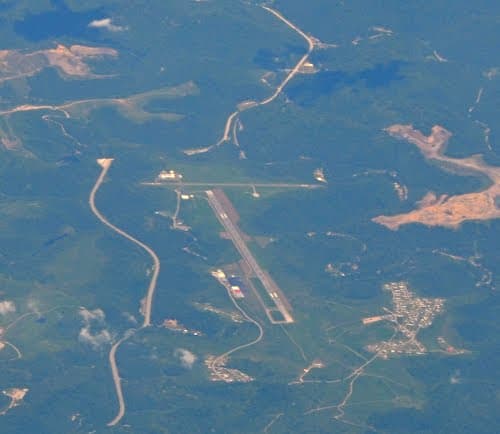
Wendell H. Ford Airport sits at 1300 Terminal Road in Chavies, about 10 miles northwest of Hazard, and it is open to the public. In Perry County, that matters most when a medical flight needs a clear runway, a business visitor needs to reach local industry, or winter weather makes driving slower and less certain. The airport’s daily operations show why rural air service still matters here: there is no control tower, aircraft talk to one another on the common traffic frequency, and fuel is on hand for both local and visiting planes.
How the airport works day to day
The field uses the FAA identifier CPF and dates its activation to November 1983, which places it squarely in the modern era of county airport development. Perry County’s airport information says it is attended from 0800 to dusk, with a lighted beacon that runs from sunset to sunrise. For pilots, that mix of staffing, lighting, and weather reporting is what turns a small county airfield into something usable beyond bright daylight hours.
The communications setup is simple but practical. Pilots use CTAF and UNICOM on 122.7, while AWOS-3 weather service on 119.025 gives a live read on conditions before takeoff or arrival. The airport also carries 100LL and Jet-A+ fuel, so it can serve piston aircraft and turbine traffic without forcing crews to divert for a fuel stop.
The runway layout shows how much the field can handle for a rural airport. Runway 14/32 measures 5,499 by 100 feet, is paved with asphalt, and has medium-intensity edge lights, PAPI approach guidance, and REIL runway-end lights. The shorter Runway 6/24 measures 3,246 by 60 feet, is also asphalt, and Perry County says its lighting has been permanently removed. In plain terms, the main runway gives the county a longer, more capable landing surface than many small local strips, which is one reason the airport can support broader general aviation use.
Why the access road matters as much as the runway
The airport’s biggest constraint is not always in the air. A Kentucky Transportation Cabinet study on the access road says the route has had narrow lanes, little to no shoulders, steep grades, and slope failures. Those problems do more than make the drive inconvenient: they have limited fuel deliveries, especially during winter, when trucking conditions are hardest.

That detail matters because an airport is only as reliable as the ground network feeding it. If fuel trucks cannot reach the field easily, the county loses part of the flexibility that makes a public airport valuable in the first place. For residents, that means the airport’s usefulness depends on both a serviceable runway and a dependable road connecting it to the rest of Perry County.
Why non-pilots should care
Kentucky’s 2022 Airport Economic Impact Study puts Wendell H. Ford Airport in a statewide system of 58 public-use airports that support commerce, tourism, air ambulances, military training, and aviation education. The same study says Kentucky airports supported 116,000 jobs, $8 billion in personal income, and $24 billion in economic output in calendar year 2022. Those are state totals, but they explain why even a small county airport can show up in economic development, public safety, and workforce planning.
Perry County’s industrial-sites page ties the airport directly to local business activity. It says the Coal Fields Regional Industrial Authority site is served by Wendell H. Ford Airport and lists a 5,500-foot main runway as part of the site’s appeal. The same page names tenants such as Sykes, Inc., FedEx Distribution Center, Forrester Joseph Trucking, Hurley Electrical Contracting, and Dajcor Aluminum, which shows the airport is part of the county’s pitch to employers that need fast access for people, parts, and time-sensitive deliveries.
That is the practical answer for a non-pilot: the airport helps make Perry County easier to reach, easier to serve, and easier to invest in. It matters when a company wants to inspect a site, when a specialist needs to fly in, and when an air ambulance needs a local landing option rather than a longer transfer by road.
A role in drones and new aviation work
Wendell H. Ford Airport is also part of Perry County’s push into unmanned systems. The county’s USA Drone Port page calls the airport a critical partner because it gives clients opportunities to fly in for testing and facility utilization. That connection puts the airport into a newer kind of aviation economy, one that reaches beyond traditional general aviation and into research, testing, and advanced manufacturing support.
The drone-port plan is ambitious. The county says the project received a $1.5 million 2018 AML Pilot grant for an indoor drone flight-testing facility, and the broader vision includes a National Unmanned Robotic Research and Development Center, a 500-foot runway, and 24-hour drone-testing capabilities. The page also says airport leadership is represented on the drone-port board, including Steve Barker as chairman of the Hazard Airport Board. For Perry County, that means the airport is not just a landing strip. It is part of a larger effort to build an aerospace niche in the coalfields.
The policy and funding behind the airport
Local governance has also shaped the airport’s path. Perry County ordinances show the Hazard Perry County Airport Board was re-constituted in 1992, giving the field a formal management structure that has lasted for decades. That kind of institutional continuity matters in a rural county airport, where runway maintenance, lighting, fuel service, and access-road planning all depend on steady oversight.
The latest federal money points in the same direction. On June 4, 2026, Rep. Harold "Hal" Rogers announced $20 million for the Hazard Airport Runway Project, describing it as an effort to extend the runway at Wendell H. Ford Airport and improve safety while creating commercial and industrial opportunities. That funding push fits the airport’s existing role as a transportation asset, a logistics point, and a site with room to grow.
The airport’s name also carries a wider Kentucky aviation legacy. The Wendell H. Ford Aviation Investment and Reform Act for the 21st Century was signed into law on April 5, 2000, linking the Perry County field to a national aviation figure whose influence reached far beyond the county line. In Perry County, though, the airport’s value is local and immediate: it is the place that keeps the county connected when the road network, the weather, or the distance to larger airports makes ordinary travel harder.
This article was produced by Prism’s automated news system from verified source data, official records, and press releases, then run through automated quality and moderation checks before publishing. The system is built and supervised by the people who set the standards it runs under. Read our full AI policy.
Know something we missed? Have a correction or additional information?
Submit a Tip