Helena Harbor markets Phillips County as a logistics and industrial hub
Helena Harbor’s 4,000 industrial acres and multimodal access still give Phillips County a real recruitment edge, but jobs depend on tenants, upgrades and workforce buildout.
Why Helena Harbor still matters
Helena Harbor’s strongest selling point is practical: it gives Phillips County something many rural counties do not have, a large flood-protected industrial complex with river, rail, road and air access already built into the pitch. The harbor markets 4,000 acres of industrial sites centered on a 2.25-mile slackwater harbor, and that scale matters because site selectors look first for dependable land, utilities and transportation before they look at slogans.
That is why the harbor remains central to Phillips County’s economic case. It is not being positioned as a single dock or one-off project, but as a long-term logistics and industrial platform that can support manufacturers, agricultural shippers and distribution users that need to move heavy materials in and out of the Delta without starting from scratch.
The infrastructure package site selectors want
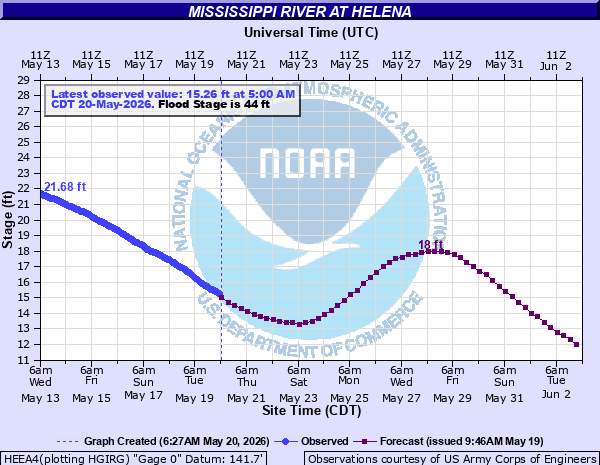
The harbor’s physical setup is the core of the argument. Helena Harbor describes its channel as nine feet deep and 300 feet wide, with additional berthing space along much of its length and a turning basin at the head of the channel. The adjacent industrial park, according to the Arkansas Waterways Commission, has rail service, natural gas, electrical power and water utilities.
Location adds to the package. The site sits off Arkansas State Highway 20, about six miles south of Helena, with access to the U.S. Highway 49 bridge and direct links to U.S. Highways 61 and 49. Helena Harbor also points to planned Interstate 69 about ten miles east, which helps explain why the county keeps framing the harbor as a logistics node rather than just a riverfront asset.
That combination gives the county a pitch that is broader than river shipping alone. Helena Harbor says the site can connect to roughly 15,000 miles of inland waterways, the Gulf of Mexico and ocean trade lanes reaching Latin America and other markets. For a county trying to compete for capital investment, that is the kind of access that can lower transportation costs, improve reliability and make a rural site look less risky.
What the harbor can unlock, and what still has to happen
The business case is strong, but it is not self-executing. Flood protection reduces one of the first questions investors ask in a Mississippi River county, which is whether a site can operate reliably through high water and disruption. Still, flood protection alone does not create jobs. Phillips County also needs tenants, service capacity, trained workers and continued public investment before residents see the full payoff in payrolls and tax base.
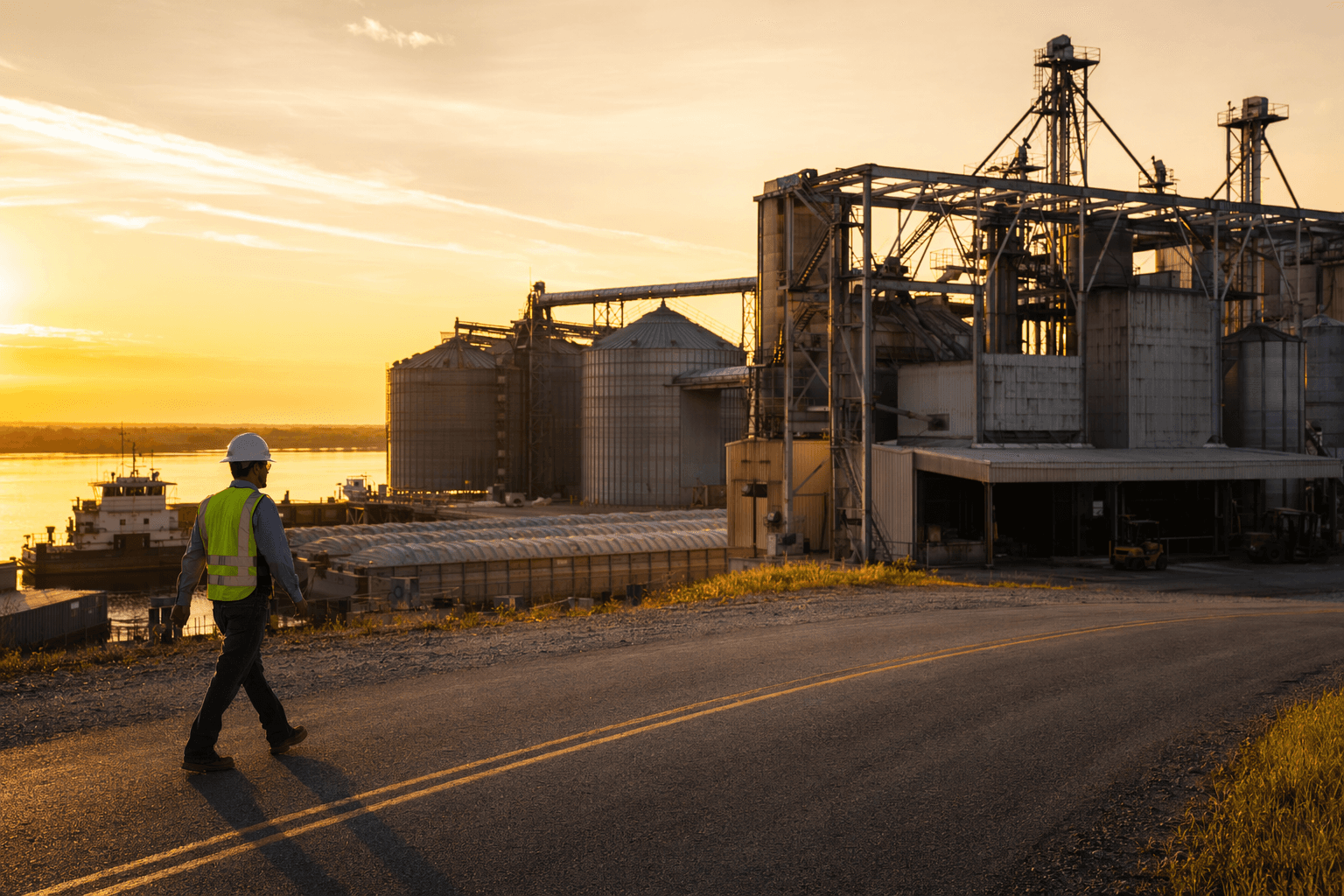
That is where the harbor’s recent capital projects matter. In August 2023, Gov. Sarah Huckabee Sanders came to Helena-West Helena for an economic-development event tied to four agribusiness companies: Poinsett Rice and Grain, Scates River Terminal, Scoular and Helm Fertilizer Corp. Poinsett Rice and Grain said it had invested $9 million at its Helena location and could process 60 million bushels per hour. Helm America Crop Nutrition said it had invested $12 million to double storage capacity at Helena Harbor.
The public side of the equation has been moving too. The same period included mention of a $6,412,652 Maritime Administration grant to help fund a rail spur and water tower, plus a separate $2.8 million America’s Marine Highway grant for a container-on-barge terminal. Those are not cosmetic improvements; they are the kind of investments that determine whether a harbor can actually handle more freight, more storage and more tenants.
Workforce, safety and the support systems around the port
Industrial recruitment rarely succeeds on acreage alone. Helena Harbor’s own materials connect the site to workforce and training institutions including Crowley’s Ridge Technical Institute, Phillips Community College of the University of Arkansas and the Arkansas Department of Workforce Education. That is important because employers considering the Delta want to know whether they can find and train labor for construction, logistics, maintenance and production work.
Phillips County Community College of the University of Arkansas has since pushed that point further. On June 11, 2025, PCCUA presented a proposed Workforce Training Center in Helena to 25 members of the Phillips County Industrial Council, saying the project is meant to respond to record-low labor participation and limited job opportunities in the Delta. The training plan would cover construction, manufacturing, welding, CDL, HVAC, health sciences, artificial intelligence and related job skills.
The county’s operating environment also matters to site selectors. Helena-West Helena’s service profile includes municipal pickup services, regional Class I and IV landfills, 30 paid firefighters and 36 volunteers with 13 units, plus a Class III ISO fire rating that local officials are trying to improve. That may sound like back-office detail, but those numbers tell employers whether the community can support industrial growth beyond the waterfront.
A transportation hub with a long memory
Helena Harbor’s pitch also fits the county’s history. Helena was incorporated in 1833 and grew as a river port, while West Helena began as a railroad town in 1917. The two cities merged into one on January 1, 2006, and that merger fits a county that has always been shaped by movement, shipment and access.
Phillips County itself dates to 1820, making it the second oldest county in Arkansas. Its economy was built early on cotton, lumber and transportation, but it also endured deep setbacks, including the Elaine Massacre in 1919 and major floods in 1927 and 1937. That history helps explain why flood protection has become such a central part of the harbor’s modern sales pitch. In Phillips County, reliability is not a buzzword; it is the difference between a site that can be marketed and a site that can actually perform.
Helena Harbor still matters because it gives Phillips County something concrete to sell: deep industrial land, multimodal access and a riverfront location with regional reach. The next test is whether the county can keep turning that asset into tenants, training and infrastructure strong enough to produce lasting jobs, not just headlines.
Know something we missed? Have a correction or additional information?
Submit a Tip