HPAI Confirmed in Clay County AR Broiler Flock, Biosecurity Urged for Poultry
Bird flu hit a Clay County commercial broiler farm Friday, putting Phillips County flocks on alert during the highest-risk stretch of spring migration along the Mississippi Flyway.
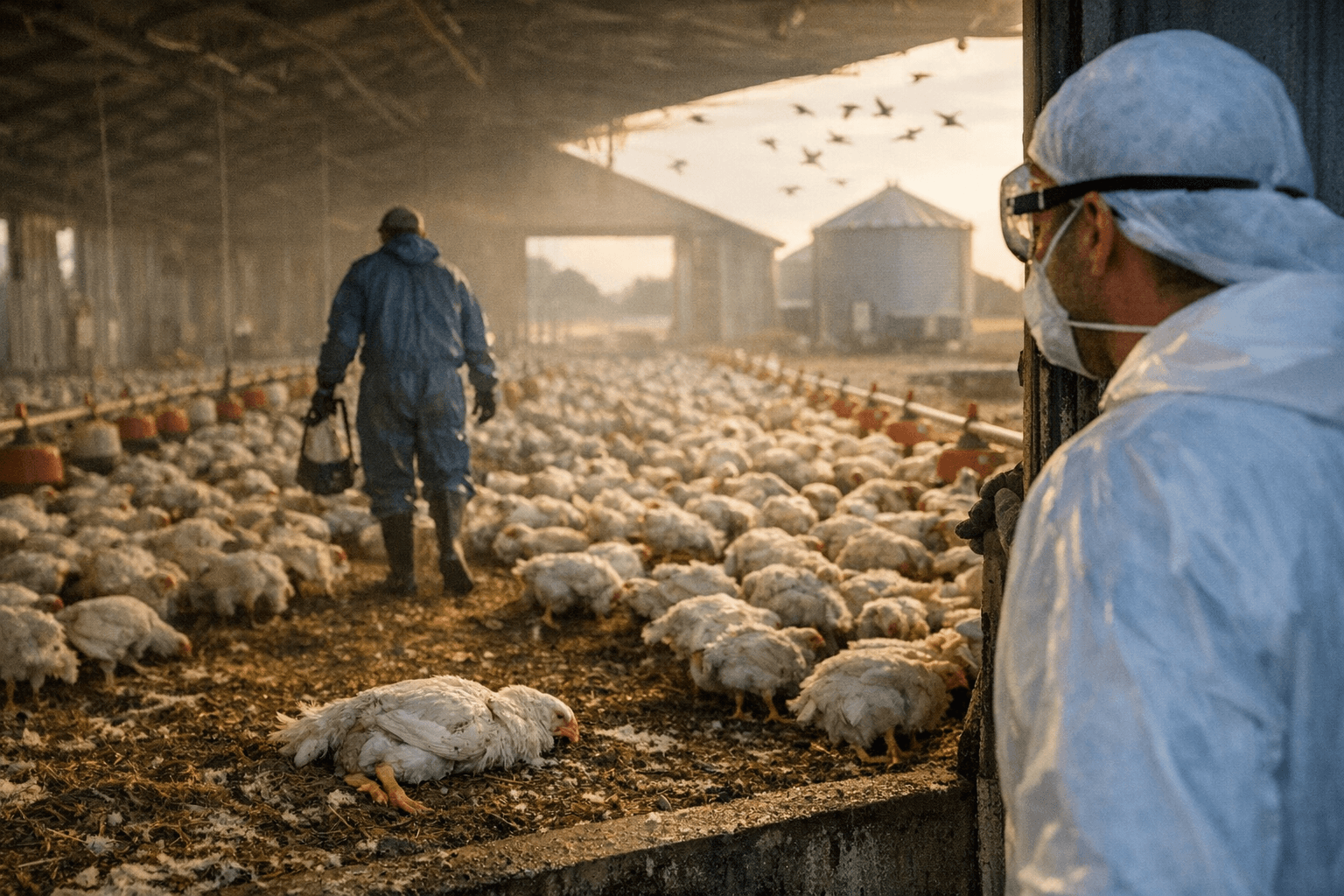
The Arkansas Livestock and Poultry Division confirmed highly pathogenic avian influenza in a Clay County commercial broiler operation Friday, and Dustan Clark, extension poultry health veterinarian for the University of Arkansas System Division of Agriculture, immediately called on every flock owner in the state to treat this week as a critical window for biosecurity action.
For Phillips County backyard keepers and commercial growers, the warning arrives at the most exposed moment of the year. Northward waterfowl migration through the Mississippi Flyway runs directly above the Arkansas Delta, and wild waterfowl shed HPAI in their droppings while showing no signs of illness. State agriculture officials note that as little as one gram of contaminated manure can infect millions of domestic birds, a figure that underscores how quickly a single passing flock of mallards can become a catastrophic farm event.
Knowing what to watch for is the first line of defense. The signs most likely to precede mass losses include sudden unexplained death in birds that appeared healthy hours earlier, a sharp drop or complete halt in egg production, soft-shelled or misshapen eggs, respiratory distress such as gasping or coughing, swelling around the head and eyes, and purple discoloration of combs, wattles, or legs. Any of those signs warrant an immediate call to the Arkansas Poultry Disease Hot Line at 501-823-1746 or the USDA at 866-536-7593. Extension veterinarian Clark can also be reached directly at 479-957-4245.
This week, the most critical biosecurity actions are covering outdoor pens with roofs or tarps to block contact with wild bird droppings, restricting access to essential workers only, logging all visitor and vehicle movement on the property, and changing clothes and footwear before entering any poultry housing. Any new birds, including show animals or 4-H entries returning from off-farm competitions, must be quarantined at least 100 feet from the home flock for a minimum of 30 days. Equipment and crates borrowed from other operations should be fully disinfected before arrival on the property.
Three persistent myths deserve correction. On human risk and cooking safety: properly cooked poultry and eggs remain safe to eat, and the Arkansas Department of Agriculture has confirmed no bird-to-human HPAI transmission in the state. On pets: dogs and cats that roam outdoors can carry the virus on paws or fur after contacting wild birds; they should be excluded from poultry housing. On which flocks are most vulnerable: backyard flocks actually carry higher exposure risk than commercial operations, not lower, because outdoor birds have direct contact with wild waterfowl droppings and shared water sources that commercial producers work systematically to eliminate.
The confirmation in Clay County also carries consequences beyond that operation. Arkansas Department of Agriculture protocol requires quarantine and sampling of nearby poultry farms following any HPAI detection, which can restrict movement of birds and hatching eggs across county lines. Phillips County families planning to exhibit poultry at a county fair or 4-H show this year should expect potential health certification requirements if the virus continues spreading into eastern Arkansas. The broader supply-chain pressure is already visible: HPAI has struck more than 129 million birds across all 50 states since 2022, a sustained toll that has driven the egg price increases shoppers in Helena-West Helena have seen at the checkout counter throughout the past year.
"The potential losses and costs associated with avian influenza outbreaks make it extremely important for all poultry flock owners to protect their flocks," Clark said. Updated biosecurity guidance, HPAI confirmation logs, and free training webinars are available through the Arkansas Cooperative Extension Service's avian influenza page; Phillips County residents can also contact their local county extension office for in-person support.
This article was produced by Prism’s automated news system from verified source data, official records, and press releases, then run through automated quality and moderation checks before publishing. The system is built and supervised by the people who set the standards it runs under. Read our full AI policy.
Did this article answer your question?