Phillips County penal farm preserves rural incarceration history
The old penal farm near Poplar Grove still shows how Phillips County jailed convicts, worked them in the fields, and turned New Deal money into concrete cells.

The Phillips County Penal Farm Historic District sits quietly off County Road 353 south of U.S. Route 49 near Poplar Grove, but the complex still tells a hard county story. This was once a working prison farm where inmates labored by day and slept in their cells at night, and today the vacant, overgrown site remains one of the clearest physical records of how Phillips County handled punishment, labor, and public spending.
A county prison farm that still reads like a system
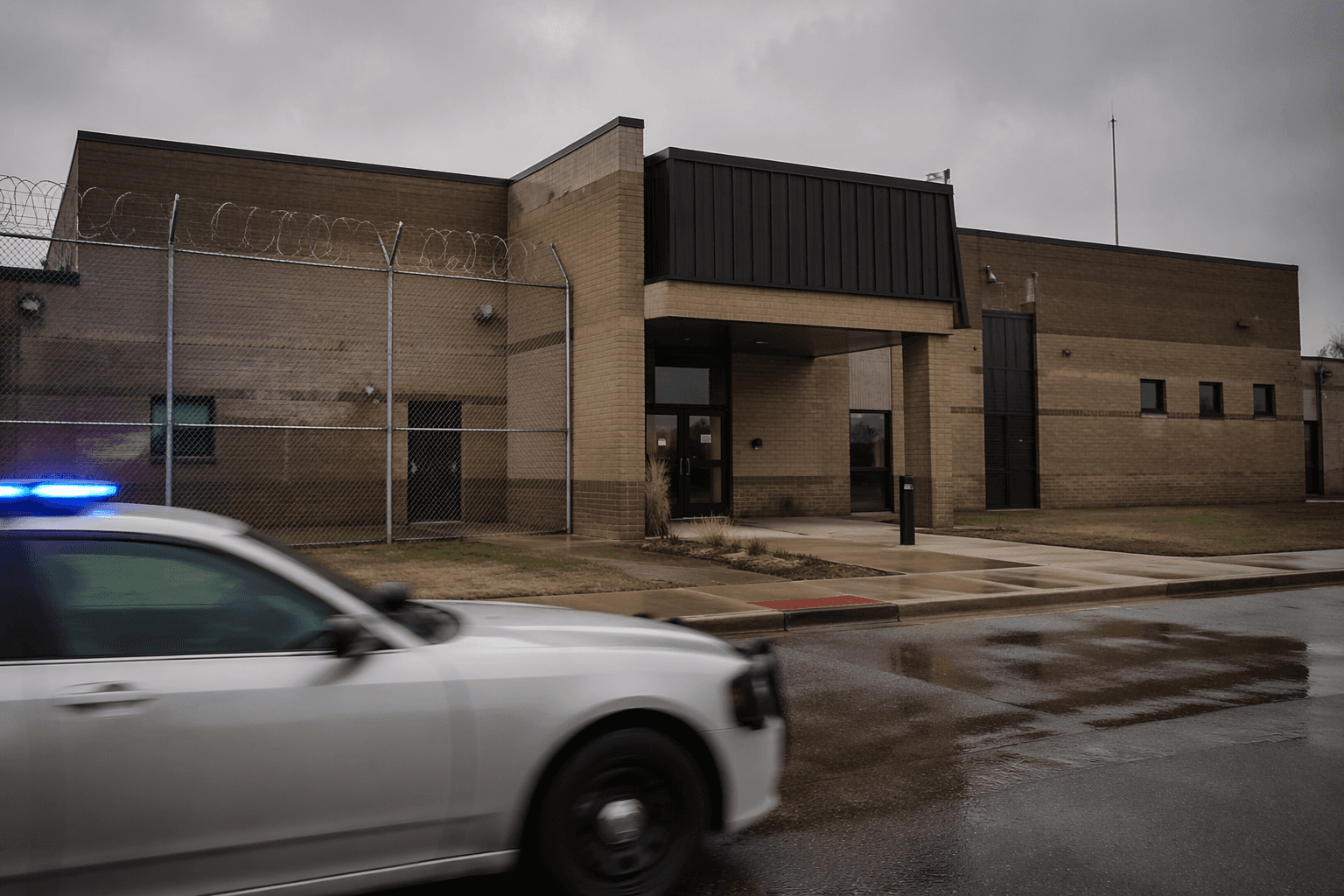
The district includes three contributing buildings, one contributing site, and one contributing structure: a main jail building, two additional concrete-block jail buildings, and a cast-concrete water tower. The National Register record says the property has excellent overall integrity, even though the buildings are deteriorated and vandalized, because they still retain their location, design, setting, materials, workmanship, feeling, and association.
That matters because this is not just a surviving old jail. It is a county-owned correctional complex that shows a whole system at work, from confinement to farm labor to water supply. The site’s vacant status only sharpens that point: the buildings no longer house anyone, but they still preserve the layout and logic of a prison farm that once served rural Phillips County.
From early county jails to the farm near Poplar Grove
Phillips County’s punishment history stretches back well before the New Deal concrete on County Road 353. Early county use began with a two-story log building that held a courtroom above and a jail below. That structure gave way to a frame courthouse with an adjacent log jail, and then to a two-story brick building in 1860.
By the nineteenth century, a county penal farm had been established near Poplar Grove. County convicts worked the fields during the day and returned to their cells at night, tying incarceration directly to agricultural labor. The arrangement reflects a rural county model in which punishment, production, and county administration were closely linked, especially in an area where land and labor still shaped local government decisions.

Poplar Grove itself helps explain why the penal farm was placed where it was. The community was once a thriving railroad stop with six general stores, four churches, cotton gins, grist mills, and schools for both white and Black children. Its position along what is now U.S. Route 49, between Marvell and West Helena, placed the farm in a rural corridor that was connected enough for county business but isolated enough for a labor camp-like operation.
New Deal concrete on County Road 353
The site’s most visible buildings came from the Great Depression era, when Phillips County turned to the Works Progress Administration for help. WPA Project No. 54-354 was approved on September 26, 1935, with $2,213 to build a detention home for county convicts. The Helena World later noted on June 18, 1936, that the detention home was among 21 WPA projects approved but not yet started, and the WPA approved another $3,375 on August 30, 1936, for a concrete building to serve as a county detention home on county-owned property.
Those projects produced the main jail building and the concrete-block companion structures that remain on the site. The district is classified architecturally as Modern Movement and International Style, and the main jail is described as a two-story cast-concrete structure with strong International Style influences, even while keeping a Plain Traditional form. The result is a stark county building that fits the WPA era: functional, durable, and stripped down to the essentials.
The larger federal program helps place the Phillips County project in a wider Arkansas context. The Works Progress Administration began operations in Arkansas in July 1935 and closed in 1943. During its years in the state, it spent almost $117 million in federal funds, plus about $36 million from local and state sponsors. Across the country, it became the largest work-relief program of the Great Depression, and in Phillips County it left behind a concrete reminder of how New Deal money reached even a county penal farm.
Why the site still matters now
The Phillips County Penal Farm closed in 1973, which turns the district into a preservation issue as much as a historical one. The site is no longer an operating institution, but it remains a rare government-owned landscape that still shows how the county once organized incarceration and labor. Because the property has been vacant for years, its future depends on how county leaders, preservation officials, and the community decide to treat a site that is already recognized in the National Register of Historic Places.
The district’s value is not limited to architecture. It captures the county’s shift from early log jails and courthouse-based detention to WPA-era concrete detention buildings, then into the modern problem of what to do with a deteriorated but intact historic complex. The surviving water tower, the jail buildings, and the farm setting still make that history legible on the ground.
A rare county record left in place
Phillips County does not have many places where the history of incarceration, labor, and public works survives in one location. The penal farm near Poplar Grove does exactly that. It preserves the county’s older jail tradition, the labor regimen of the prison farm, and the New Deal construction that replaced it, all in one overgrown district on the east side of County Road 353 south of U.S. 49.
That combination gives the site its lasting importance. It is a record of how Phillips County once used land, labor, and federal aid to build and maintain punishment infrastructure, and it leaves the county with a clear choice now: let the place fade further, or keep one of its most unusual public properties visible as part of local memory and county history.
This article was produced by Prism’s automated news system from verified source data, official records, and press releases, then run through automated quality and moderation checks before publishing. The system is built and supervised by the people who set the standards it runs under. Read our full AI policy.
Did this article answer your question?