$400K UMD Micromobility Study to Aid Prince George's County Road Safety
University of Maryland will use a $400,000 federal grant for a micromobility safety study to inform College Park and Prince George's County road-safety plans.
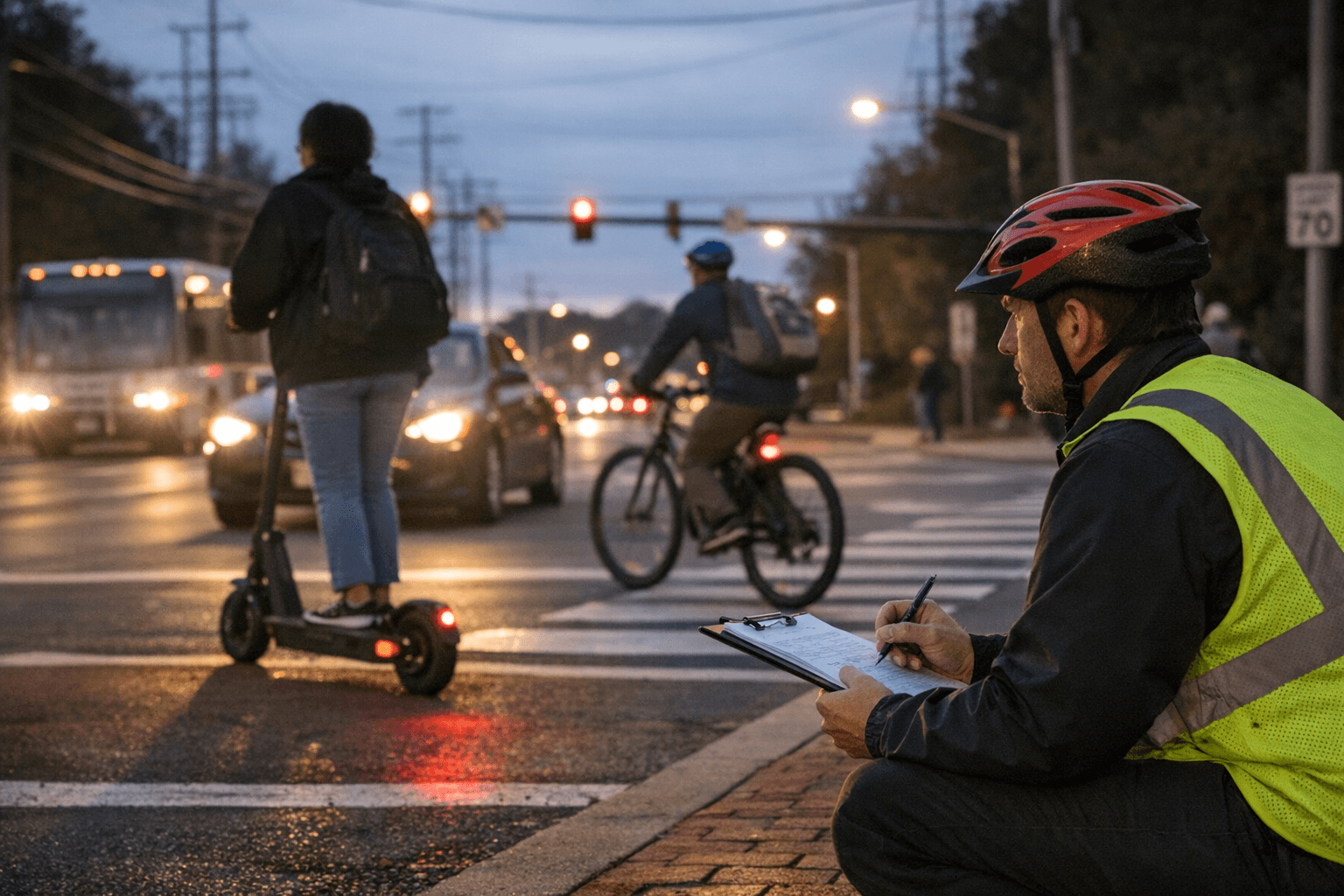
The University of Maryland, College Park will receive $400,000 to conduct a micromobility safety study aimed at improving street safety for College Park and Prince George's County residents. The study will gather community input, analyze video-based behavior data, and develop findings to inform Safety Action Plans for both the City of College Park and Prince George's County.
Maryland’s congressional delegation announced $1,442,360 in federal grant awards to support a range of road-safety projects across the state, with the UMD award one of several local investments. Other allocations in the package include funding for trauma and EMS analysis, engineering reviews of high-crash intersections, and planning efforts for counties and municipalities. The grants form part of a federal emphasis on reducing roadway deaths and serious injuries.
UMD’s micromobility study is designed to produce evidence and community-informed recommendations that county and municipal planners can use to prioritize safety countermeasures. Study work will include collecting feedback from riders and residents, using video-based behavior analysis to identify risky interactions, and translating those findings into actionable measures for planners. Examples of potential recommendations include changes to bike and scooter infrastructure, improved crosswalks, and adjusted enforcement strategies.
For Prince George's County, the study could affect how officials allocate limited resources for immediate fixes and longer-term projects. Findings that point to specific corridors, intersections, or behaviors can strengthen grant applications, justify engineering changes, or guide targeted enforcement. City of College Park planners will be able to fold the study’s conclusions into municipal Safety Action Plans that guide street design, traffic calming, and micromobility policies near campus neighborhoods and commercial strips.
Community engagement is a core part of the effort. Residents, students, and micromobility users can expect opportunities to share local knowledge about pavement conditions, conflict points, and travel patterns that are not always obvious in raw crash data. Because the study pairs community input with video-based behavioral analysis, planners will have both qualitative context and quantitative evidence when deciding whether to add infrastructure such as protected bike lanes, raised crosswalks, or new signal timing.
The grant to UMD is one piece of a broader push to make Maryland streets safer. For Prince George's County readers, the immediate takeaway is practical: the county and College Park will receive study-driven recommendations that could lead to visible changes on local streets. The next steps are the study’s outreach and analysis phases, followed by the translation of findings into Safety Action Plan items that County and City officials will be positioned to implement.
This article was produced by Prism’s automated news system from verified source data, official records, and press releases, then run through automated quality and moderation checks before publishing. The system is built and supervised by the people who set the standards it runs under. Read our full AI policy.
Did this article answer your question?