Braveboy faces four Democratic challengers in pivotal county executive race
Braveboy’s bid for a full term now runs through a Democratic primary where crime, growth and county services will decide Prince George’s next executive.
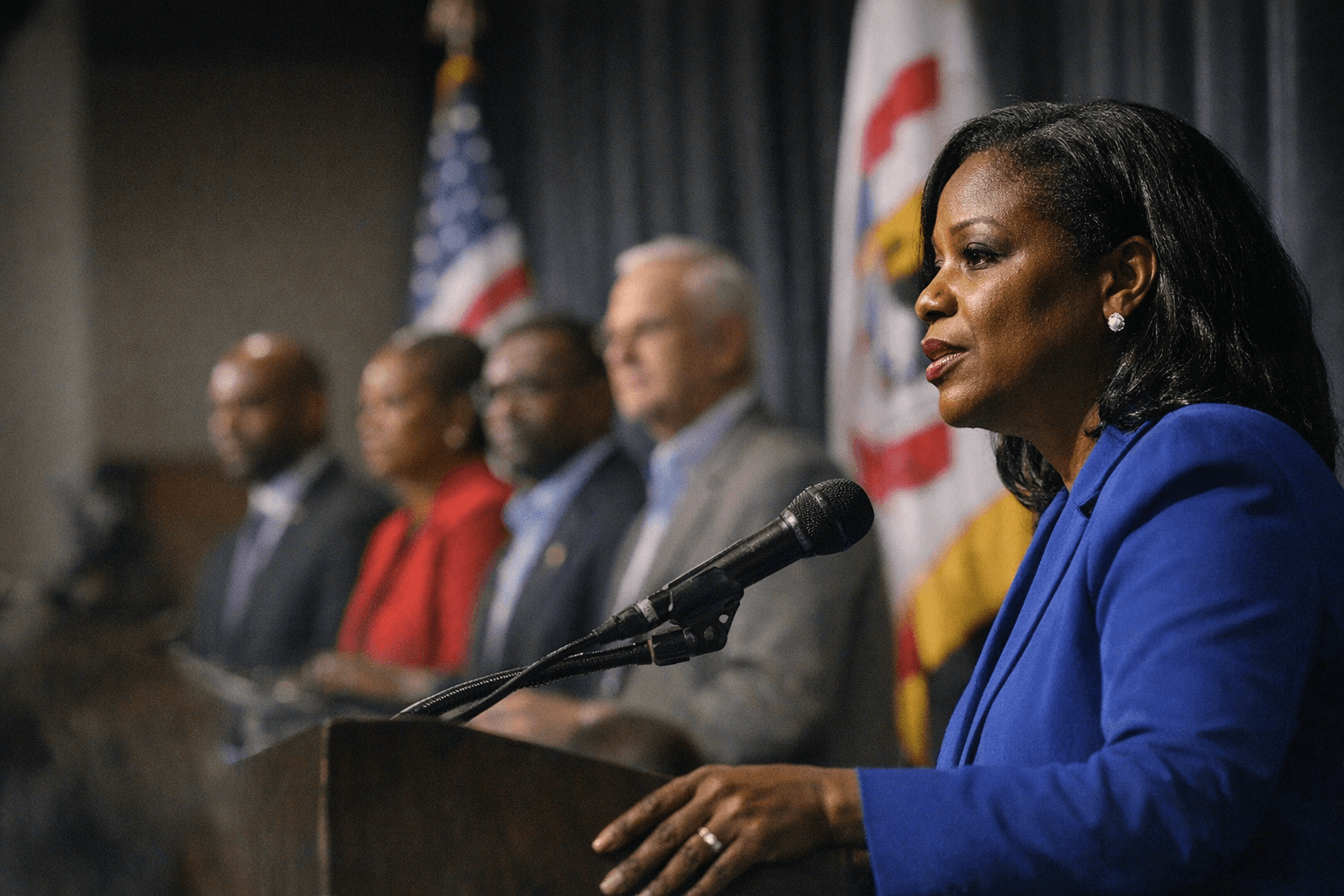
Prince George’s County voters are about to choose who controls a multibillion-dollar budget that shapes public safety, schools and economic development for more than 900,000 residents. With no Republican filed, the June 23 Democratic primary is poised to decide whether County Executive Aisha Braveboy keeps the job she won in a 2025 special election or loses it to one of four challengers.
Braveboy is seeking a full four-year term after replacing Angela Alsobrooks, who left for the U.S. Senate. That makes this race less about party labels than about direction: whether the county keeps building on the infrastructure and public safety investment associated with Alsobrooks’ tenure or pivots toward a new approach to crime, growth and day-to-day government performance.
Public safety is likely to be the sharpest fault line. The county has drawn criticism over crime in some neighborhoods, and that pressure gives Braveboy a vulnerability even as she runs on incumbency and her record. Billy W. Bridges is trying to turn that frustration into a reform message, arguing for economic accountability and tighter government efficiency. Greg Holmes is taking a more confrontational line, calling for transformational leadership and warning that the county cannot afford what he sees as outdated politics.
The race is not only about policing. It is also about whether Prince George’s can finally translate its size and proximity to Washington into broader economic momentum. Marcellus Crews, a community organizer, is pitching expanded services for working-class residents, a message aimed at families who want county government to feel more responsive on the basics. Charnell D. Ferguson is focusing on education, housing and youth development in under-resourced communities, tying the county’s future to better opportunities for children and more stable neighborhoods.

Those differences matter because the next county executive will help decide how quickly roads, schools, housing and local services improve for residents who live with the results every day. Economic stagnation in some parts of the county has fed the argument that Prince George’s needs more than maintenance, it needs a reset.
For now, endorsements and polling have not dramatically changed the contest, and community forums were expected through May and June. That leaves Braveboy and her four Democratic challengers racing to define the county’s next chapter before voters decide which vision best fits Prince George’s County.
This article was produced by Prism’s automated news system from verified source data, official records, and press releases, then run through automated quality and moderation checks before publishing. The system is built and supervised by the people who set the standards it runs under. Read our full AI policy.
Did this article answer your question?