College Park Airport blends Wright brothers history with active flights
College Park Airport is more than a relic. Its 2,680-foot runway, SFRA rules, and TSA vetting make it a working field where history and modern security collide.
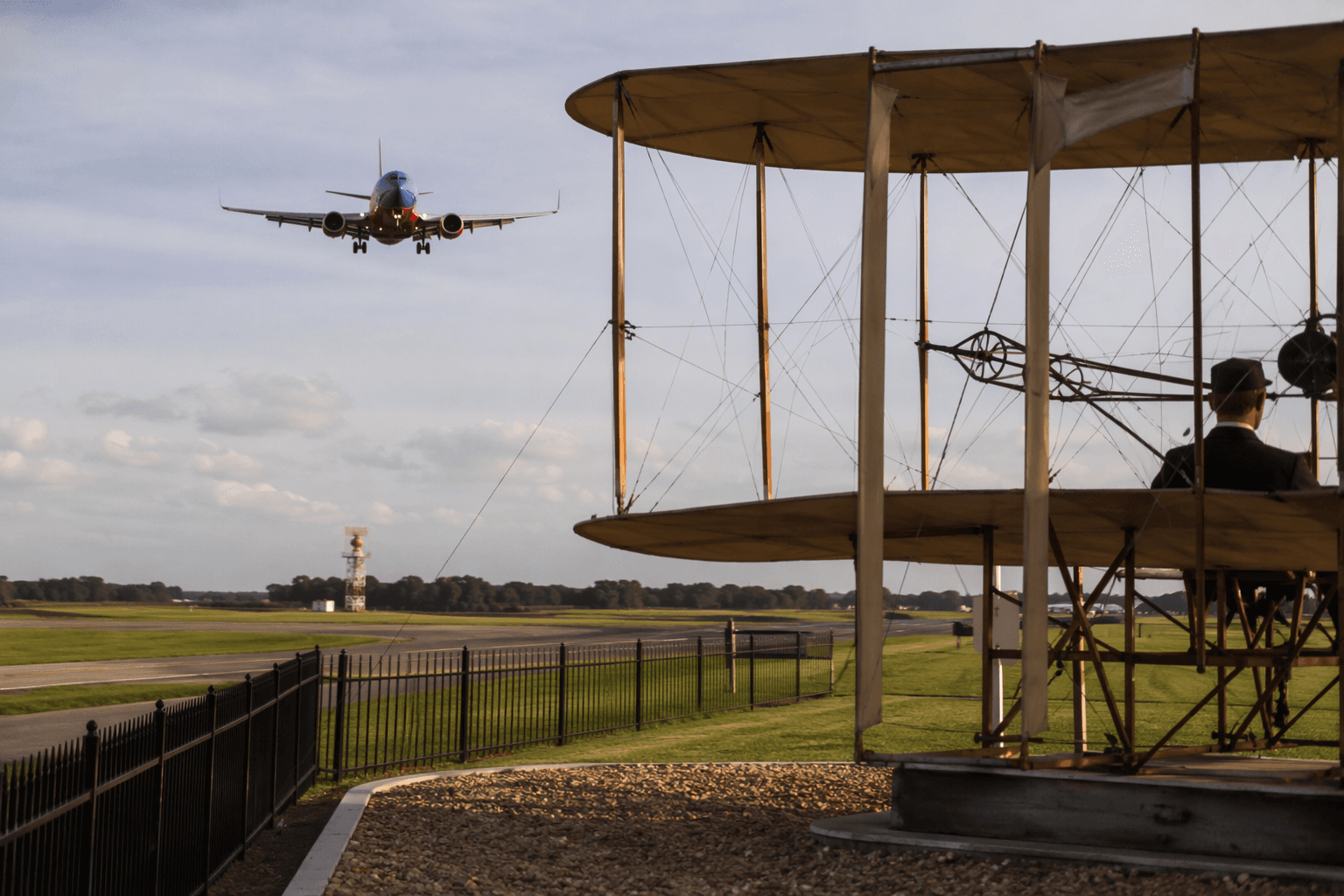
College Park Airport still functions as a real piece of transportation infrastructure in Prince George’s County, not just a museum stop. The field in College Park, Maryland, is described by the airport as the “world’s oldest continuously operated airport,” but it also handles active flights under some of the tightest airspace rules in the country. That combination makes it one of the county’s clearest examples of how preservation and present-day aviation can coexist, uneasily but successfully.
A working airport with exacting details
College Park Airport’s day-to-day operation is defined by concrete numbers, not nostalgia. Its FAA identifier is KCGS, the runway is 15/33, and the paved surface measures 2,680 feet by 60 feet. The airport sits at 48 feet above mean sea level, with CTAF on 122.975 and AWOS-3 on 121.225, details that make it clear this is an active aviation facility where pilots still coordinate takeoffs, landings, and weather checks.
Those specifics matter because the airport is small by modern standards and tightly integrated into the surrounding city. A 2,680-foot runway limits what kinds of aircraft can reasonably use the field, and the published frequencies show that local traffic still depends on radio discipline and weather reporting. For nearby residents and businesses, the airport’s size and operating profile help explain why it remains a low-volume general aviation field rather than a commercial hub.
Why the rules are stricter here than at most small airports
The airport sits inside the Washington, DC Special Flight Rules Area and the Flight Restricted Zone, which means pilots face security and communications requirements that do not apply at a typical county airport. College Park Airport’s MD-3 vetting procedures require a multi-step TSA process before a pilot can operate to or from the field, and that applies to the three general aviation airports in the restricted area. Federal regulation 14 CFR § 93.343 spells out the limits on aircraft operations to or from College Park Airport, Potomac Airfield, or Washington Executive/Hyde Field Airport unless a pilot meets the required conditions.
That framework is a direct reminder that access is controlled, not open-ended. In 2016, FAA and TSA streamlined the Maryland Three access policy, but the underlying reality remained the same: flying here takes advance preparation, not casual use. For county readers, that matters because the airport’s value depends on preserving a rare operating field while keeping it inside a security system built after September 11.
From Wright brothers work to modern aviation
The airport’s historical significance starts with the Wright brothers and the Army. The site opened in 1909 as a military demonstration site for Wilbur Wright and Orville Wright, and a National Air and Space Museum collection entry says flight operations at College Park began in 1907, when the Wright brothers instructed U.S. Army Signal Corps personnel there. A Prince George’s County historic sites summary sheet says the original Army leasing agreement dates to August 1909, and by spring 1911 four temporary wooden hangars stood on the site, with two more added that fall.
Those early details explain why College Park Airport carries more than local memory. It sits in the same lineage as the first mile-high flight by a powered airplane, the first female passenger, and the first controlled helicopter flight, all milestones associated with the field. Secondary historical sources place Henry Berliner’s controlled helicopter flight at the airport on June 16, 1922, adding a specific date to one of the site’s most distinctive aviation achievements.
The airport’s story also links to broader federal science and aviation work. Historical sources connect the site to the National Bureau of Standards arriving in 1929, showing how College Park helped bridge early experimentation and later institutional aviation development. That mix of military, scientific, and civilian use is part of what makes the airport unusually relevant in Prince George’s County today.
Preservation is not passive here
College Park Airport’s historic status has long been part of local planning and preservation work. A Maryland historical document identifies it as the oldest continuously used airport in the United States, and preservation references tied to the site date back to September 23, 1977. The airport also sits within a wider cultural network that includes the College Park Aviation Museum and the Field of Firsts Foundation, both of which help interpret why the field matters beyond a single neighborhood.
Preservation, though, does not mean freezing the airport in place. A College Park Airport Safety Project presentation outlined an airport layout plan development and obstruction analysis in 2012, followed by runway renovation and FAA and Maryland Aviation Administration threshold recommendations in 2019. Those phases show that keeping the airport viable has required ongoing engineering, compliance work, and coordination with aviation authorities, not just interpretive displays.
Development pressure has a direct impact on safety
The airport’s surroundings remain part of the story because land use nearby can affect flight safety. Planning materials from the University of Maryland and local agencies show the area around the airport has been part of continued redevelopment discussion, and a 2025 AOPA article said proposed construction threatened safety at College Park Airport. In a field where obstacle clearance and runway thresholds are already tightly managed, even nearby building proposals can become aviation issues, not just zoning debates.
That is why county readers should care now. College Park Airport is not only a reminder of Prince George’s County’s role in aviation history, it is a live case study in how a small field operates under modern security rules while facing pressure from growth around it. Its future depends on whether preservation, safety, and development can stay aligned, because the airport’s value comes from both its age and its ability to keep flying.
This article was produced by Prism’s automated news system from verified source data, official records, and press releases, then run through automated quality and moderation checks before publishing. The system is built and supervised by the people who set the standards it runs under. Read our full AI policy.
Did this article answer your question?