Family Sues Korean Air After Oxygen Mask Failed During Fatal In-Flight Emergency
An oxygen mask that wasn't connected to any supply. That's what Korean Air gave Porscha Brown, 33, of PG County as she collapsed at 35,000 feet.
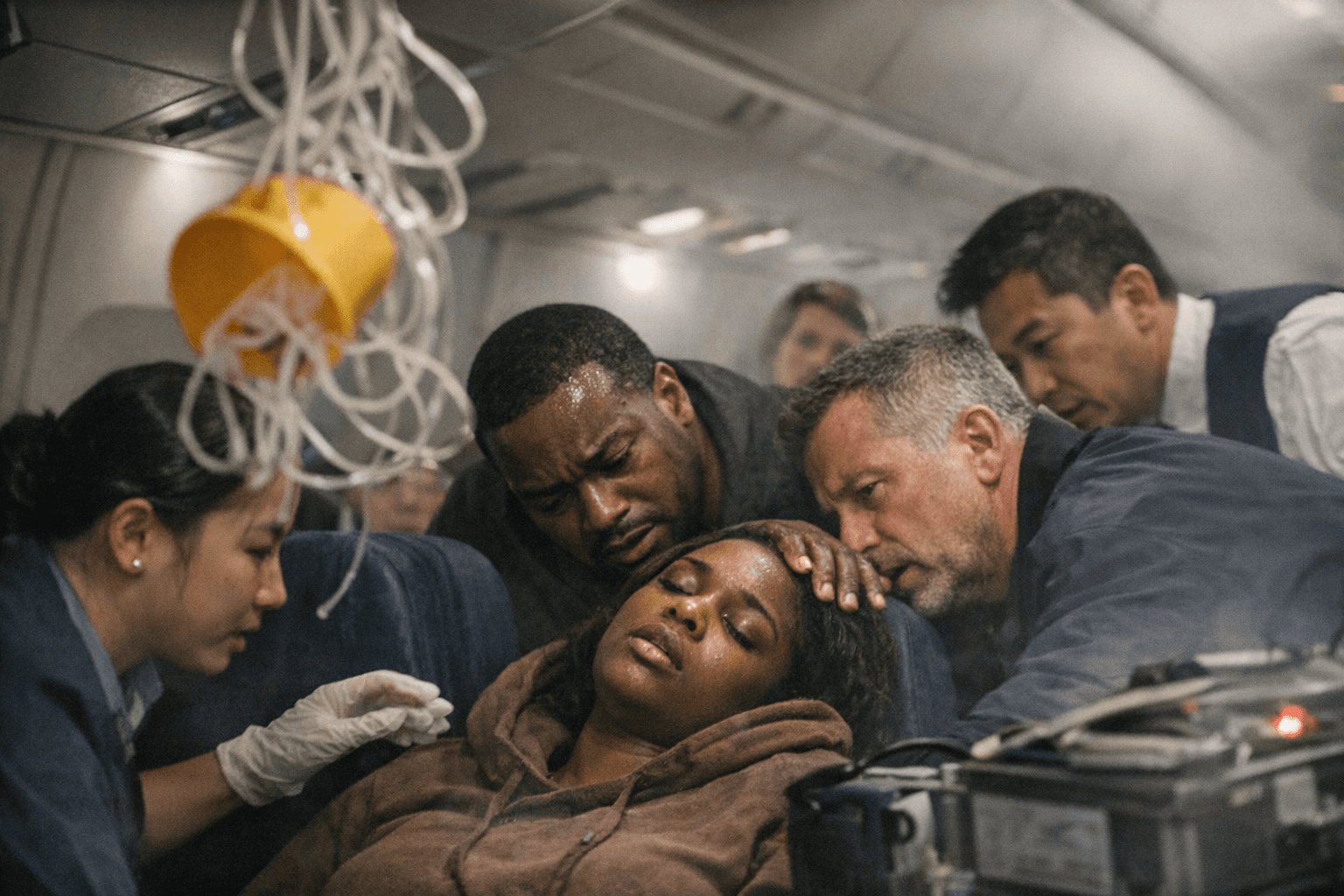
The oxygen mask a Korean Air flight attendant placed over Porscha Tynisha Brown as she gasped "I can't breathe" was never connected to any oxygen supply. That failure, a federal wrongful death lawsuit now alleges, killed the 33-year-old Prince George's County woman at cruising altitude while her friends watched helplessly.
Brown worked as a civilian safety specialist for the U.S. Department of Defense at Fort Belvoir, Virginia, where four days before her March 29, 2024 death her command recognized her with an excellence award, an honor later renamed in her memory. She had boarded Korean Air Flight KE94 at Washington Dulles International Airport that Friday with three friends, heading to Seoul for a vacation she would not return from.
About 12 hours into the transpacific flight, shortly after the second meal service, Brown told her companions she wasn't feeling well, then told both friends and crew she couldn't breathe before collapsing. Eyewitnesses discovered after the flight that the mask crew had provided was never attached to an oxygen source. The lawsuit states Brown "would have in all likelihood survived" had the crew responded correctly.
The suit, Gormly v. Korean Airlines Co., Case No. 1:26-cv-00845, was filed April 2, 2026 in U.S. District Court for the Eastern District of Virginia in Alexandria. Charles Gormly serves as special administrator of Brown's estate. The legal team includes Charles B. Molster III, a trial attorney with 42 years of practice in that court, alongside Darren Nicholson and Hannah Crowe of Burns Charest LLP.
"Basic, well-established safety procedures were not followed," Molster said. "This case involves a cascade of preventable failures that cost a young woman her life." Nicholson framed it as a matter of corporate accountability: "Airlines have a duty to protect their passengers, especially during medical emergencies. Ms. Brown deserved that care, and her family deserves answers." Crowe described Brown as "a really accomplished and beloved member of her community" whose death brought "shock and pain" to her family, friends, and coworkers.
The suit proceeds under the Montreal Convention, an international airline liability treaty that sets automatic carrier responsibility for proven damages up to roughly $175,000 without requiring passengers to prove fault. For claims above that threshold, Korean Air would need to demonstrate the accident was not caused by its own negligence. The airline said it will "faithfully respond to legal procedures" but declined further comment. The suit seeks damages for wrongful death, pain and suffering, lost future earnings, and medical expenses.
Burns Charest has secured this kind of verdict before: Nicholson and Crowe were part of the team that won a $9.6 million jury verdict against American Airlines in California, in a case where crew failed to follow the airline's own procedures after a passenger suffered a stroke shortly after takeoff and was left paralyzed.
In-flight medical emergencies occur roughly once every 212 flights globally, and survival rates for cardiac arrest at altitude are significantly lower than on the ground. Aviation attorney Abram Bohrer, who specializes in airline cases but is not involved in Brown's lawsuit, has noted that flight crews often lack proper training for medical emergencies. Commercial carriers are required under aviation regulations to maintain basic emergency equipment on board and to have crew trained in its use; the lawsuit argues Korean Air's crew failed that standard entirely.
Brown is survived by her parents, a brother, and two young nephews. The case now proceeds in federal court, where the legal team will argue that the woman who spent her career enforcing safety standards for the Defense Department died because a flight crew could not execute a basic emergency oxygen procedure.
This article was produced by Prism’s automated news system from verified source data, official records, and press releases, then run through automated quality and moderation checks before publishing. The system is built and supervised by the people who set the standards it runs under. Read our full AI policy.
Did this article answer your question?