Potomac Interceptor Repairs Complete, Prince George's Drinking Water Safe
After 55 days of around-the-clock work, DC Water restored flow to the 72-inch Potomac Interceptor; E. coli had reached nearly 12,000 times safe levels.
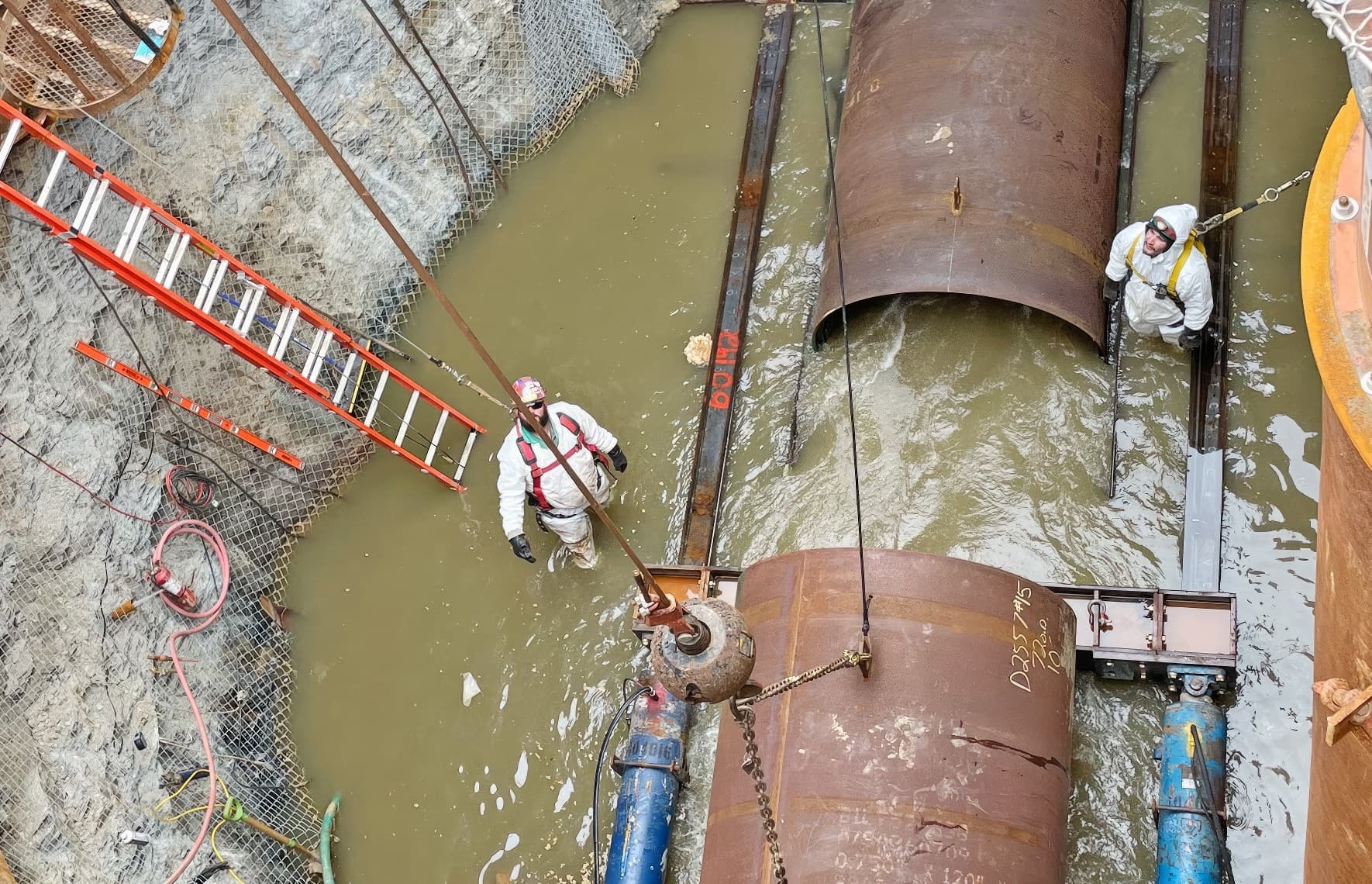
Fifty-five days after a 72-inch sewer pipeline ruptured along Clara Barton Parkway in Montgomery County, DC Water lifted a steel bulkhead gate by crane, shut down bypass pumps, and declared emergency repairs to the Potomac Interceptor complete — with Prince George's County confirming that drinking water service throughout the county remained safe and uninterrupted throughout the crisis.
The repair sequence unfolded over the weekend of March 13-15. Crews announced the completion of emergency repairs on Friday night, March 13. After testing water in the area Saturday morning, DC Water removed the bulkhead gate and shut down the bypass system around noon. "Full flow has been restored and the C&O Canal has been fully drained as part of site restoration," the agency announced. The Interceptor, a 54-mile regional sewer pipeline built in the early 1960s, carries wastewater from Loudoun County and Fairfax County in Virginia and portions of Montgomery County, Maryland, to the Blue Plains Advanced Wastewater Treatment Plant in Washington, D.C.
"This operation was extremely challenging, but our teams rose to the occasion, working tirelessly through harsh weather and tough conditions. Their expertise, dedication, and collaboration were key to our success," said David L. Gadis, DC Water CEO and General Manager.
Prince George's County residents were never at risk of contaminated tap water, the county said, because most drinking water in the region comes from the Potomac Water Filtration Plant, which sits upstream from the collapse site on Clara Barton Parkway. DC Water and regional partners continued monitoring water quality throughout the repair period. The severity of the Potomac River contamination itself, however, was striking: testing conducted in the days after the January 19 rupture found E. coli levels nearly 12,000 times higher than what is considered safe for human contact, with millions of gallons of raw sewage having discharged into the river.
DC Water spokesperson Sherri Lewis said investigators identified an unexpected complication rooted in the pipeline's original 1960s construction. "The rocks and the boulders that were backfilled from the original construction exacerbated the situation that we had here because they blocked the entire pipe," Lewis said. "That's not something you would normally see under standard industry backfill practices." Lewis added that the agency is now examining other sections of the Interceptor to prevent a recurrence.
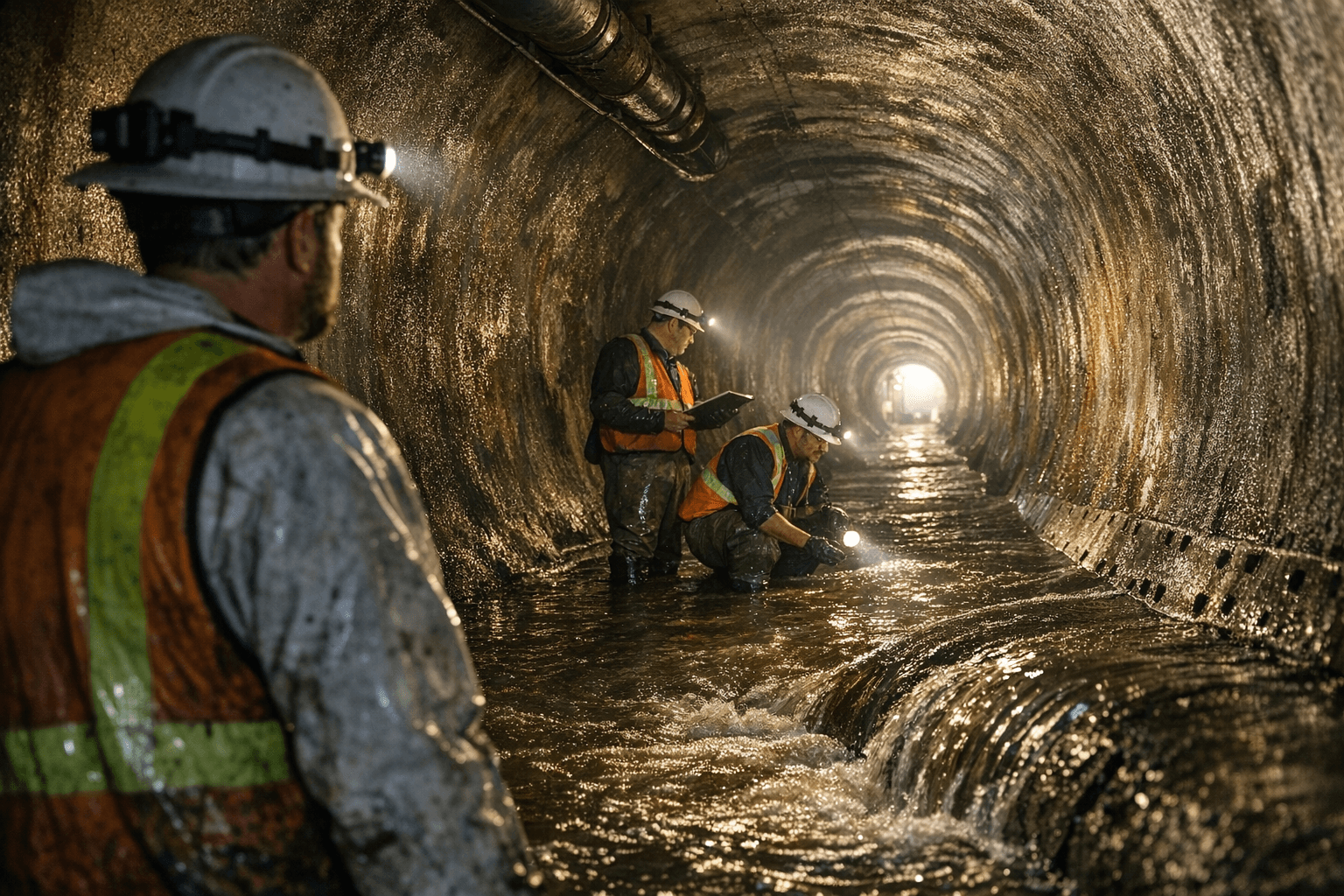
With flow restored, DC Water turned immediately to two parallel workstreams: environmental remediation and structural reinforcement. Crews began flushing the C&O Canal with freshwater from the Potomac River, followed by debris clearing, mucking, and removal of contaminated soil. Water held at Violet's Lock is being used to flush the canal through openings the repair crews had used during bypass operations. Separately, DC Water said it is accelerating a previously planned rehabilitation of more than 2,700 linear feet of pipe through a process called slip lining, in which new pipe sections are pushed into place through openings retained in the trench boxes using a mechanical system not yet installed.
At a press conference March 18 at Lock 10 of the C&O Canal, the EPA called the completion "a moment to celebrate" and said repairs finished a week ahead of schedule. Jessica Kramer, assistant administrator for the Office of Water at the EPA and the federal response's senior official, noted that President Donald Trump had pledged the Interceptor would be fixed by March. "His administration delivered ahead of schedule, despite multiple and significant intervening severe weather events; and the results speak for themselves," Kramer said. She added that completing environmental remediation in time for America 250 activities remains the next benchmark.
Lewis acknowledged that the hardest work may still be ahead. "It's been a lot of hard work, and I think everybody is really excited to get to this point," she said. "We still have a lot of work ahead.
This article was produced by Prism’s automated news system from verified source data, official records, and press releases, then run through automated quality and moderation checks before publishing. The system is built and supervised by the people who set the standards it runs under. Read our full AI policy.
Did this article answer your question?