Prince George's County Planning Board Opposes State Bill Targeting Regional Planning Agency
Ten former Prince George's County planning commissioners called SB1005 a "shocking reorganization" that could cost millions and destabilize pensions for 5,000 employees.
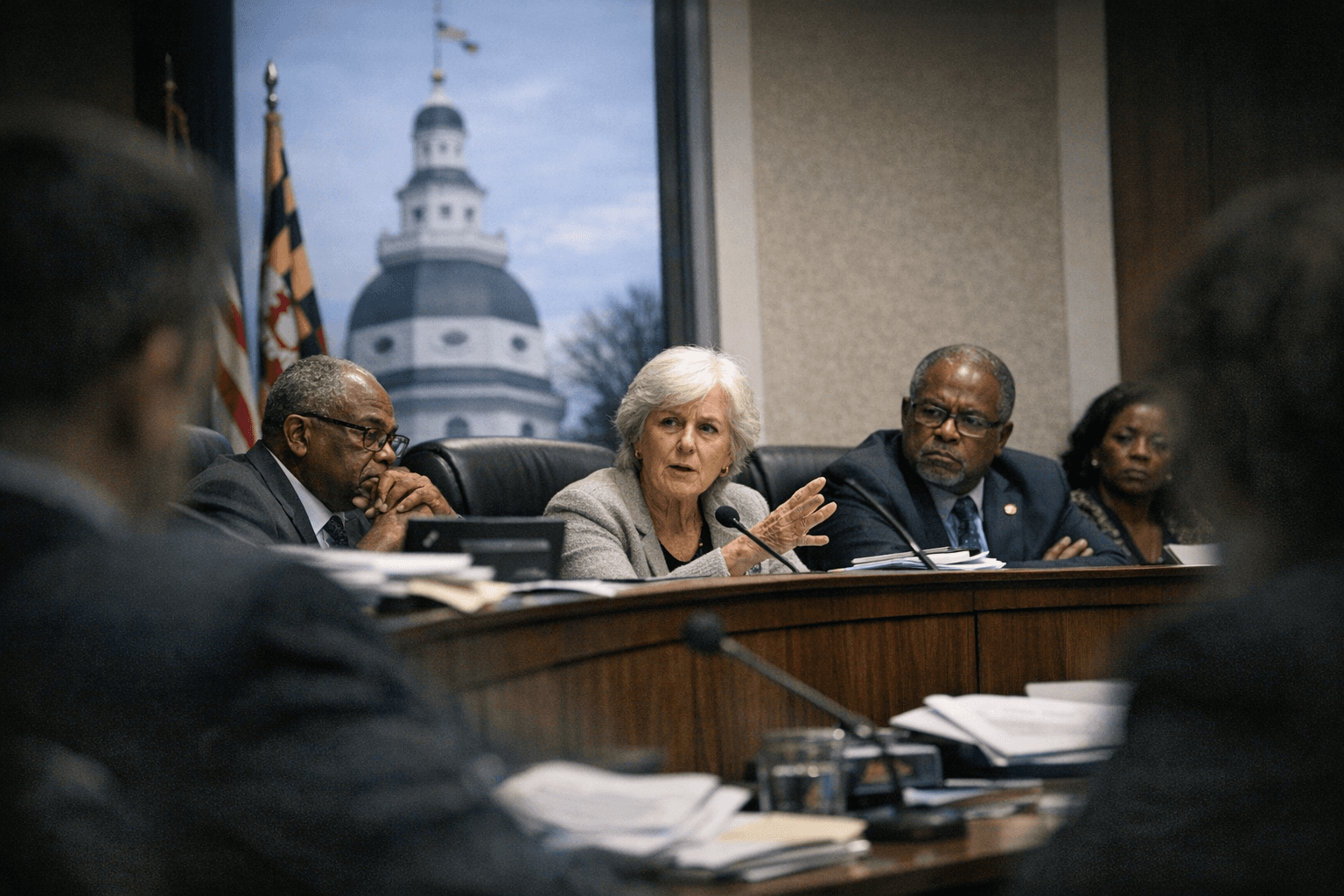
Ten former members of the Prince George's County Planning Board, including multiple former chairs and vice chairs, are calling state Senate Bill 1005 a "misguided attempt to fix something that isn't broken" — and the legislation now faces a Senate committee hearing as opposition from planning officials on both sides of the county line continues to grow.
SB1005, formally titled the Maryland-National Capital Park and Planning Commission General Counsel and Powers of Local Planning Boards - Alterations Act, would repeal the requirement that M-NCPPC appoint a general counsel and instead require the Montgomery County and Prince George's County planning boards to each appoint their own legal counsel for commission operations within their respective counties. The bill was introduced February 24, 2026, and is pending before the Senate Education, Energy, and the Environment Committee, with a hearing scheduled for March 26.
The former commissioners' letter, addressed to the Montgomery and Prince George's delegations, used language rarely heard from veteran planning officials. They called the measure "a shocking reorganization," "a duplicative bureaucracy," and warned it would produce "millions of dollars in waste." The group cautioned that SB1005 would fracture the agency's unified legal, HR, finance, procurement, and inspector general functions, systems they noted have earned national awards and currently support more than 5,000 employees and retirees. They also warned that destabilizing the commission's pension system could expose Prince George's County taxpayers to long-term liabilities.
M-NCPPC was founded in 1927 and holds geographic authority across both Montgomery and Prince George's counties, the two Maryland jurisdictions surrounding Washington, D.C. Cleaving its administrative functions by county, opponents argue, would unwind nearly a century of shared infrastructure.
The Montgomery County Planning Board, which outlined its position at its March 12 meeting in Wheaton, has formally voted to oppose the bill and urged the General Assembly to reject it outright. In its statement, the board said SB1005 "would effectively dismantle the Commission by decentralizing legal, financial, and other administrative services that depend on coordinated bi-county operations," and warned the resulting duplication "could cost millions of dollars each year, while weakening regional coordination on land use, transportation, parks, and environmental planning."
The Prince George's County Planning Board's position has been less clearly defined. A meeting transcript records a motion, roll call vote, and a declaration that the bill had been approved by the board, with Vice Chair Manuel Geraldo, Commissioner Brittany Jenkins, Commissioner Lori Matthews, and at least one other member voting in favor. Jenkins and Matthews were sworn in on March 17 and March 18, 2026, respectively, appointed by County Executive Aisha N. Braveboy. The two new commissioners joined Chairman Darryl Barnes, Vice Chair Manuel Geraldo, and Commissioner Billy Okoye on March 19 for their first board meeting.
The speaker who moved to support the bill acknowledged the stakes in the transcript: "I'll admit that I've been conflicted," the board member said, before arguing that SB1005 "gives Prince George's County the independence to put our residents first" and "keeps the commission intact and our people protected." The bill numbering in that transcript is inconsistent, with references to "SB10005" and "Senate Bill 105" appearing in the same discussion, and the official meeting minutes have not yet been released to reconcile those discrepancies.
Jordan Balkam Colbert, identified in a board meeting as the senior government affairs analyst in M-NCPPC's office of general counsel, presented an overview of the bill to the board, describing its central purpose as repealing the agency-wide general counsel requirement in favor of county-level legal appointments.
The competing pressures on the Prince George's board reflect a broader tension within M-NCPPC: whether a governance model built over nearly 100 years of bi-county integration can be selectively restructured without fracturing the whole. The Senate committee hearing on March 26 will be the next test of whether the General Assembly is persuaded by those who say the commission is working as designed, or by those who believe Prince George's County has waited long enough to chart its own course.
This article was produced by Prism’s automated news system from verified source data, official records, and press releases, then run through automated quality and moderation checks before publishing. The system is built and supervised by the people who set the standards it runs under. Read our full AI policy.
Did this article answer your question?