Prince George’s County plaza stays fenced off months after completion
Prince George’s County spent about $10 million on Civic Plaza, but the fenced-off space in Largo still has not opened months after completion.

A $10 million public plaza built beside the Wayne K. Curry Administration Building in Largo was finished months ago, but residents still cannot use it. Civic Plaza remains fenced off, turning what county leaders promised as a community gathering place into a closed-off site that has become a test of accountability for Prince George’s County Government.
The plaza was supposed to open in December 2025 after the county broke ground on April 9, 2025, but it stayed shut after completion. County and Maryland Stadium Authority materials described the project as the first of five signature efforts in the Blue Line Corridor revitalization strategy, a major redevelopment push centered in central Prince George’s County and tied to $400 million in bond authority approved by the state in 2022. The Maryland Board of Public Works approved the county-state memorandum of understanding in January 2023.
County officials had pitched Civic Plaza as a flexible public destination, not just decorative space in front of government offices. Plans called for a lawn and stage, playground, art walk, outdoor games, a butterfly garden, an enclosed dog park, and room for festivals and daily use. Residents took part in interactive design workshops in 2024, helping shape a project that was meant to serve county workers, nearby neighborhoods and visitors to Largo Town Center.
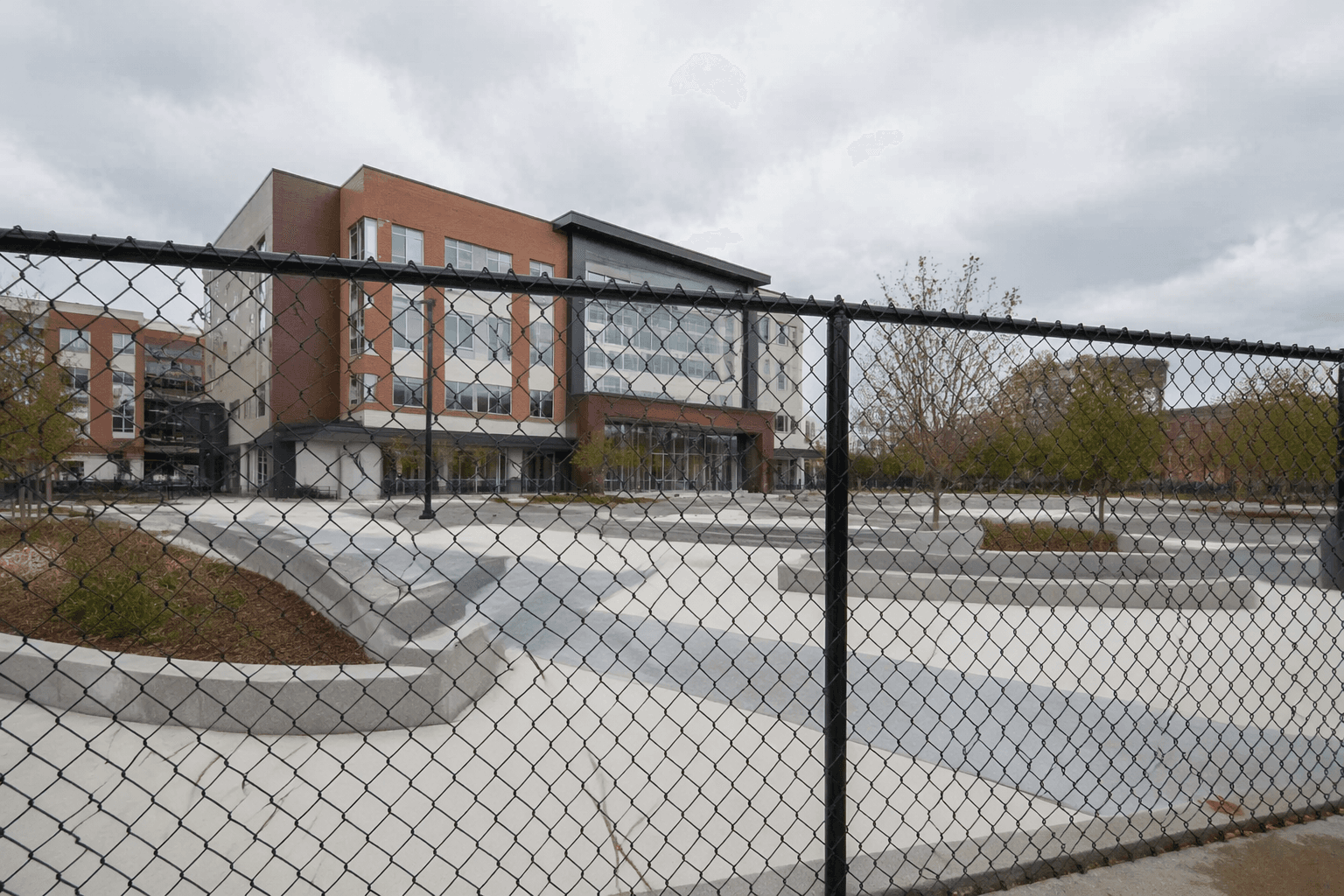
Instead, the site is now at the center of criticism over why a completed public amenity still cannot open. Reporting in early June showed the plaza still closed and drawing scrutiny over how the project was planned and why it had not been turned over for public use. The concern widened in May, when county officials said safety, liability and handicap accessibility issues meant the plaza would need to be redesigned, with some elements possibly torn down.
County officials also said the play equipment would be removed and donated. The county’s Office of Central Services said the fence was intended to prevent injuries and limit liability, but artist Graham Coreil-Allen disputed the safety explanation and said the public process that shaped the plaza was being disregarded. The project included a 14,000-square-foot mural, and there was disagreement over whether visible markings on a utility building were graffiti or art.

The dispute reflects a larger leadership and oversight problem. The project was advanced under former County Executive Angela Alsobrooks and carried into Aisha Braveboy’s administration, which chose to keep the public out while the plaza is being redesigned and reimagined. The Maryland Stadium Authority said a county official gave inaccurate information about the project, adding another layer of confusion around a development that was supposed to showcase progress. Instead, Civic Plaza has become a visible reminder that a public project can be completed on paper and still fail to deliver the space residents were promised.
This article was produced by Prism’s automated news system from verified source data, official records, and press releases, then run through automated quality and moderation checks before publishing. The system is built and supervised by the people who set the standards it runs under. Read our full AI policy.
Know something we missed? Have a correction or additional information?
Submit a Tip