Prince George's County touts growth, $1.5 billion in investment gains
Prince George’s County says $1.5 billion in leveraged investment proves its rise, but the real test is whether jobs and storefronts spread beyond National Harbor and the Blue Line.
The county’s growth story now faces its hardest test
Prince George’s County is selling itself as one of the Washington region’s fastest-changing economic engines, backed by about $1.5 billion in leveraged investment. The harder question for residents is whether that money is showing up in paychecks, open storefronts and easier commutes beyond National Harbor and the Blue Line corridor.
A bigger county makes a bigger claim
The pitch rests on scale as much as branding. Prince George’s County had an estimated population of 970,374 on July 1, 2025, which makes it one of the largest labor and consumer markets in Maryland. About 36.7% of residents age 25 and older held a bachelor’s degree or higher in the 2020 to 2024 estimate, and median household income was about $101,800, figures that support the county’s argument that it has the educated, comparatively affluent workforce needed to attract employers.
The labor market, though, is not without strain. The county’s unemployment rate stood at 5.4% in February 2026, a reminder that the growth narrative is being built in a mixed economy, not a boomtown. That is why county leaders keep emphasizing not just investment totals, but the practical returns they say follow from them: jobs created, jobs retained and the business activity that comes with them.
Where the jobs and money are landing
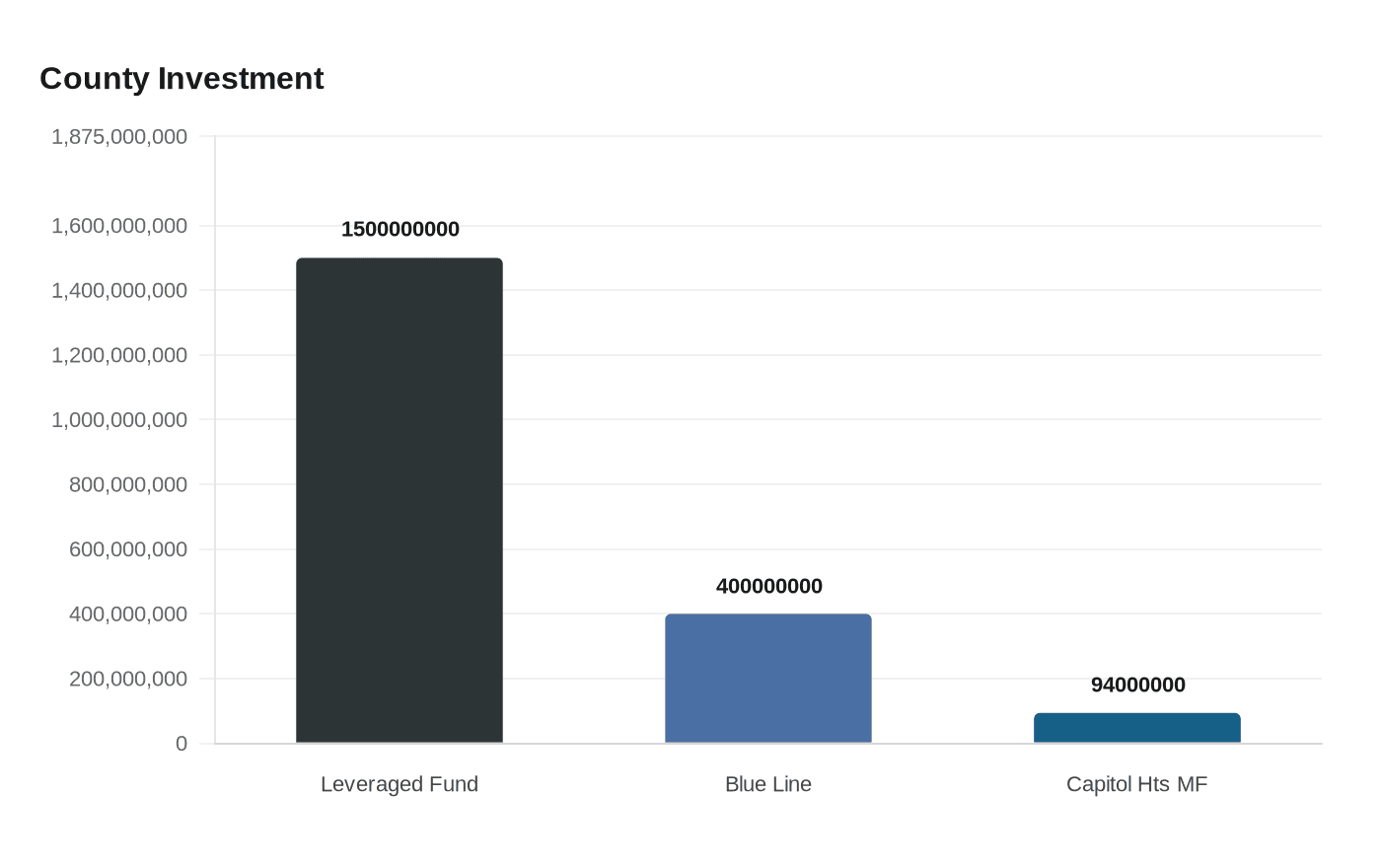
Prince George’s County Economic Development Corporation says the Economic Development Incentive Fund has helped leverage roughly $1.5 billion in investment and contributed to thousands of jobs created and retained. For local business owners, that matters less as a headline than as a signal that the county is trying to turn public incentives into visible activity on the ground.
County leaders point to a decade-long job record as evidence that the strategy is working. PGCEDC said Prince George’s County added 55,000 new jobs between 2011 and 2021 and led Maryland counties in job growth over that period. The agency also highlighted its 2024 Achievement Report, which said the Innovation Collaborative generated more than 200 new business partnerships and mentored more than 50 BIPOC- and women-owned startups.
That mix matters because it shows how the county wants to define success: not just ribbon cuttings for large projects, but a wider pipeline of local firms, suppliers and entrepreneurs that can grow around them.
The corridors telling the story
The places that keep showing up in the county’s economic pitch are the places that are already shaping daily life and commute patterns. National Harbor remains the marquee development, and the county describes it as its largest project, with 7.3 million square feet of space, 2,000 hotel rooms and 470,000 square feet of convention area. That scale makes it more than a tourism district. It is a regional employment center, a consumer draw and a symbol the county uses to argue that it can compete for private investment on its own terms.
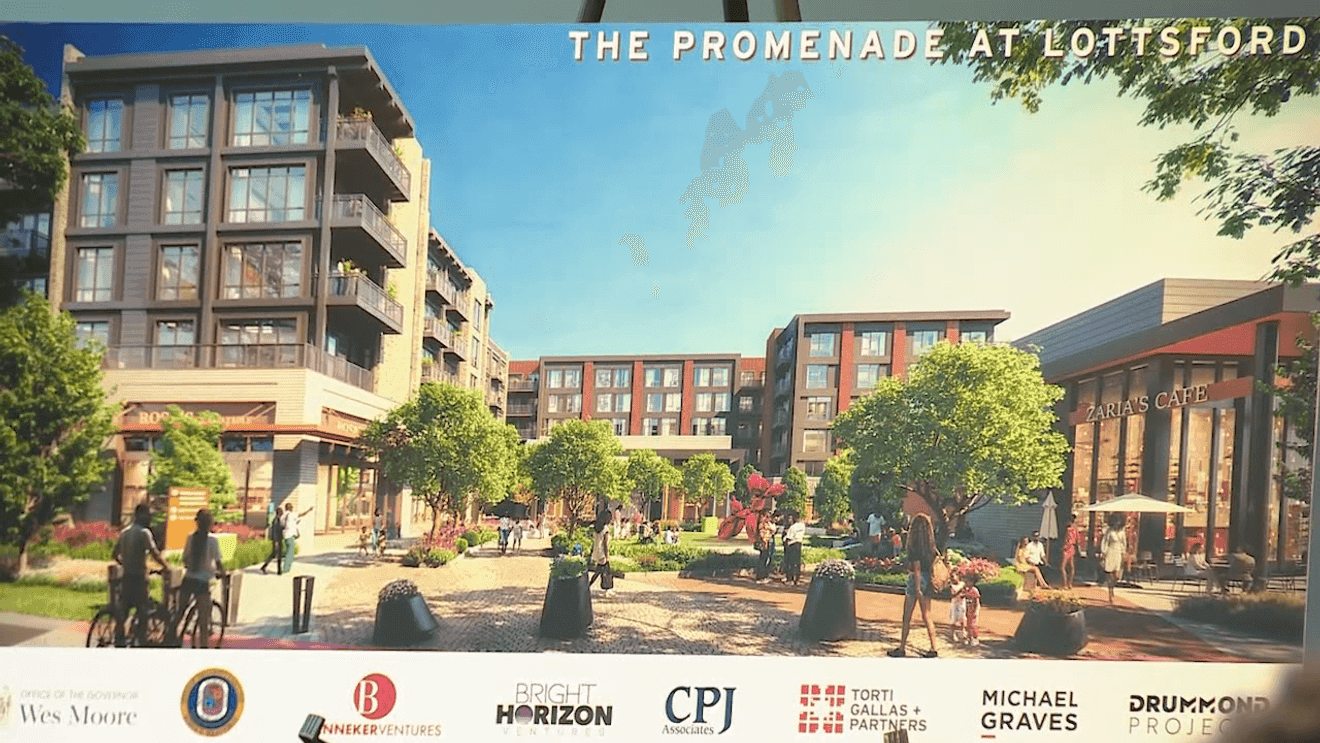
The Blue Line Corridor is the other major test case. PGCEDC has highlighted a $400 million Blue Line project that includes Largo Civic Plaza, along with a $94 million multifamily project in Capitol Heights tied to corridor revitalization. Those numbers point to a development strategy built around transit-oriented housing, retail and mixed-use growth, with the expectation that more people, more riders and more spending will follow.
College Park and the Innovation Corridor also remain part of the county’s economic geography. Those areas connect research, higher education, federal contracting and entrepreneurship, which is why county planners keep folding them into the same narrative as National Harbor and the Blue Line. In practice, those are the corridors where the county is deciding whether growth stays concentrated in a few headline districts or starts reaching deeper into surrounding neighborhoods.
Why the workforce argument is central
The county’s promotional case leans heavily on workforce development because that is where the long-term economic competition is likely to be won or lost. Prince George’s County is home to major institutional anchors, including NASA’s Goddard Space Flight Center, the University System of Maryland, Joint Base Andrews, WMATA and MGM National Harbor. Those employers help explain why county leaders keep describing Prince George’s not as a bedroom suburb, but as a regional hub with multiple economic engines.
That framing is also designed to appeal to investors looking for more than location. Proximity to Washington, D.C., has always mattered, but the county is now arguing that it can offer an educated labor force, room to grow and enough institutional depth to support industries such as technology, life sciences, aerospace, cybersecurity, advanced manufacturing, hospitality and entrepreneurship. The county’s economic development arm is betting that those sectors can reinforce one another, especially if local residents can move into better-paying jobs rather than being pushed to the edges of the region’s labor market.
The friction under the growth message
The growth story is not unfolding in a vacuum. In April 2026, the Prince George’s County Council introduced bills aimed at speeding permitting and making it easier to open and operate businesses, a direct response to complaints that the county’s process is slower than elsewhere in the region. That matters because even the strongest development pitch can stall if restaurant owners, small retailers and service companies cannot get through the system fast enough.
At the same time, the council approved new fees on liquor, gun, tobacco and self-storage businesses. That drew objections from some business owners and underscored a familiar tension in county politics: officials want to attract investment and encourage entrepreneurship, but they also need revenue and regulatory control. For business owners, the message is mixed. The county is promising easier entry while also adding costs in several sectors.
What comes next
The next public marker for this narrative is PGCEDC’s State of the Economy Breakfast, scheduled for June 4, 2026, at MGM National Harbor. County Executive Aisha N. Braveboy is expected to discuss the economic outlook, new development plans and workforce engagement, making the event another stage for the county’s effort to keep investors focused on its growth case.
That is the larger story here. Prince George’s County is not just celebrating investment gains; it is trying to prove that those gains are changing where jobs cluster, which corridors benefit and how residents experience the county’s economy in everyday life. The numbers are real, but the test is whether the momentum reaches more than the usual handful of showcase addresses.
This article was produced by Prism’s automated news system from verified source data, official records, and press releases, then run through automated quality and moderation checks before publishing. The system is built and supervised by the people who set the standards it runs under. Read our full AI policy.
Know something we missed? Have a correction or additional information?
Submit a Tip