Prince George's County's African American Heritage Sites, A Visitor's Guide
Prince George's County holds more than 300 years of African American history across a dozen named sites — from Bowie's Northampton Slave Quarters to Glenn Dale's Dorsey Chapel — most of which you can explore on your own today.
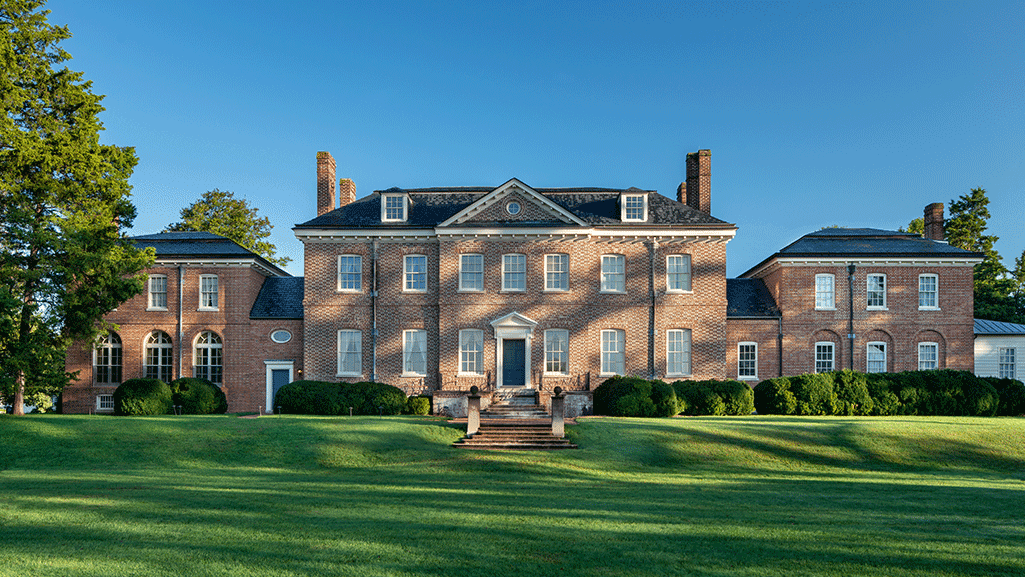
For over 300 years, African Americans have raised families and built communities that have been vital to the growth and development of Prince George's, Maryland and its history." That sentence, drawn from the county's own African American Heritage Sites Guide, barely scratches the surface of what is preserved here. Stretching from pre-colonial Native American settlements through the antebellum era, the Underground Railroad, the years of legal segregation, and the formative Black communities of the 20th century, Prince George's County holds one of the densest concentrations of African American heritage sites in the Washington metro region. This guide walks through those sites, their stories, and how to visit them.
A History Built Under Extraordinary Constraints
Before exploring the individual sites, it helps to understand the legal and economic landscape that shaped them. Free Black families living in the county prior to the Civil War were not able to acquire titles to land until the 1870s or later. That structural exclusion makes the survival of so many community-built structures all the more remarkable. Men and women established neighborhoods, established businesses, infused the cultural landscape through arts and technology, and built structures that have survived through years of change. The heritage sites documented across the county are physical proof of that persistence.
The African American Heritage Sites Guide
The county's African American Heritage Sites Guide is the practical starting point for any visit. African Americans have played a significant role in the history of Prince George's, Maryland, illustrated in numerous historical sites, schools, and settlements — all catalogued within it. The guide offers two ways to engage: it invites you to take a visual journey to those African American historic sites and buildings, whether through offered guided tours at specific locations or self-guided tours. The ExperiencePrinceGeorges tourism platform, which hosts the guide alongside Visit Maryland branding, frames the mission plainly: "Black history is America's history all year long."
History, Heritage and the Underground Railroad
Several of the county's most significant sites are directly tied to the Underground Railroad and the daily acts of resistance that preceded it. Maryland is recognized as one of the most powerful destinations for authentic Underground Railroad history, and is truly unique in the number of places that tell inspiring stories of the heroic men, women and children who fought for freedom from slavery along the Underground Railroad.
Northampton Slave Quarters and Archaeological Park
The most extensively documented site in the guide is the Northampton Slave Quarters and Archaeological Park, located at 10915 Water Port Court in Bowie (phone: 301 627-1286). The 1,000-acre Northampton plantation was originally granted to Thomas Sprigg in 1673 by Charles Calvert, the third Lord Baltimore, and was home to the Sprigg family, their servants, and enslaved African Americans. Numerous enslaved people escaped from Northampton plantation during the period when it was owned by the Sprigg family from 1800 to 1836. Runaway ads in Washington, D.C. newspapers document their attempts at freedom; Osborn Sprigg Jr. placed multiple ads in The Centinel of Liberty for both "Charles" and "Bob" in 1800.
Samuel Sprigg, governor of Maryland from 1819 to 1822, inherited Northampton around 1814-1815 after the death of his uncle, Osborn Sprigg Jr. The 1840 U.S. Census recorded 117 enslaved people at Northampton. Today, rebuilt foundations of two slave quarters and interpretive signs detail the lives of enslaved people who lived here. A paved path leads to four self-guided interpretive signs and the former foundations. The park is entirely self-guided and open to the public. Some freed African Americans and their descendants remained at Northampton as tenant farmers until the 1930s, and today many descendants of those enslaved there still reside in Prince George's County. The site is a member of the National Underground Railroad Network to Freedom.
Belair Mansion
Belair Mansion is the circa 1745 Georgian brick plantation house of Maryland's colonial Governor Samuel Ogle and his wife Anne Tasker Ogle. Located at 12207 Tulip Grove Drive in Bowie (phone: 301 809-3089), for more than 100 years, the Ogle and Tasker families living at Belair Mansion struggled to keep their enslaved people from running away. At least 50 enslaved people were at Belair at any time, and an inventory lists their names, ages, and sometimes their occupations. When open, the featured exhibit "African-American Slaves at Belair" tells the stories of resistance and flight. Belair is a member of the National Underground Railroad Network to Freedom. The mansion has been restored to reflect its 250-year-old legacy and is now listed on the National Register of Historic Places.
Darnall's Chance House Museum
Darnall's Chance was built in 1742 for James Wardrop and served as the home of many prominent tobacco merchants. The museum is located at 14800 Governor Oden Bowie Drive in Upper Marlboro (phone: 301 952-8010). The site depended on the labor of enslaved African Americans, and eight individuals attempted to gain their freedom by escaping from here in the 19th century. Programs and tours describe the site's enslaved African Americans and their families, who remained in the area following emancipation.
Elizabeth Keckly Burial Site
On May 26, 2010, a ceremony was held at National Harmony Memorial Park in Landover unveiling a memorial headstone marking the grave of Elizabeth Keckley, who is best known as the seamstress and confidante of Mary Todd Lincoln and author of "Behind the Scenes," though her largely forgotten work on behalf of newly emancipated enslaved people deserves equal recognition. Keckley devoted herself to raising funds and collecting donations for formerly enslaved people seeking refuge in Washington, and in 1862 she organized the Contraband Relief Association at Union Bethel AME Church, founding and serving as the first president of the group of forty volunteers. The burial site is located at National Harmony Memorial Park, 7101 Sheriff Road, Largo (phone: 301 772-0900).
Marietta House Museum
At the Marietta House Museum in Glenn Dale, you will find a replica of the home and land where multiple generations of both free and enslaved families lived and labored. The Federal-style house was built in 1812-1813 by enslaved labor under the ownership of Gabriel Duvall, Supreme Court Justice from 1811 to 1835, and the Duvall family maintained ownership until 1902. During the years before the Civil War, enslaved families including the Duckett, Butler, Jackson, and Brown families resided here; some sought freedom through flight, some through the courts, and some through deeds.
Community Institutions: Churches, Halls, and Parks
Beyond the plantation-era sites, the guide documents the institutions that African American communities built for themselves.
Abraham Hall, at 7612 Old MuirKirk Road in Beltsville, was constructed by the Benevolent Sons and Daughters of Abraham in 1889 and is located in the historic African American community of Rossville. It is the first African American historic site in Prince George's County to be fully restored utilizing public funds, and it served as a meeting hall, house of worship, school, and social hall before being renovated and re-dedicated in 2009 to house the Black History Program of the Maryland-National Capital Park and Planning Commission.
Built in 1900 as a Methodist church, Dorsey Chapel served as the social and spiritual center of Brookland, an African American farming community in Glenn Dale, located at 10704 Brookland Road. Distinguished by Gothic Revival and Queen Anne decorative elements and ornamental shingles on its principal gable, Dorsey Chapel is a rare surviving example of this type of architecture in Prince George's County. The congregation later merged with Perkins Chapel to form Glenn Dale United Methodist Church, and when Dorsey Chapel faced scheduled demolition in 1980, the Friends of Dorsey Chapel organized efforts to preserve and restore it.
Blacksox Park was once home of the Mitchellville Tigers and the Washington Blacksox, two local African American sandlot baseball teams. The 70-acre park, primarily designed for baseball and softball, has interpretive exhibits that keep that athletic legacy visible.
The full roster of named sites in the guide also includes St. Paul's (Free Hope Baptist) Church, St. Mary's Beneficial Society Hall, Mount Nebo Church, and the Charles Duckett Log Cabin, each representing a distinct thread of Black civic and spiritual life across the county's geography.
Planning Your Visit
The African American Heritage Sites Guide covers sites spread across the county, from Beltsville in the north to Glenn Dale, Bowie, Upper Marlboro, Largo, and beyond. For visitors planning a single day, the Bowie cluster — Northampton, Belair Mansion, and the area around Old Town Bowie — provides a concentrated route. Northampton Slave Quarters and Archaeological Park is open daily from sunrise to sunset. By transit, the site is accessible from the Largo Town Center Metro Station on the Blue Line, via Bus Route C26, with a short walk north on Lake Arbor Way to Lake Overlook Drive and then Water Port Court.
The ExperiencePrinceGeorges platform also promotes ongoing programming: special activities, programs, and events are held at the historic sites throughout the year, with International Underground Railroad Month in September bringing particular focus to sites like Northampton. Contacting individual sites directly is the surest way to confirm hours, tour availability, and any admission requests before you go.
The African American Heritage Sites guide, as one heritage traveler noted, invites visitors to take a closer look at buildings and sites associated with African Americans that have been overshadowed by grander buildings with extensive landscapes. That quiet instruction carries real weight. The structures documented here were built, and often preserved, by communities working against legal, economic, and social forces designed to erase them. Visiting them is the least complicated form of recognition.
This article was produced by Prism’s automated news system from verified source data, official records, and press releases, then run through automated quality and moderation checks before publishing. The system is built and supervised by the people who set the standards it runs under. Read our full AI policy.
Did this article answer your question?