Public Pushback Grows as USDA Reviews BARC Reorganization Plan
Documents published in December by the U.S. Department of Agriculture summarized public comments on the future of the Beltsville Agricultural Research Center (BARC), showing overwhelming local and elected-official opposition to vacating or reorganizing the facility. With a congressional reporting deadline for USDA budget decisions on January 11, the summary and a parallel national debate over staffing cuts have intensified pressure on the agency and clarified what is at stake for Prince George's County.
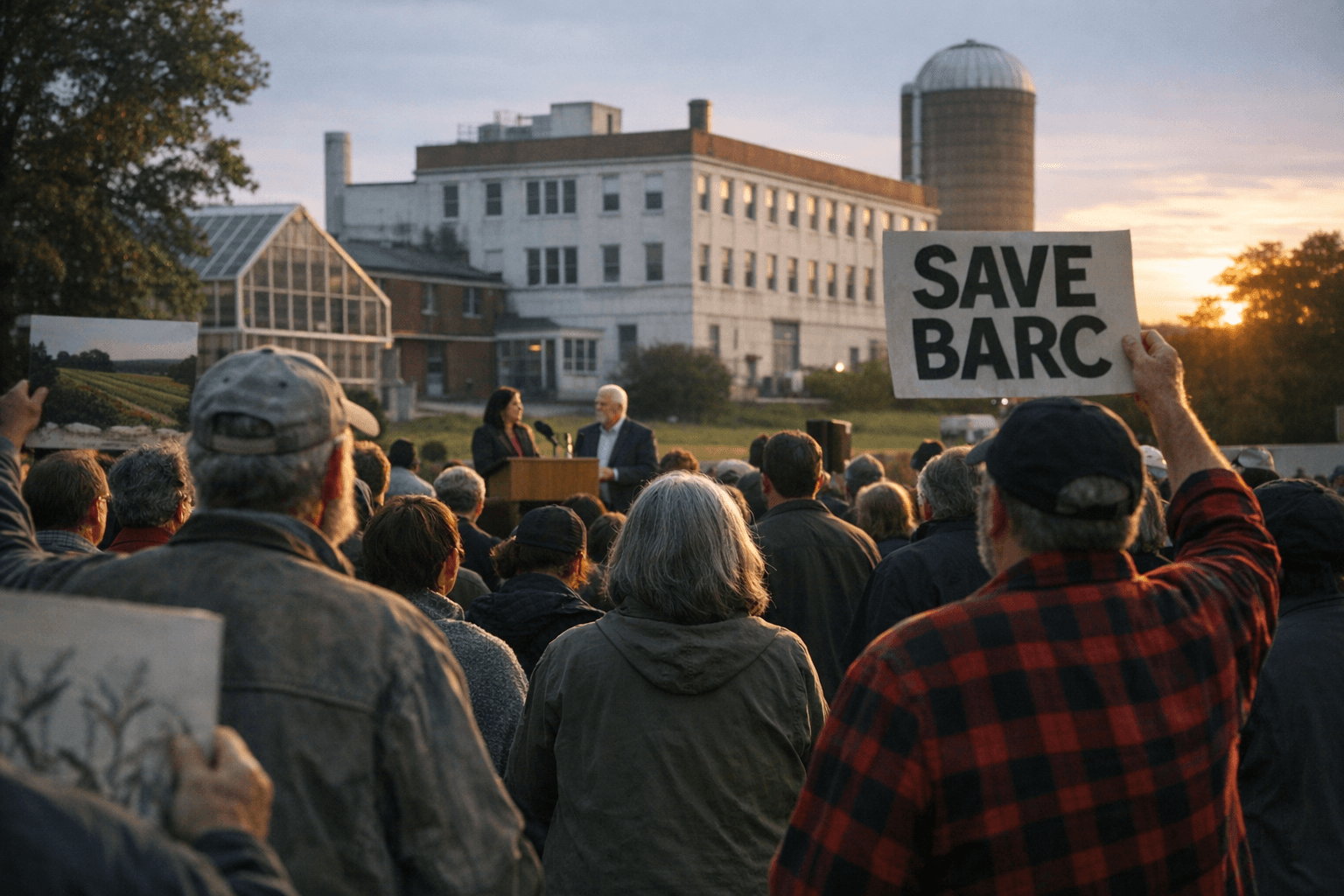
In December the U.S. Department of Agriculture released documents that summarized public input on its proposed reorganization, including a focused summary for the Beltsville Agricultural Research Center. Of 2,185 commenters identified in that summary for BARC, about 2,015 expressed strong opposition to vacating or reorganizing the facility, signaling broad local and political resistance as the agency prepares budget recommendations.
The USDA chose to publish only a small sample from the tens of thousands of total comments submitted on its reorganization plan, but the sample published for BARC emphasized recurring local themes: that the center functions as a core agricultural research hub; that moving or cutting operations would erode scientific capacity; and that the community strongly supports preserving research funding and staff. Those themes have been echoed in local advocacy efforts seeking to shield BARC from cuts or dispersal.
The timing of the documents is consequential. A congressional reporting deadline on January 11 requires USDA budget decisions to be laid out for members of Congress, and a separate, ongoing national debate over staffing cuts at the department has heightened scrutiny of how resources and personnel will be allocated. Together, the published comment summary and the staffing debate increase political and public pressure on USDA leadership as they decide whether to proceed with reorganization measures that could affect BARC.
For Prince George's County, the stakes are concrete. BARC is located locally and hosts scientific staff whose work underpins agricultural research, extension and potential partnerships with universities and private-sector producers. Community leaders and researchers have warned that losing concentrated capacity could slow scientific progress, reduce local employment tied to research and jeopardize long-term investments in food security and innovation. Local advocacy efforts documented in the USDA summary aim to preserve both funding lines and existing staff positions at the center.
Beyond immediate local consequences, the debate resonates with wider policy questions about how federal research priorities should be set and how dispersed or centralized scientific capability should remain. For a county that benefits from federal research presence, outcomes at BARC will shape economic, educational and environmental connections in the region.
As the January 11 deadline approaches, attention will turn to how USDA responds to the volume and tenor of public comment and whether Congress or local officials will be able to influence final budget and staffing decisions. For residents and employees tied to BARC, the coming weeks will determine whether the center’s role is reaffirmed or reconfigured in ways that could have lasting impacts on Prince George's County.
This article was produced by Prism’s automated news system from verified source data, official records, and press releases, then run through automated quality and moderation checks before publishing. The system is built and supervised by the people who set the standards it runs under. Read our full AI policy.
Did this article answer your question?