Riversdale Historic Site tells Prince George's County's layered past
Riversdale shows Prince George’s County how a grand mansion also holds the history of slavery, labor, and changing public memory. Its tours now frame the Calvert estate as more than architecture.

Riversdale Historic Site in Riverdale Park is one of Prince George’s County’s clearest places to read the county’s layered past in one landscape. The Calvert Mansion at 4811 Riverdale Road carries Federal-era architecture, family wealth, and the history of enslaved labor inside a site now treated as a major historic landmark.
A house built into the county’s record
Riversdale, also known as Calvert Mansion, was built in 1801 and later recognized as a preserved historic resource of unusual weight. The Maryland Historical Trust lists it as Inventory No. PG:68-5, says it was listed on the National Register of Historic Places on April 11, 1973, and records a National Historic Landmark date of Dec. 9, 1997.
The Riversdale Historical Society describes the mansion as a restored, five-part, stucco-covered brick plantation home built between 1801 and 1807. That description matters because it places the property in the architectural language of its era, while also making clear that it was built to serve as the center of an estate, not just as a showpiece. In a county filled with older buildings, Riversdale stands out because its formal recognition matches the depth of the story it can tell.
The Calvert family, and the land beneath them
The house was begun by Henri Stier, an aristocrat from Antwerp, and completed by his daughter Rosalie Stier Calvert and her husband George Calvert. George Calvert was the grandson of the 5th Lord Baltimore, a detail that ties the property to the elite colonial and early national history that shaped Maryland’s landholding class.
The original Riversdale property reportedly covered 729 acres, and Rosalie Stier Calvert and George Calvert moved into the mansion in the summer of 1803. That scale helps explain why the site still carries so much interpretive weight: it was not simply a home, but the center of an agricultural and social order that depended on land, status, and forced labor.
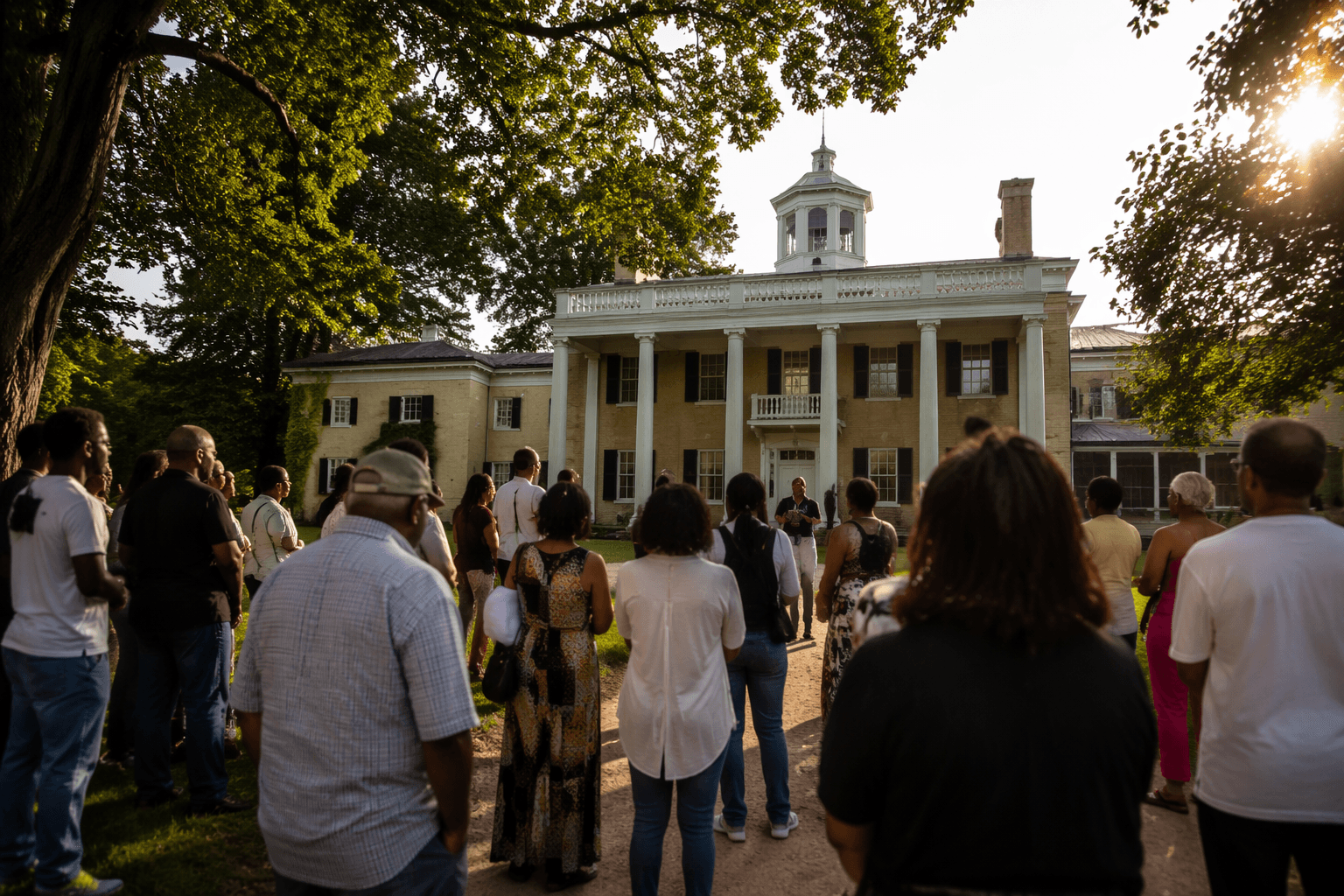
Riversdale’s value as a county landmark comes from that combination of family history and structure. The mansion reflects the ambitions of the Calverts, but the estate only functioned because of the people who worked it.
The labor history that can’t be left out
The Riversdale Historical Society says the workforce at the plantation included enslaved, indentured, and free men, women, and children. That broad labor mix is part of what makes the site more than a standard mansion tour, because it pushes visitors to look past the house itself and into the lives that sustained it.
Surviving letters from Rosalie Stier Calvert and documents preserved from her son Charles Benedict Calvert help tell that story. MD 250 says Riversdale offers more than 200 years of diverse stories, and notes that interpretation of the National Historic Landmark is shaped by private and public records that give a glimpse into the lives of enslaved individuals such as Adam Francis Plummer.
That interpretive choice is central to how the site works for today’s residents. The mansion still presents the visual appeal of Federal architecture, but the broader story now includes the people whose work made the estate possible, which gives Prince George’s County a sharper and less romanticized account of its past.
From plantation estate to Riverdale Park
Riversdale’s later history shows how the property moved from plantation land into the fabric of a growing suburban community. The Calvert heirs sold the estate in 1887 to developers who formed the Riverdale Park Company, and that company used the house as its surveyor’s office and headquarters.
That shift is one reason Riversdale matters as a local history site. It captures a larger county pattern: land once controlled by plantation families became the base for new development, new boundaries, and a new civic identity in Riverdale Park. The site’s long life makes it useful not only for understanding the early 19th century, but also for seeing how Prince George’s County was remade over time.
How to visit Riversdale now
Riversdale Historic Site & Museum remains an accessible local outing, whether the interest is architecture, family history, or public interpretation. The Riversdale Historical Society offers historic house tours with an introduction five minutes before departure, and tickets are sold at the Visitor Center.
Admission is $5 for adults, $4 for seniors and groups of 10 or more, $2 for ages 18 and under and students with ID, and free for children 4 and under. The grounds and gardens are open daily from dawn to dusk, giving residents a way to experience the property even when they are not taking a house tour.
That open-access landscape is part of the site’s civic value. Riversdale does more than preserve a mansion in Riverdale Park; it gives Prince George’s County a place to confront how wealth, architecture, slavery, and political influence shaped the county, and how public memory is now being widened to include the people once left at the margins.
This article was produced by Prism’s automated news system from verified source data, official records, and press releases, then run through automated quality and moderation checks before publishing. The system is built and supervised by the people who set the standards it runs under. Read our full AI policy.
Did this article answer your question?