UMD Professor Wins $1 Million Grant for Spintronics Research
University of Maryland researchers announced that Professor Cheng Gong received a $1 million single investigator grant from the Office of Naval Research to study atomically thin magnetoelectric materials and nanoscale spintronic devices. The work could lead to highly energy efficient memory and logic devices, a development with potential economic and workforce implications for Prince George's County.
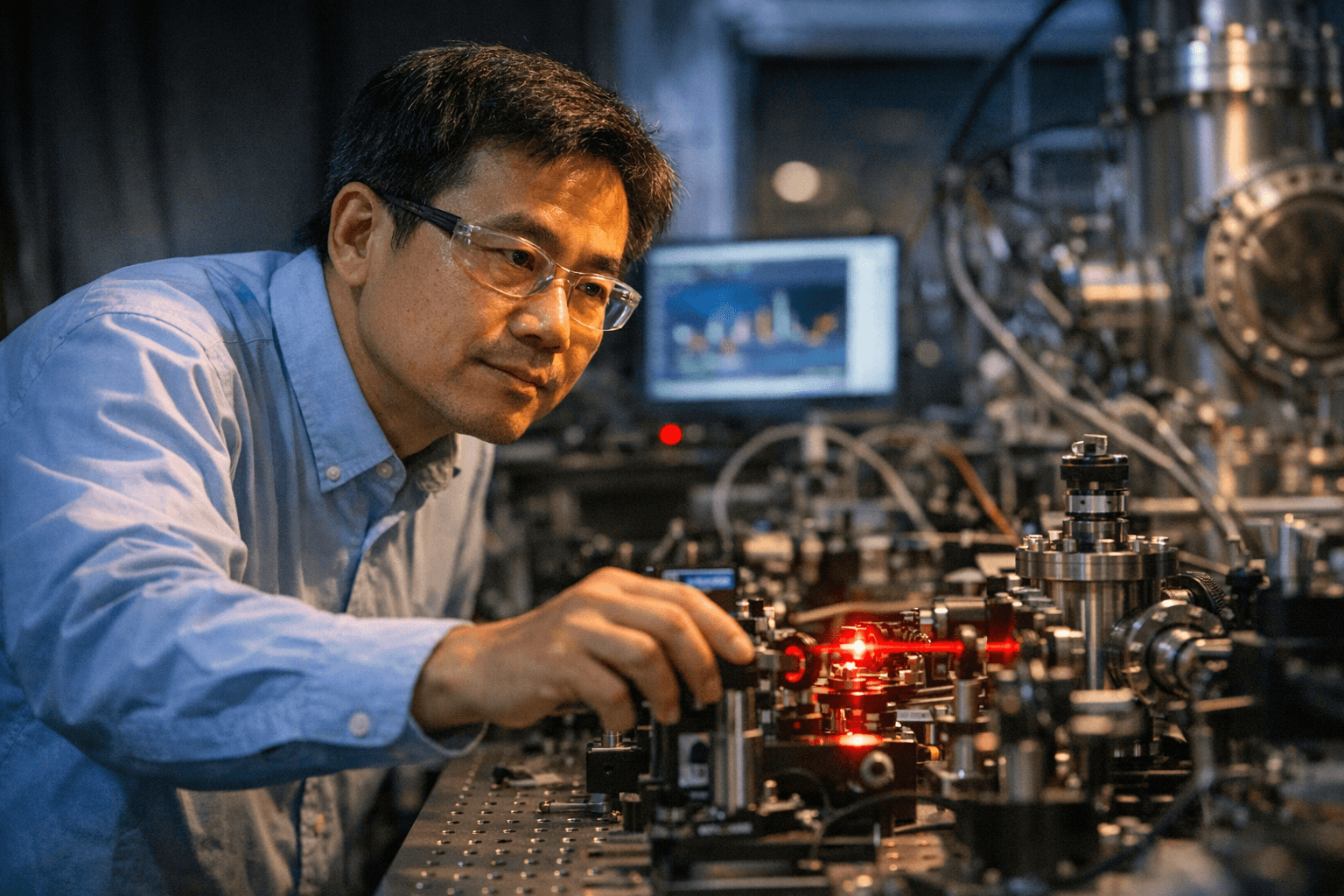
Professor Cheng Gong of the University of Maryland Department of Electrical and Computer Engineering received a $1 million single investigator grant from the Office of Naval Research on December 19, 2025 to advance research on atomically thin magnetoelectric materials and nanoscale spintronic devices. The project will be conducted in UMD nanodevice laboratories on the College Park campus, and it aims to build devices that manipulate electron spin rather than electrical charge.
The technical motivation for the work centers on reducing Joule heating that occurs when electrical charge is moved through conventional circuits. By minimizing charge flow and using electron spin to store and process information, spintronic devices promise much lower energy dissipation and dramatically smaller device footprints for memory and logic. The department release described the research as relevant to next generation computing and noted that it demonstrates UMD competitiveness for federal research funding.
Locally the grant signals continued investment in high technology research within Prince George's County, with potential benefits for students, early career researchers, and the regional innovation ecosystem. Work in university laboratories can lead to new training opportunities for undergraduate and graduate students, partnerships with local community colleges, and potential technology transfer that supports startups and job creation in the county. Federal funding from the Office of Naval Research also underscores national security and defense interest in energy efficient computing technologies.
There are broader policy and equity considerations for county leaders and university partners. Ensuring that workforce development programs reach residents from underrepresented communities could help distribute economic benefits more widely. Supporting affordable housing and transportation options near research hubs will make it easier for local talent to participate in emerging technology sectors. County officials and university administrators may also explore community science outreach to translate laboratory advances into tangible educational opportunities.
The grant funds work that could influence how future computing hardware is designed, and the experiments at UMD will contribute to a national research effort to build smaller, more efficient devices. As the project progresses in the coming months, its outcomes will matter to local students, workers, and policymakers who are watching how federal investment translates into regional opportunity.
This article was produced by Prism’s automated news system from verified source data, official records, and press releases, then run through automated quality and moderation checks before publishing. The system is built and supervised by the people who set the standards it runs under. Read our full AI policy.
Did this article answer your question?

