UMD Research Spending Tops $1.5 Billion, Ranks 14th Nationwide
The combined University of Maryland research enterprise reported more than $1.5 billion in research expenditures for fiscal year 2024 and climbed to No. 14 among all U.S. institutions in the National Science Foundation survey. The increase of roughly $154 million year over year signals growing investment in AI, quantum science, and translational medicine that could boost Prince George's County jobs, startups, and private partnerships.

The University of Maryland's combined research enterprise, encompassing the College Park and Baltimore campuses, reported more than $1.5 billion in research expenditures for fiscal year 2024 and earned a No. 14 ranking among all U.S. institutions in the National Science Foundation Higher Education Research and Development survey. The joint enterprise was No. 9 among public institutions, and the figure represented an increase of roughly $154 million from the prior year.
Officials framed the results as evidence that Maryland is expanding its research profile in fields with strong commercial and workforce implications. Growth areas cited included artificial intelligence and quantum science, with specific investments tied to the Capital of Quantum Initiative and the Artificial Intelligence Interdisciplinary Institute. University leaders also highlighted collaborative translational medicine facilities and recent entrepreneurship recognitions as strengths supporting technology transfer and spinout formation.
For Prince George's County the ranking matters for several reasons. The College Park campus sits within the county and serves as a major local employer and talent magnet. Higher research spending typically translates into more federal and industry grants, construction and lab procurement, and demand for specialized services that boost local firms. Research commercialization and entrepreneurship recognitions increase the likelihood that startups will form and remain in the region, supporting job creation in high wage STEM professions and strengthening the county tax base.
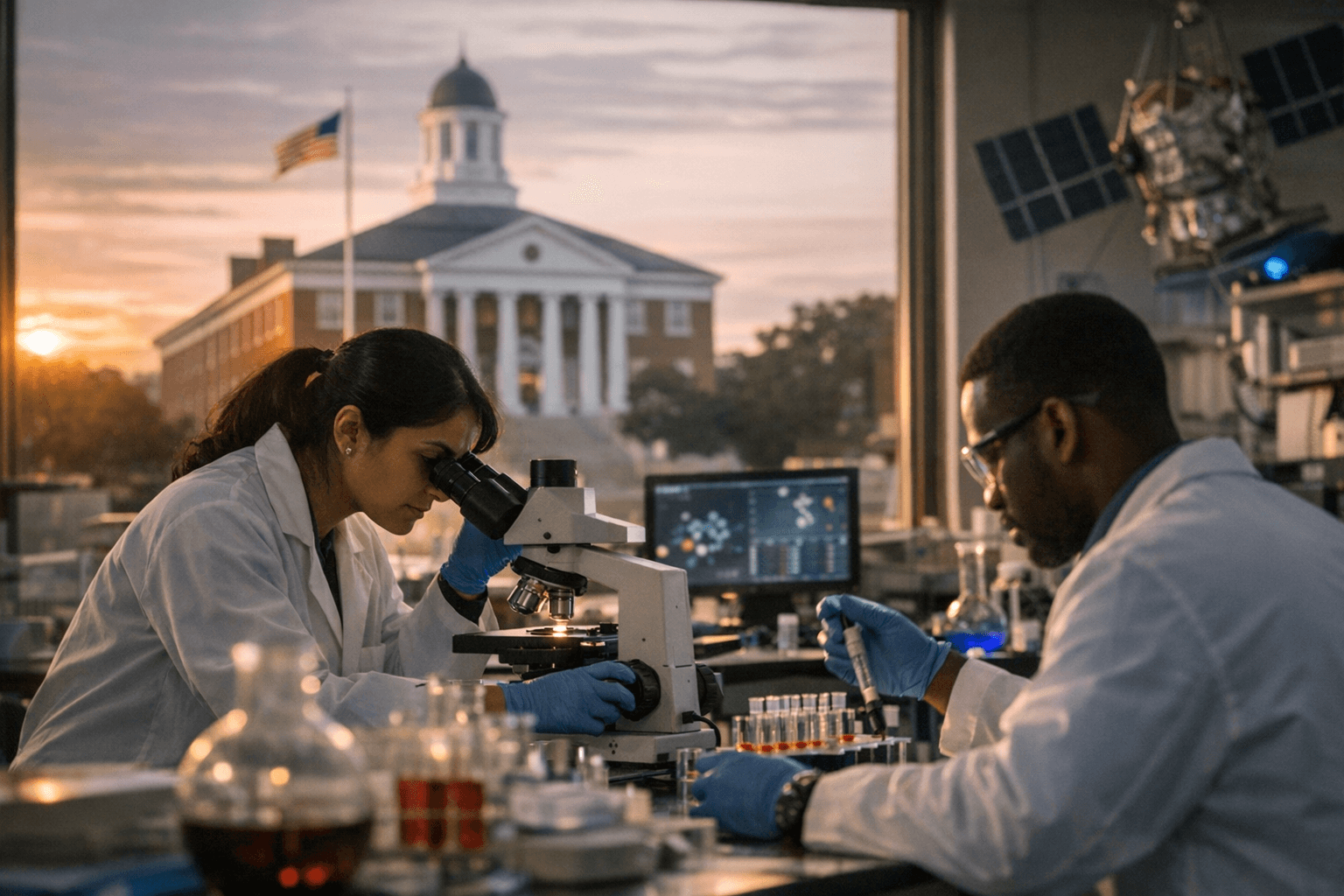
Market implications extend beyond immediate hiring. A sustained shift into AI and quantum research positions the university to capture larger shares of federal research dollars and private sector partnerships, both of which can accelerate venture funding and procurement spending in local supply chains. Translational medicine facilities create pathways for clinical trials and biotech collaborations that may draw health investment to the county level.
Policy implications for county and state officials include prioritizing workforce development programs that align with university strengths, ensuring adequate lab and commercial space, and coordinating transportation and housing strategies to retain researchers and entrepreneurs. Over the long term the trend toward concentrated investment in AI, quantum, and translational medicine suggests a structural shift in the regional economy that could raise average incomes and diversify Prince George's County industry mix if local policy and infrastructure keep pace with research growth.
This article was produced by Prism’s automated news system from verified source data, official records, and press releases, then run through automated quality and moderation checks before publishing. The system is built and supervised by the people who set the standards it runs under. Read our full AI policy.
Did this article answer your question?

