UMD Students and Prince George's Residents Voice Concerns Over Landover Data Center
More than a dozen UMD students and Prince George’s County residents spoke out at Jiménez Hall on Feb. 25, 2026, over a planned hyperscale data center on an 87-acre former Landover Mall site.
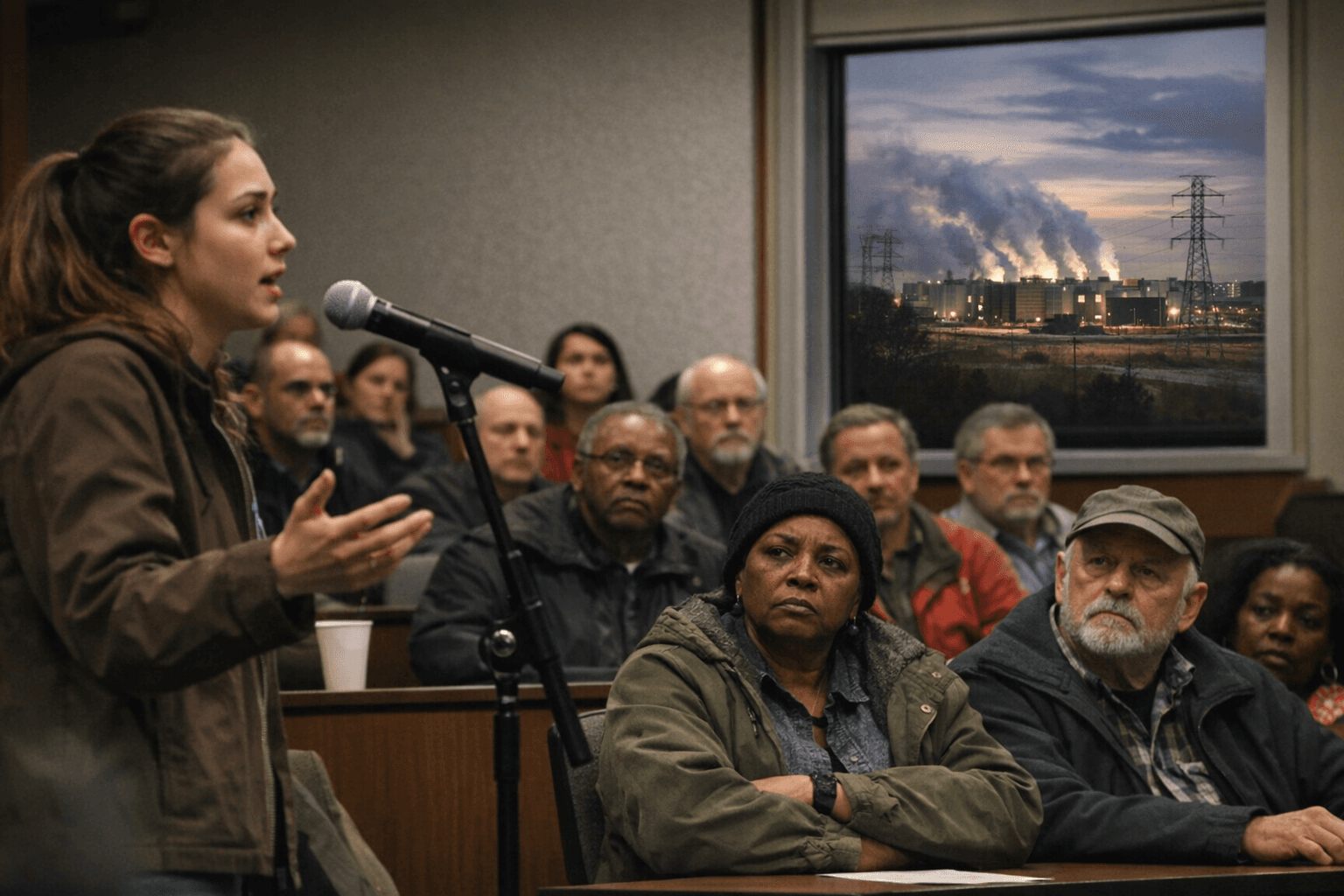
More than a dozen University of Maryland students and Prince George’s County community members spoke out at Jiménez Hall on Feb. 25, 2026, opposing a proposed hyperscale data center on the former Landover Mall site, and framed the issue as one of environmental justice and local sovereignty. The forum came after the Prince George’s County Planning Board approved the project in 2024, and speakers warned the approved 87-acre development threatens longtime community priorities.
The massive data center would be located on an 87-acre property that has stood empty for nearly two decades after the old Landover Mall was demolished, according to reporting from The Diamondback. Panelists and audience members at Jiménez Hall focused on the site’s history and the lack of clarity about the developer’s plans, citing the Planning Board approval but noting developers and county officials did not appear at the forum to answer residents’ questions.
Staci Hartwell, an environmental advocate with the South County Environmental Justice Coalition, told the forum, “I really do believe that this is a fight that determines whether or not we will have sovereignty over our lives,” and described the fight against data centers as “a fight for our souls.” Hartwell also told attendees she hopes the panel will inspire University of Maryland students to vote, tying the discussion about land use to civic engagement on campus.
Kwasi Brooks, a recent UMD graduate with a master’s in data science who lives in Prince George’s County, said his presence marked a return to local activism after graduation. “Its really important for me to do all the work on the ground that I can to try to make the community better, because I see it getting worse, and I see the ways that it could be better if only we had a little bit more organization,” Brooks said at Jiménez Hall. Brooks also argued that “part of the reason that Landover is a convenient place for billionaires to build data centers is that areas with high Black populations are overlooked,” linking racial and geographic equity to site selection.
Minutes from a separate municipal record, Cpdistrict2digest, show ongoing ties between UMD students and City Hall: Councilmember Mackie thanked UMD students who engaged at a recent civic engagement panel, and Mayor Kabir noted participation on a Greenbelt Coalition panel. The digest also lists local operational items that frame the county’s civic calendar: elections for Mayor and Council on November 4 from 8am – 8pm, early voting at David Hall on Sunday, November 2 from 11am – 4pm, and a city Fall Cleanup final day on Saturday, October 25 from 8am – 12pm. The digest further notes that residents must be 16 years of age by November 4 to be eligible to vote, information civic organizers may use to mobilize students and younger residents ahead of municipal decision points.
Organizers and speakers at Jiménez Hall identified clear gaps that remain: no developer statement was presented at the forum, Planning Board approval documents and conditions from the 2024 decision were not available to attendees, and a complete list of forum speakers and any panel transcript have not been released. Those records - the Planning Board’s 2024 decision documents, environmental and traffic assessments, and developer contact information - are necessary to test speakers’ claims and to assess projected impacts on local infrastructure and neighborhoods.
Photographs of the Feb. 25 gathering at Jiménez Hall show attendees talking as they waited to learn more about the proposed data center, underscoring community demand for detail and accountability. Until county records and developer plans are made public, community advocates say the battle over the 87-acre Landover site will continue to center on questions of sovereignty, racial equity, and whether municipal and county processes adequately protect neighborhoods adjacent to large industrial-scale projects.
This article was produced by Prism’s automated news system from verified source data, official records, and press releases, then run through automated quality and moderation checks before publishing. The system is built and supervised by the people who set the standards it runs under. Read our full AI policy.
Did this article answer your question?