Archaeologist identifies unmarked Native American burial mound in Marks, Quitman County
An unmarked burial mound in Marks survived under later burials, showing Quitman County sits on a deeper Native landscape than many people realize.
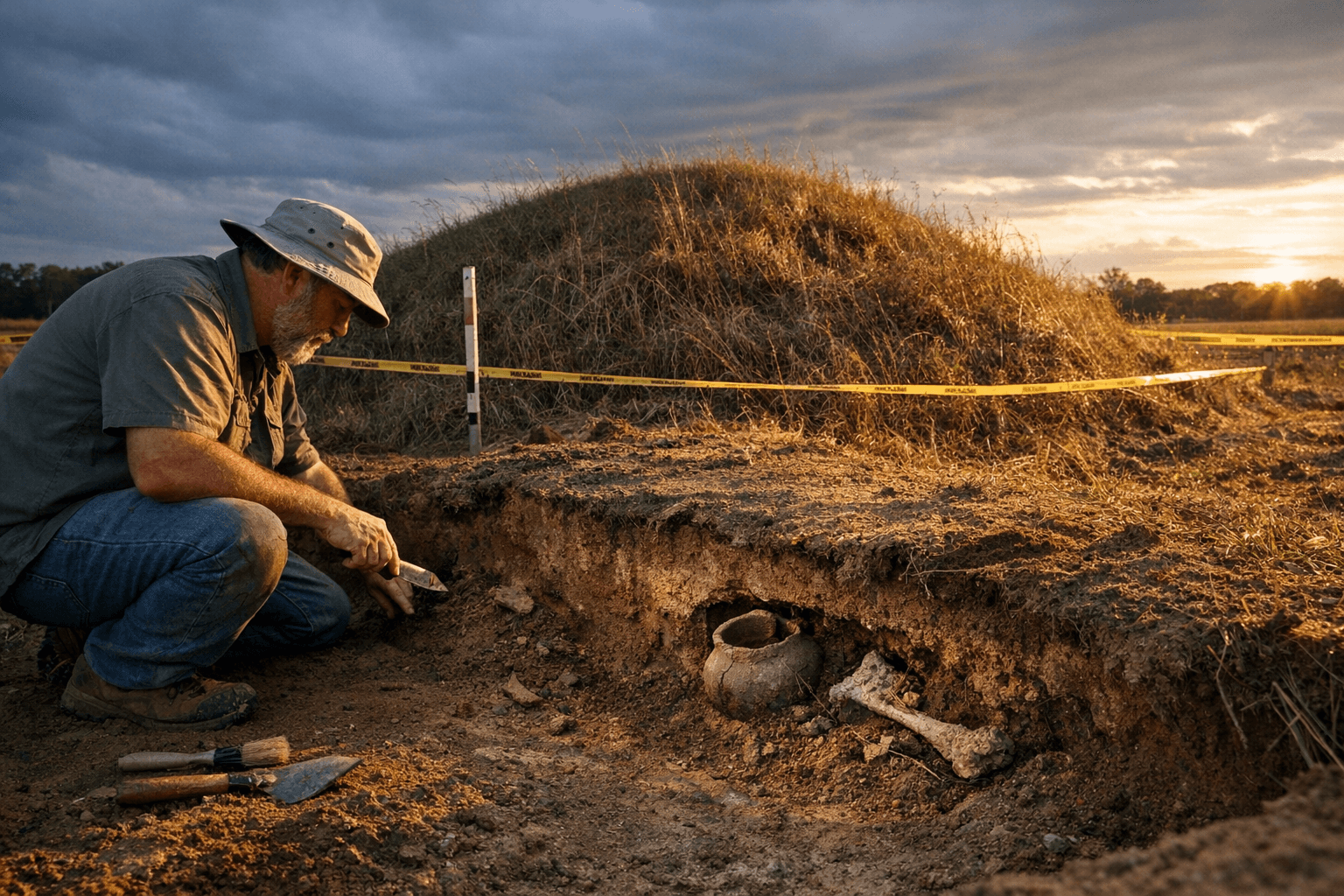
An unmarked Native American burial mound in Marks survived long enough to be identified because pottery sherds turned up in eroded streamside ground, and later historic burials placed on top of it may have helped shield the older feature from being lost.
Archaeologist Gregory L. Little identified the mound in Marks, in Quitman County, by reading the landscape where stream erosion exposed artifacts. The find matters because it places another Native burial feature inside a county already known for a concentrated prehistoric record, not an isolated one-off discovery.
Quitman County’s history page says the county has four Native American mounds listed on the National Register of Historic Places. Among them is the Denton Site, which dates to the Archaic period, about 4000 B.C., and is described as a possible node of interaction for regional cultural activity. The county’s listed prehistoric sites also include the Posey Site, 22QU500, in Marks, and the Shady Grove Site, 22QU525, also in Marks. The Norman Site is another part of that record, reinforcing that the Marks area already contains multiple recognized ancient locations.
State preservation records add broader context. The Mississippi Department of Archives and History says Mississippi’s archaeological resources stretch back 12,000 years, and the Mississippi Mounds Trail says the state’s mound sites marked centers of social and political authority. Those same sites are under pressure from erosion, farming, urban development and looting, threats that make each new identification harder to ignore. The trail says many Mississippi mound sites were built from about 2,000 years ago to a few hundred years ago, and it points to Smith Creek Mounds as an example of a site occupied from about A.D. 750 to 1350, with mound construction beginning around A.D. 1000 or a little earlier.
For Quitman County, the Marks find pushes the conversation beyond archaeology and into stewardship. A burial mound hidden in plain sight suggests that residents may be living near Native history they never knew was there, and that streambanks, wooded cuts and other disturbed ground can hold fragile evidence of that past. The county’s existing mound listings, paired with this newly identified unmarked burial feature, show a landscape that still deserves careful treatment from landowners, officials and anyone considering work near known prehistoric areas.
This article was produced by Prism’s automated news system from verified source data, official records, and press releases, then run through automated quality and moderation checks before publishing. The system is built and supervised by the people who set the standards it runs under. Read our full AI policy.
Did this article answer your question?