Coldwater River Rise Near Marks Threatens Roads, Properties in Quitman County
The Coldwater River at Marks surged toward historically damaging levels late last week, with forecast guidance warning of high water persisting into early April across northern Quitman County.
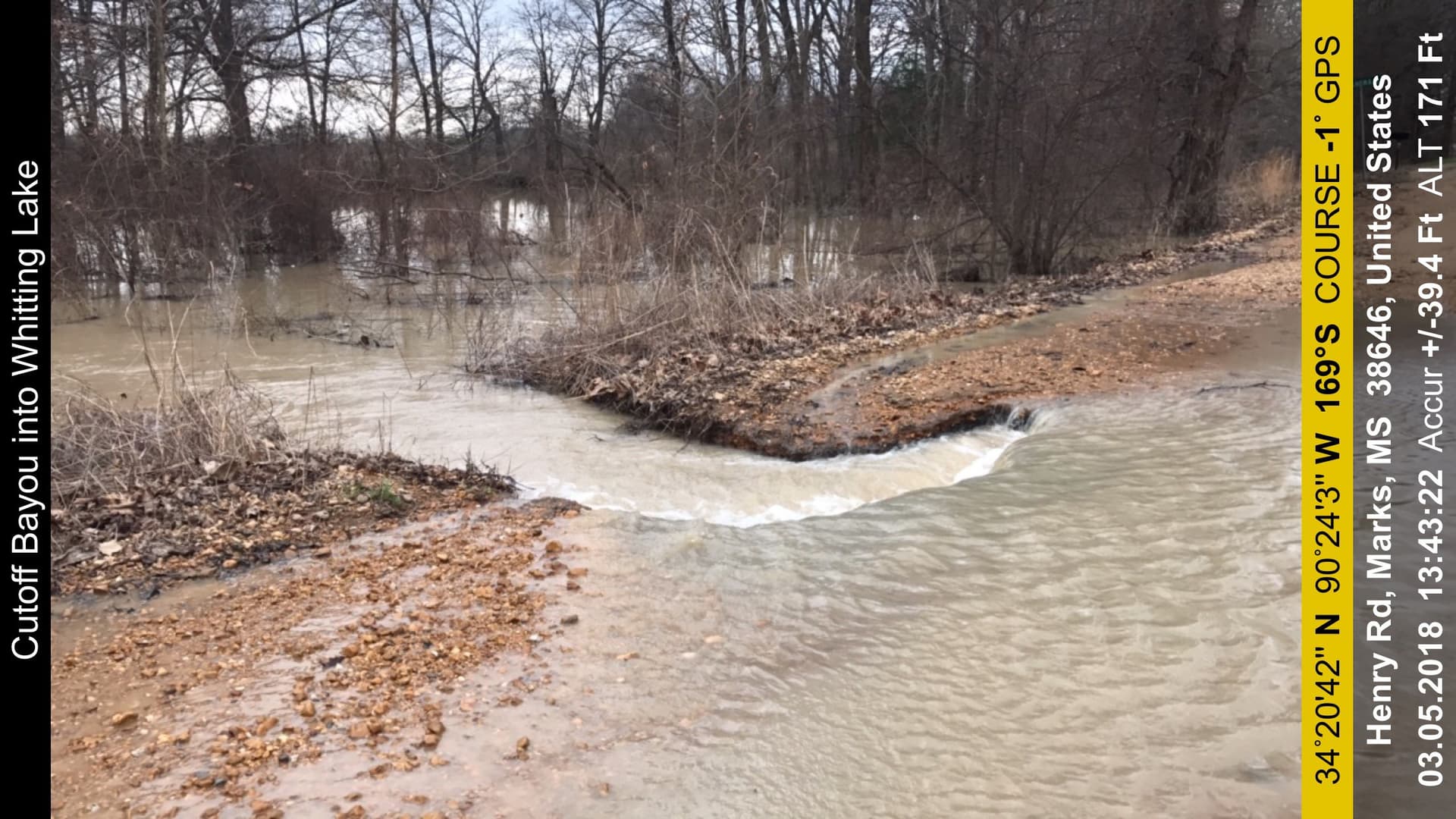
The Coldwater River at Marks pushed toward levels that historically swamp secondary roads and farm fields across northern Quitman County late last week, with federal forecasters projecting the threat to linger well into April. Readings logged at the National Oceanic and Atmospheric Administration gauge at Marks, station MKSM6, showed a substantial stage rise during the final days of March, and forecast products updated on March 29 projected continued elevated conditions for three to seven days ahead.
MKSM6 is the primary federal monitoring point for river stages affecting northern Quitman County. The gauge recorded its most recent observed value on March 27, and NOAA's National Weather Service updated its forecast ensemble two days later. That guidance, which factors in both upstream reservoir operations and regional rainfall, indicated high water extending from late March into early April 2026.
When the Coldwater River climbs to historically impactful thresholds, the effect on the ground in northern Quitman County is swift and direct: county and township roads become impassable, low-lying farmsteads and crop fields flood, and access routes serving the county courthouse in Marks come under close watch. Communities including Crowder, Lambert and Falcon, which depend on secondary road networks for medical transport, school bus routes and supply deliveries, are among the most exposed when stages rise quickly.
The agricultural stakes compound the transportation risk. Large portions of Quitman County are working farmland, and high water during late March cuts into crop access, endangers livestock, and disrupts road-dependent deliveries at a critical point in the planting calendar. In past spring seasons, similar rises along the Coldwater River corridor left numerous secondary roads and farm fields in northern Quitman County under water for extended periods.

County and state emergency managers have been relying on NOAA and NWS hydrologic forecasts to determine the timing of road closures, coordinate sandbagging operations, and assess whether requests for mutual aid are warranted. Local officials also coordinate with the Mississippi Emergency Management Agency and, when upstream reservoir management is a factor, with the U.S. Army Corps of Engineers. River forecasts along the Coldwater can shift rapidly with additional rainfall or changes in reservoir releases, making the MKSM6 gauge page a live operational tool rather than a static reference.
Residents in flood-prone areas, particularly those with properties adjacent to the river north of Marks, should check the NOAA gauge at water.noaa.gov and monitor the NWS local forecast office for stage updates. Anyone in a low-lying area should move vehicles and high-value equipment to higher ground without waiting for an official closure order, and be prepared to shelter in place or evacuate on short notice if Quitman County emergency management issues guidance. Flooded roads should not be driven on, regardless of apparent depth.
With the forecast window extending through the first days of April, this is an active situation on the Coldwater River, not a receding one.
This article was produced by Prism’s automated news system from verified source data, official records, and press releases, then run through automated quality and moderation checks before publishing. The system is built and supervised by the people who set the standards it runs under. Read our full AI policy.
Did this article answer your question?

