Marks photo and funeral home story honor Black Mississippi memory
A 1990s Marks photograph led Christopher Young back to Delta Burial Corporation, where Black civic memory, funeral service and family history still shape Quitman County.
A photograph from Marks pulled Christopher Young back into Quitman County’s Black memory and gave him a place to stand inside it. What began as an online find in 2018 became a framed image on his wall, then a return trip to the same ground with Joe Sanders, where the county’s history was no longer abstract but tied to names, buildings and families.
A photograph that still points the way
The image, credited to Jack Spencer, shows Rev. L.A. Stokes posing in Marks sometime in the 1990s. Young has said he kept coming back to it because it felt deeply “genuine,” the kind of picture that does more than record a face and a place. It captured the texture of Mississippi life and the weight of Black community memory in a town where people still remember one another by name.
That is what makes the photograph more than a keepsake. It became a clue, a way into a local story that was still alive on 1st Street in Marks and in the conversations that follow old family lines, church ties and business histories across the Mississippi Delta. In a county as small as Quitman, memory is not an archive hidden far away. It lives in the places people still visit every day.
Delta Burial Corporation and the civic work of care
Young and Sanders began their return at Delta Burial Corporation, the Black-owned funeral service in Marks that was celebrating its 100-year anniversary. The company does not turn people away because they cannot pay, a policy that gives its work a civic meaning far beyond the funeral business. In a rural county where money, dignity and access often decide who gets decent service, that kind of commitment has long mattered.

Delta Burial’s own history places its organization in 1927 and incorporation in 1928. Other reporting has described a 1925 founding and a century of service, but the through line is the same: Black men in Marks built an institution because Black mourners were too often pushed toward white funeral homes that charged more and delivered less. Mississippi Today reported that the business was formed by Black men pooling their money after discriminatory treatment from white funeral homes, and that Delta Burial remained managed by Black stockholders in 2025.
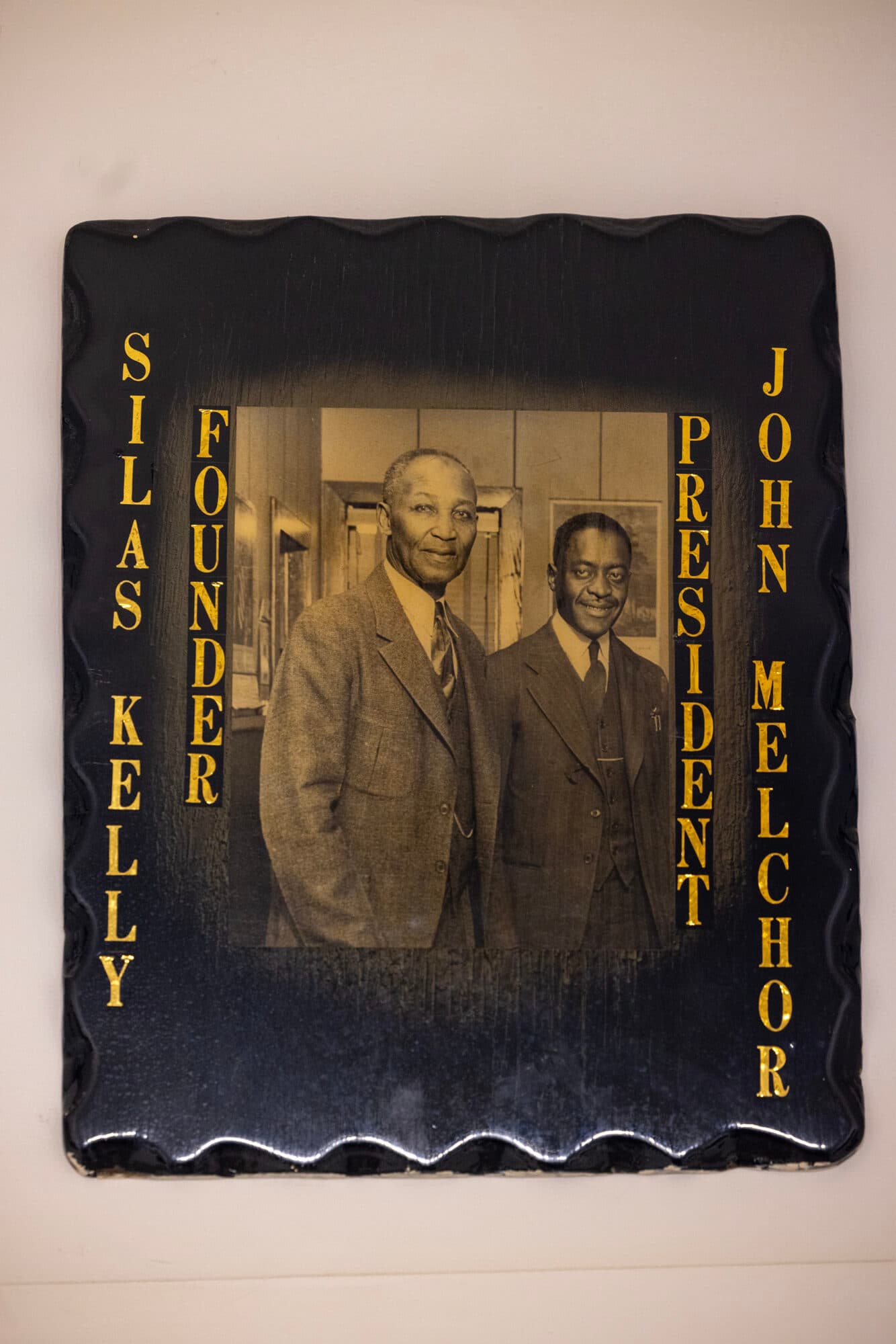
The company’s founders are identified in its history as Silas Kelly, I.W. LouAndrew and Rueben Price. That matters because names like those are not just ceremonial. They mark a generation that built durable institutions out of exclusion, and those institutions still shape how Quitman County handles loss, burial and remembrance.
The centennial also drew broader attention in 2025, including a Mississippi Humanities Council-supported project called Beyond the Census, which is digitizing and preserving Delta Burial Corporation’s historical records. In a place where paper records can disappear and oral history can fade, that work gives the county a better chance of keeping its own memory intact.
Retracing the people in the picture
The August 14, 2025 visit was not just about looking at a building. It was about following the people in the photograph and asking who could still identify them, explain them and place them in local memory. Shelton Leonard played that role, helping Young identify people in the picture and pointing him toward the next stop: the Stineray Diner in nearby Lambert.
There, Reverend Larry Smith and his wife, Earnestine Smith, run a professional-services business alongside the diner. That detail fits the larger pattern in Quitman County, where businesses often serve more than one purpose and where church, commerce and family networks overlap in ways outsiders can miss. In small Delta towns, a meal, a conversation and a name can all become part of the same local record.

The story also reaches through family memory. Jerry Polk, Rev. Stokes’ stepson, appears in the narrative as another link in the chain between the photograph and the living people who can still explain it. A baptismal pool in Marks adds another layer, reminding readers that Black memory in the county is carried not only by businesses and pictures, but by faith communities and rites that bind generations together.
Why Quitman County makes this memory matter
Quitman County was created in 1877 from parts of Tunica, Coahoma, Panola and Tallahatchie counties, and it was named for John A. Quitman. Marks, the county seat, was laid out in 1906 and incorporated in 1907. By the 2020 census, the city had 1,444 residents and the county had 6,176, making Quitman County one of Mississippi’s least populous counties.
Those numbers help explain why a single photograph can carry so much weight. In a county this small, institutions do not just provide services. They anchor identity. Marks and nearby Lambert sit in a part of the Mississippi Delta shaped by agriculture, rail transport and Black institutions that had to serve the community when few others would.
That is the deeper value of Young’s return to the site where the photograph was made roughly 30 years earlier. It shows how a picture can lead back to a funeral home, a diner, a baptismal pool and a set of names that still matter to the people who live with them. In Quitman County, memory is not sentimental decoration. It is a working civic resource, and Delta Burial Corporation remains one of the places where that memory still has structure, purpose and a future.
This article was produced by Prism’s automated news system from verified source data, official records, and press releases, then run through automated quality and moderation checks before publishing. The system is built and supervised by the people who set the standards it runs under. Read our full AI policy.
Did this article answer your question?