Quitman County plans Charley Pride park and museum in Marks
Quitman County is planning a Charley Pride park across from the Marks train station and a museum-hotel in the old Savoy Hotel. The hotel would add overnight lodging downtown.
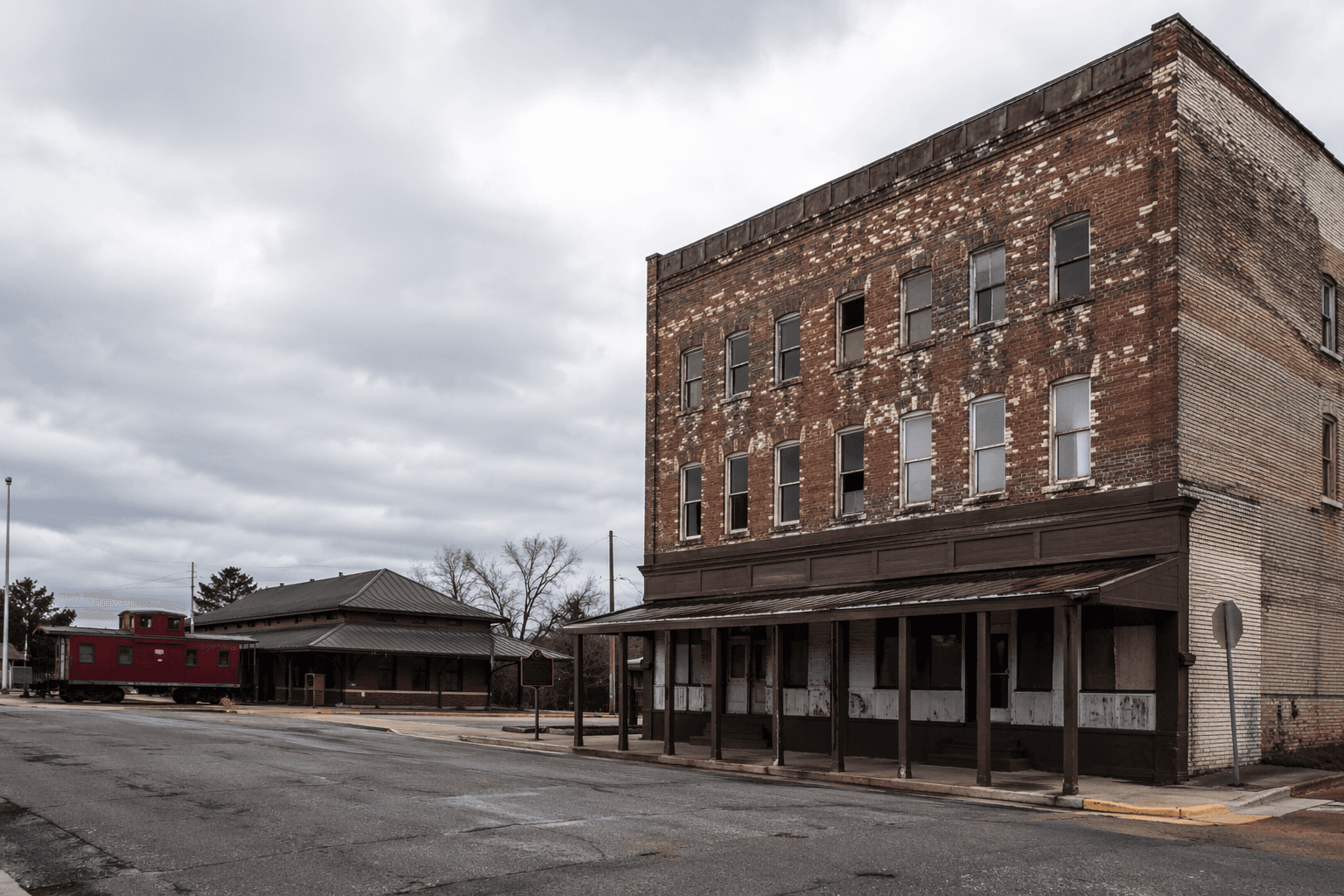
A life-size Charley Pride statue is planned across from the Marks train station. Quitman County is putting Pride at the center of a three-part tourism plan in Marks, with a park planned across from the station and the old Savoy Hotel slated to become the Charley Pride Museum & Hotel. The county plans for the hotel to provide overnight lodging for visitors coming through the Delta town.
The Pride of Quitman County Park is designed to sit directly across from the station, where visitors would be greeted by a life-size Charley Pride statue, a mural recounting the 1968 Marks Mule Train and Martin Luther King Jr.’s Poor People’s Campaign, and a layout based on a baseball diamond. The design ties Pride’s life in Quitman County to his years in professional baseball and his ownership stake in the Texas Rangers.
Quitman Tourism Economic Development is the county’s nonprofit division of county government organized to promote tourism and economic growth. The project is moving through design and procurement, with a revised request for qualifications for engineer and architect services tied to approved HUD FY2024 Economic Development-Community Project Funding, plus a Willis Engineering agreement, proof of publication, and other project paperwork posted in early 2026.

The museum-hotel plan centers on the old Savoy Hotel at 100 East Main Street in Marks. The renovated building would include a lobby, a coffee shop and a small museum with Pride memorabilia, while the larger tourism plan also links the park to a farmers market and the Marks train depot. Quitman County’s scope of work puts Phase 1 of the park at an estimated $750,000 to $1.5 million and Phase 2, the farmers market and depot, at $2.5 million to $3 million.
Pride was born in Sledge on March 18, 1938, one of the few African-American country musicians to achieve major success and the second African American inducted into the Grand Ole Opry.
This article was produced by Prism’s automated news system from verified source data, official records, and press releases, then run through automated quality and moderation checks before publishing. The system is built and supervised by the people who set the standards it runs under. Read our full AI policy.
Did this article answer your question?