Quitman County records reveal local history through tax rolls and archives
Quitman County’s school lists, tax rolls and county files can pin down families by name, age, district and property, beginning with records from 1878.
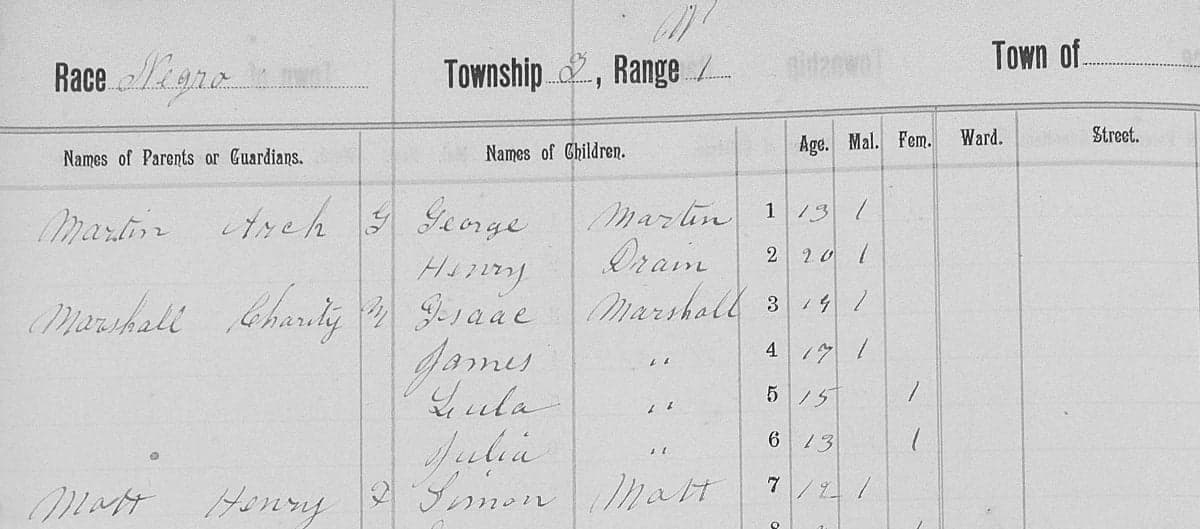
A child named in an 1878 school list can lead you to a family’s land, taxes and later court or probate records. In Quitman County, that paper trail is unusually practical because the records survive in three useful layers: educable-children lists, county tax rolls and county records that stretch across the county’s first decades.
Start with the school-age lists
Quitman County was formed in 1877 from parts of Tunica, Coahoma, Panola and Tallahatchie counties, and that makes its earliest records especially valuable for sorting families that were moving, settling and renaming households in the years after Reconstruction. The Mississippi Department of Archives and History holds a Quitman County educable-children collection with 40 items, and the earliest dated item is 1878. The 1878 lists include the child’s name, age, sex, race and election district or ward, giving you a tighter geographic and family clue than a bare name alone.
The election district or ward can place the family in a specific part of the county, whether the household was tied to Marks, Lambert, Crowder, Falcon, Sledge or the rural communities between them. If the same surname appears later in land or probate material, the school list gives you a starting point for matching the right family branch.
Use the tax rolls to see property, status and movement
Quitman County’s tax rolls add another layer. Quitman County has a usable run of records from the 1890s, including 1890 personal, 1892 land, 1893 personal, 1894 personal, 1895 personal, 1898 personal and 1899 personal assessments. Those years can help you connect a household to a place, a crop, a household inventory or a change in wealth from one decade to the next.
Mississippi county tax rolls tracked far more than acreage. Across the statewide series, the listed property types included slaves, livestock, horses, carriages, musical instruments, watches, jewelry, guns, knives, cash, securities, clocks, bowling alleys, theatres, racetracks and furniture. A family that shows up with livestock in one year and a larger land holding the next may have been expanding; another family with only personal property may have been renting or moving frequently.
The images for the tax-roll series were created by FamilySearch onsite at the Mississippi Department of Archives and History in 2011. Because the images are organized as archival records rather than a summary, you can read the handwriting, compare names across years and look for neighbors who appear on the same page.
Move from names to county records
Once you have a household name from a school list or tax roll, the county records can extend the story. The county-records finding aid lists Quitman County Records, 1877-1934, as part of the county records collection. That range covers the period when families were establishing farms, transferring land, appearing in court and leaving probate traces that often help explain where they lived and who inherited what.
The practical move is simple: use the finding aids to decide what exists before you go. Many county records are held as original records or microfilm copies, and the microfilm is available for self-serve use in the Media Room. Many records are not online, so the catalog and finding aids are the fastest way to avoid a wasted trip and to narrow down the exact box, reel or record set you need.
For a Quitman County resident trying to prove residency, recover a family land history or document a school connection, this is the order that usually works best:
- Start with a child, parent or grandparent name from an educable-children list.
- Check the 1890s tax rolls for the same surname, nearby households and any land or personal property.
- Follow the family into county records for deeds, court matters or probate references.
- Use the finding aids and catalog first, then plan a visit if the material is only on microfilm or in original form.
Read the records in the county’s historical context
The records make the most sense when you place them in Quitman County’s early history. The county’s economy was built around cotton cultivation, and the 1880 census counted 815 African Americans and 592 whites. That same census showed 62 farms and plantations with an average size of 417 acres, far above the Mississippi average of 156 acres. By 1900, the county’s population had reached 5,435 and was 77 percent African American.
Large farms, plantation settlements and shifting labor patterns meant people were often tied to districts, employers or land tracts that left traces in county paperwork. Leopold Marks allowed the Yazoo and Mississippi Valley Railroad to cross his plantation free of charge to encourage growth, a reminder that the county seat of Marks grew in a landscape shaped by land access, rail movement and agricultural expansion.
The county’s name comes from John A. Quitman, the former Mississippi governor for whom the county was named.
What these records can solve
They can help prove a family’s residence in a specific district, show when a surname first appears in Quitman County, or connect a child in an 1878 educable-children list to a household that later owned land or paid taxes in the 1890s. They can also support school history, land claims, probate questions and community history for Marks and the surrounding county.
This article was produced by Prism’s automated news system from verified source data, official records, and press releases, then run through automated quality and moderation checks before publishing. The system is built and supervised by the people who set the standards it runs under. Read our full AI policy.
Did this article answer your question?