Quitman County spotlights Rosenwald school as landmark preservation site
Preserving Marks’ Rosenwald school protects one of Quitman County’s rarest Black education landmarks and a restoration effort already backed by state funding.
Why this landmark matters now
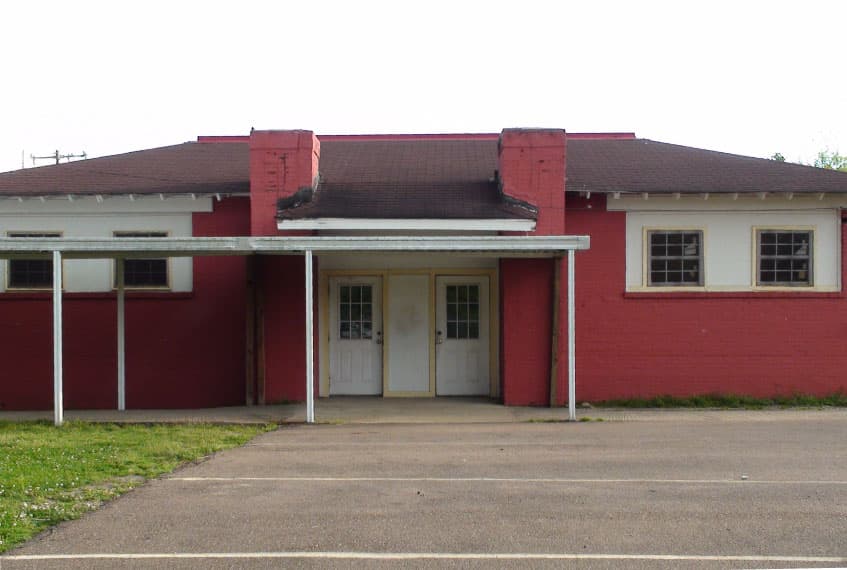
Keeping Marks’ Old African American High School standing is about more than honoring the past. At 400 Humphrey Avenue, the 1922 building has become a test of whether Quitman County will keep investing in a rare Black education landmark, or let a piece of its civic memory fade.
The stakes are immediate because the school is not just old, it is scarce. The county identifies it as one of the few remaining Rosenwald Schools in Mississippi and one of the oldest historic properties still standing in the African American community in Marks, which makes every repair decision a statement about what the county values and protects.
What stands at 400 Humphrey Avenue
The building was constructed in 1922 with support from the Julius Rosenwald Foundation and went on to serve the community for more than 90 years. According to the county’s preservation page, it provided educational and enrichment opportunities for tens of thousands of students and their families, which places the site squarely in the story of local schooling, neighborhood memory, and community advancement.
That history is why the school is described as more than an old structure. The county page presents it as a symbol of inspiration, hope, and pride, language that reflects how deeply the site is tied to Marks’ identity and to the lived experience of Black families in Quitman County.
What preservation work already exists
This is not a hypothetical preservation idea. The school was designated a Mississippi Landmark in July 2015, a status that elevates it from a local historic property to a state-recognized asset and gives preservation advocates a stronger platform for funding, fundraising, and public awareness.
State support followed. In December 2019, the Mississippi Department of Archives and History documented a $198,315 Community Heritage Preservation grant for the Marks Rosenwald School, with money designated for replication of the windows and doors, interior rehabilitation, and utilities improvement. That matters because preservation at this site is not just about stopping decay, it is about paying for the specific work that keeps the building usable and legible for future generations.
The work also has professional support. Belinda Stewart Architecture launched a Rosenwald Schools Preservation Project in February 2024 that includes the Marks school, showing that the site remains part of an active restoration effort rather than a closed chapter.
What the Rosenwald legacy means beyond Quitman County
The Marks school belongs to a much larger effort that reshaped Black education across the South. The Mississippi Encyclopedia says the Rosenwald program began in 1912 with a $30,000 Rosenwald donation to Tuskegee Institute, became the Julius Rosenwald Fund in 1917, and by 1932 had helped build 4,977 schools, 163 shop buildings, and 217 teachers’ homes for 663,615 students in 883 counties across 15 states.
Mississippi played a major role in that history. The state had 637 Rosenwald-assisted buildings, second only to North Carolina, and by 1928 one-third of the South’s rural Black schoolchildren and teachers were being served by Rosenwald Schools. Those numbers show why the Marks building carries weight well beyond Quitman County: it is part of one of the most ambitious education-building movements in the Jim Crow South.
The National Trust for Historic Preservation has described Rosenwald Schools as among the most important initiatives to advance Black education in the early 20th century. It also estimates that only 10 to 12 percent of the schools, shops, and teacher homes built between 1917 and 1932 survive today, which makes every remaining structure an unusually fragile record of public effort and private philanthropy working together.
What local preservation protects for students, descendants, and residents
For Marks residents, the value of preservation is concrete. Restoring the school protects a place where descendants can trace family history, where students can learn what education access once required, and where the county can point to a building that still tells the story of how Black communities built opportunity when public systems did not provide enough of it.
The school’s location on the campus of an active school gives the preservation effort even more practical meaning. Students pass the building as part of daily life, which means the site can function as a visible lesson in local history, community investment, and the long arc of educational opportunity in Quitman County.
The risk of delay is equally concrete. If restoration stalls, the county stands to lose one of the oldest standing historic properties in Marks’ African American community, along with a landmark that has already attracted state recognition and preservation funding. In a county where identity and investment are both measured closely, losing this school would mean more than losing an old building, it would mean losing a rare, documented piece of Quitman County’s public memory.
Why the effort matters to public decision-making
The Rosenwald school is now a preservation case that shows how history, funding, and accountability intersect. The Mississippi Landmark designation, the 2019 state grant, and the 2024 preservation project all point to a site that has already moved from recognition into action, and the next phase will determine whether that action produces lasting protection.
For Quitman County, the question is not whether the school matters. The record already answers that. The question is whether the county, state, and preservation partners will keep turning that significance into repairs, maintenance, and visible stewardship strong enough to preserve a landmark that still carries the weight of Marks’ education legacy.
This article was produced by Prism’s automated news system from verified source data, official records, and press releases, then run through automated quality and moderation checks before publishing. The system is built and supervised by the people who set the standards it runs under. Read our full AI policy.
Know something we missed? Have a correction or additional information?
Submit a Tip