Wittenberg students learn Delta history, culture during Marks visit
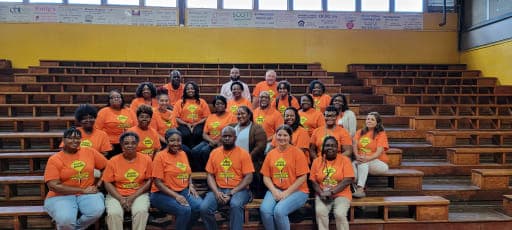
Wittenberg University students spent March 3 in Marks learning how Delta history, civil rights memory and rural life still shape Quitman County today.

Wittenberg University students and faculty traveled from Springfield, Ohio, to Marks on March 3 as part of FIRE Week, a campus program built around focused, integrated and reflective experiential learning. The visit put a classroom into the Delta itself, with students learning about agriculture, flooding, political history and the civil rights legacy that still defines Quitman County.
The county says the trip was designed to take students beyond lecture halls and into the community so they could study the Mississippi Delta through its people, its land and its history. The professors who accompanied the group were science and biology specialists, giving the visit an academic angle that tied place-based learning to the natural systems and social realities that shape life in Marks.
Marks carries that history in public view. Quitman County says the town is part of the Mississippi Freedom Trail, and a marker honoring the Marks Mule Train legacy was erected there on Oct. 2, 2015. The Mule Train is linked to the 1968 Poor People’s Campaign, when organizers used the image of mules and wagons to carry a message of economic justice to Washington, D.C.

The county has also pushed to preserve that story in a more permanent way. A Mule Train interpretive trail project was supported by a 2018 National Park Service African American Preservation grant and by Mississippi State University’s Carl Small Town Center. That work matters because it turns Marks from a point on a map into a place where visitors can trace how local history connects to national civil rights struggles.
The students also met with local leaders, including Pastor Michael Jossell, Samuel McCray, Manuel Killebrew and staff from Quitman County Economic Tourism & Development. A 2019 county civil rights account identifies Michael Jossell Sr. as pastor of Mount Zion Baptist Church and says Manuel Killebrew was then president of the Quitman County Board of Supervisors. That account also notes that Killebrew said he was present when the Mule Train rolled into Washington, D.C., and helped build Tent City on the National Mall in 1968.

Quitman County describes itself as a place of about 400 square miles in the Mississippi Delta, where agriculture, civil rights history, music heritage and outdoor recreation intersect. For students and educators at Wittenberg, the March 3 visit offered a direct look at how Marks tells its own story, and how residents continue working to make sure that story is told accurately, by the people who lived it.
This article was produced by Prism’s automated news system from verified source data, official records, and press releases, then run through automated quality and moderation checks before publishing. The system is built and supervised by the people who set the standards it runs under. Read our full AI policy.
Did this article answer your question?