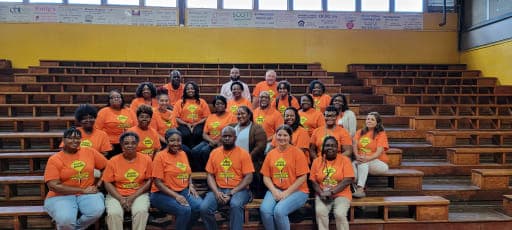
Wittenberg University students explore Quitman County history, culture, and economic justice
Wittenberg's Delta trek put Quitman County leaders, flood risk, and civil-rights memory at the center, giving Marks a chance to tell its story on its own terms.

What Quitman County gained from the visit
What Quitman County got from the Wittenberg University visit was not a simple campus-style field trip, but a chance to put its history, land, and economic questions in front of an outside audience on local terms. Students and faculty came to Marks on Tuesday, March 3, 2026, during Wittenberg’s FIRE Week, and the exchange focused as much on what residents live with now, flood risk, agriculture, population loss, and economic justice, as on what happened here decades ago.
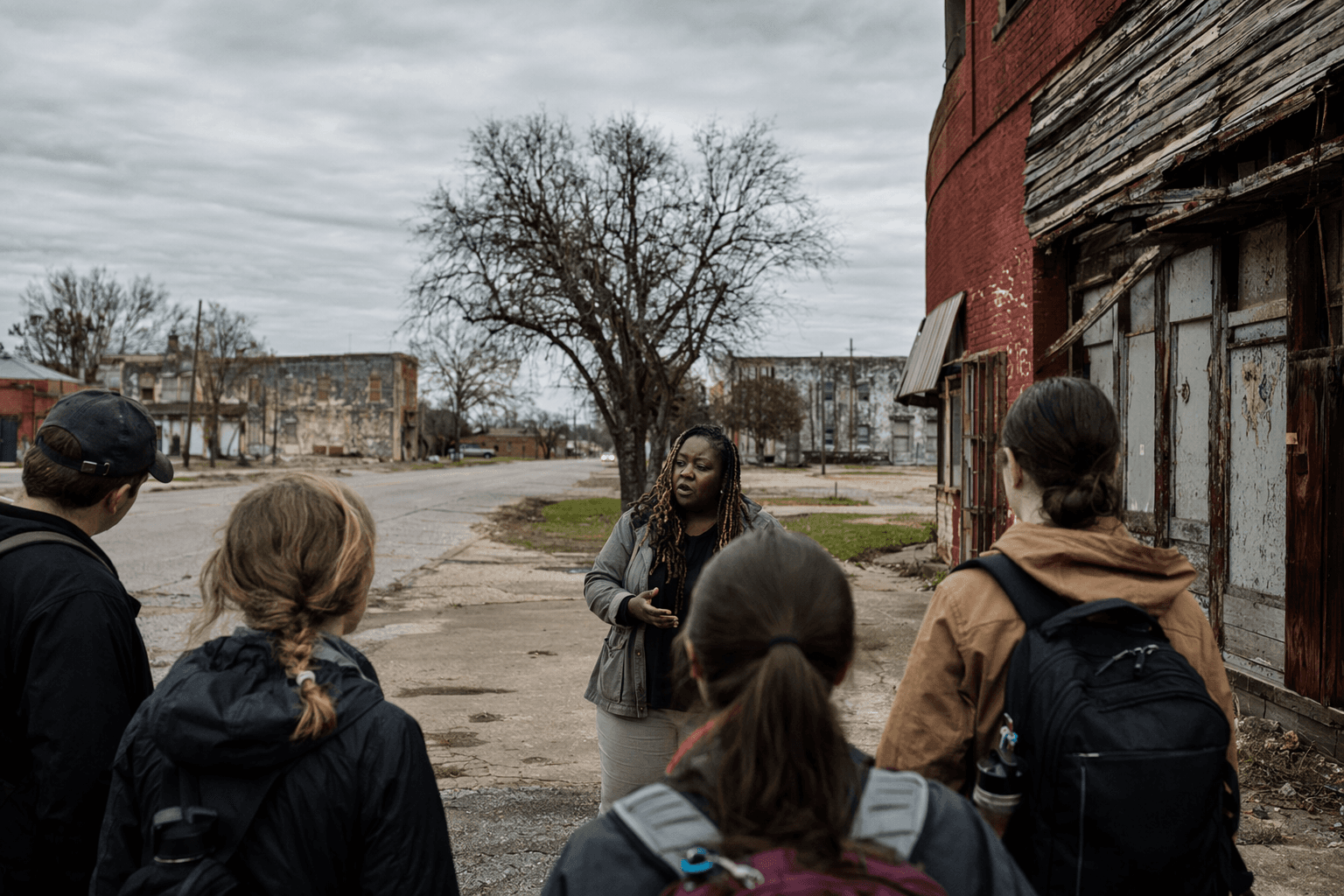
The visit also mattered because it reinforced something Quitman County has long known about itself: this is a place where civil-rights memory, rural development, and geography are inseparable. For local leaders, the benefit was not simply that visitors came. It was that the county’s story was being carried back to Ohio by students who spent time hearing from people rooted in the place.
Why Wittenberg came to Marks
The Delta trek was part of Wittenberg’s FIRE course, short for Focused, Integrative, Reflective, Experience. The university says FIRE Week ran from March 2-6 in 2026 and sits within its Connections Curriculum, which has used experiential learning to move students beyond lecture halls and into real communities since the program launched in 2022. Wittenberg said about 150 students took part in FIRE Week in 2023 and more than 220 participated in 2024, a sign that the university has turned this kind of travel into a major part of its academic identity.
In Quitman County, that framework fit the moment. The professors who accompanied the group were science and biology experts, but the work in Marks went far beyond laboratory questions. Students were asked to look at the Delta as a lived landscape, where farming, flooding, race, and public memory shape daily life.
The local voices students met
The most important part of the trip for Quitman County was the direct contact with local people who carry the county’s stories. The group met with Pastor Michael Jossell, Samuel McCray, Manuel Killebrew, and staff from Quitman County Economic Tourism & Development. Those conversations gave the visit a community-facing shape rather than making it a one-way tour through local landmarks.
That mattered because the county’s history can be told in different ways. In Marks, visitors hear about the Poor People’s Campaign, the mule train associated with Dr. Martin Luther King Jr., the county seat’s post-Civil War origins, and the long reach of Black political memory in a county that is 73.1% Black alone, according to Census Bureau estimates. By talking with local leaders, the Wittenberg group got that history from people who live with its meaning every day.
Pastor Michael Jossell’s own background connected especially directly to the county’s civil-rights legacy. In oral history at the Sixth Floor Museum at Dealey Plaza, Jossell described himself as a native of Quitman County, a high school student during a 1968 civil-rights march, and an observer of the mule train in Marks during the Poor People’s Campaign. That kind of first-person memory anchors the county’s national significance in a local voice, not just an archive.
The county’s story is larger than one decade
Quitman County’s appeal to visitors is not confined to the civil-rights era. The county was formed in 1877, the same year Marks was founded after the Civil War, and the county seat was selected at the former Hill’s Landing and renamed Belen before becoming Marks. Long before that, the land had already been inhabited and used for thousands of years, and county history materials note four Native American mounds listed on the National Register of Historic Places, including the Denton site, which dates to about 4000 B.C.
That deeper timeline gives context to why outside groups come to Marks at all. Quitman County sits in the delta of the Mississippi and Yazoo rivers and is bordered by Tunica, Panola, Tallahatchie, and Coahoma counties. It is a place where archaeological history, agricultural production, and modern rural policy are layered on top of each other, making it a natural classroom for students studying environment, economy, and justice together.
Why flooding and farming keep coming up
The Wittenberg group also encountered the county’s physical realities, especially the role agriculture and flooding play in shaping life here. That is not an abstract concern in Quitman County. State flood-mapping records show a Flood Risk Open House in Marks on February 7, 2019, and list a study effective date of May 4, 2021, underlining how seriously flood planning remains part of local life.
In a county that depends on land use and agricultural rhythms, flooding is more than a weather event. It affects roads, access to fields, property decisions, and the long-term calculation of whether families and businesses can stay rooted here. That is why the trip’s focus on the Delta’s geographic landscape and flood vulnerability was not separate from the civil-rights discussions, it was part of the same conversation about who gets to build wealth and stability in the county.
The population numbers tell a similar story. Quitman County had 6,176 residents in the 2020 census, and the Census Bureau estimated the 2025 population at 5,364. That decline gives added weight to any discussion of economic development, because every loss of population can mean fewer customers, fewer workers, and fewer public resources to support schools, services, and small businesses.
Economic justice is still the central question
For Quitman County, the significance of the Wittenberg trip lies in how it framed economic justice as an ongoing local issue rather than a distant academic concept. The students were not just learning about the past; they were being introduced to a county where historical inequality, land use, flood exposure, and civil-rights memory still shape the present. That is the kind of context local leaders want visitors to carry away, because it defines why Marks still matters.
The county’s history page and civil-rights legacy make that point clear. Marks is not only the county seat. It is the starting point for Dr. Martin Luther King Jr.’s Poor People’s Campaign mule train, a symbol that continues to draw visitors, educators, and history-minded travelers to Quitman County. When Wittenberg students spent time with local leaders, they were entering a story that the county has been telling for generations, one that links protest, land, and survival.
What remains after the students leave
The most concrete result of the visit was not a public pledge or a signed agreement, but a stronger platform for Quitman County to explain itself to outsiders. Local leaders and community figures had a chance to speak directly about the county’s history, its flood risks, its economic realities, and the cultural importance of Marks. That kind of exchange can influence how future visitors, students, and scholars approach the county.
Just as important, the visit showed that Quitman County is not waiting to be interpreted by others. It is actively presenting its own story through institutions like Quitman County Economic Tourism & Development and through residents such as Pastor Michael Jossell, Samuel McCray, and Manuel Killebrew. The Wittenberg group left with a broader understanding of the Delta, but the county also gained something lasting: another opportunity to define itself as a place where history, land, and economic justice are still tightly linked.
This article was produced by Prism’s automated news system from verified source data, official records, and press releases, then run through automated quality and moderation checks before publishing. The system is built and supervised by the people who set the standards it runs under. Read our full AI policy.
Did this article answer your question?