Rockwall County museum preserves history in Harry Myers Park
The Rock Wall is still debated, but the museum in Harry Myers Park turns that mystery into a clear window on Rockwall County’s past and present. Its campus helps newcomers see how a fast-growing county got its name.

The county’s most famous story is not sitting in a textbook or a courthouse file. It is laid out across a museum campus in Harry Myers Park, where the Rockwall County Historical Foundation Museum separates legend from documented history and makes the Rock Wall easier to understand for people who live here now.
Why this museum matters to Rockwall County now
Rockwall County is changing fast, and the numbers make that plain. The U.S. Census Bureau put the county’s population at 107,819 in the 2020 Census and estimated it at 140,738 in 2025. Yet the county covers only 127.2 square miles of land area, making it Texas’s 254th largest county by total area. That combination of small footprint and fast growth is exactly why the museum’s work matters: it gives longtime residents and newer arrivals a place to see how the county’s identity formed long before today’s subdivisions, school districts, and traffic patterns.
The Rockwall County Historical Foundation was organized on January 16, 1978 to collect and preserve the county’s history. Its mission is built around restoration, education, and recognition of significant places and people, which makes the museum more than a display space. It is a public anchor for understanding how Rockwall County moved from a rural, prairie landscape into one of North Texas’s fastest-growing suburban counties.
What is on the museum campus
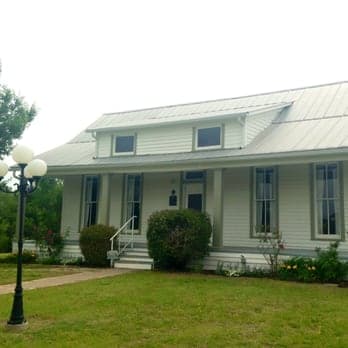
The museum operates three historic buildings in Harry Myers Park: the Manson-LaMoreaux-Hartman House, the Bailey House, and the Tenant Cabin. Those structures give visitors a direct look at domestic life in early Rockwall County, rather than just a general overview of the past.
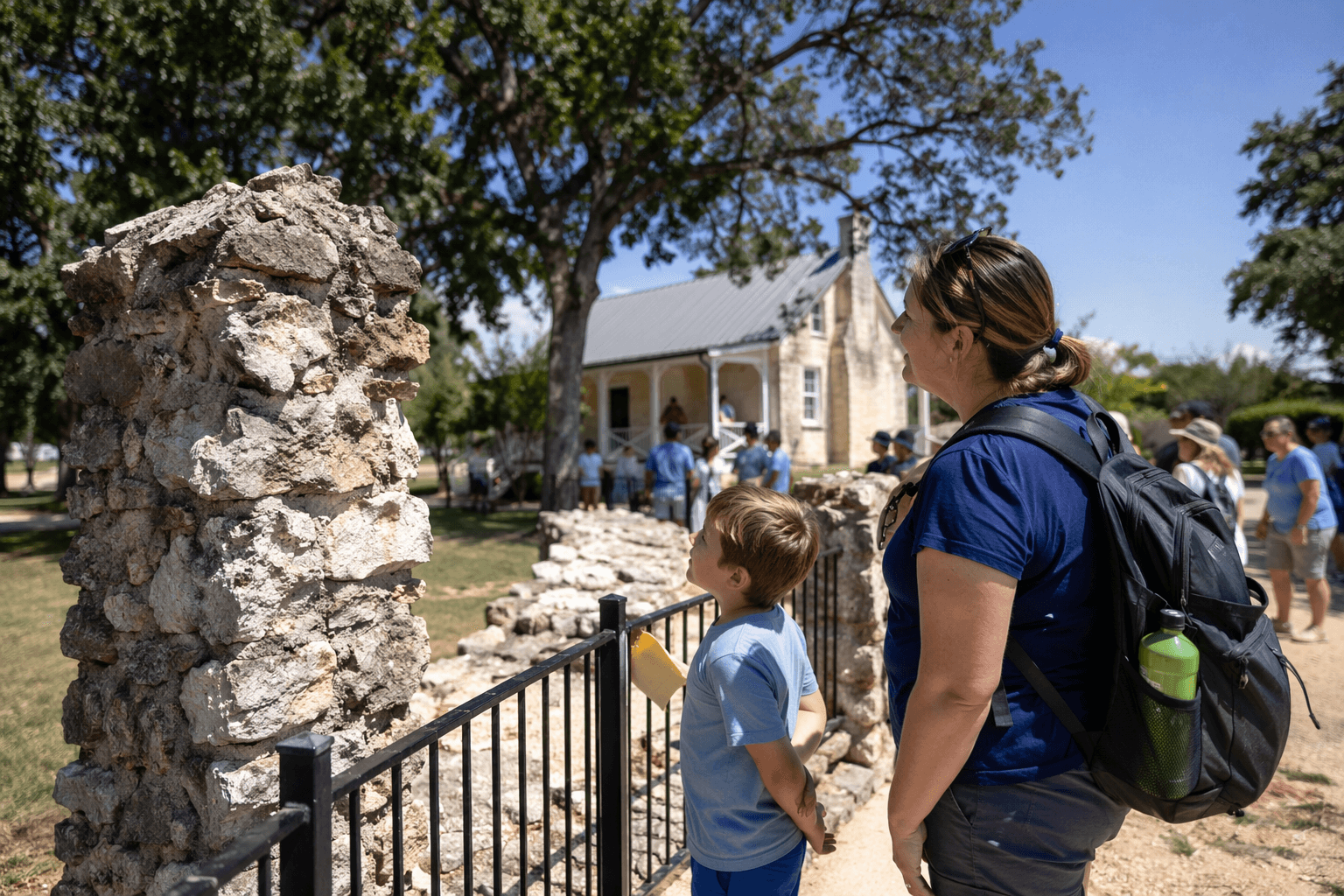
The campus also includes a Hartman windmill, a replica carriage house, an outhouse, a gazebo, and a Blackland Prairie grassland project. That mix matters because it turns a visit into a short heritage walk across the kinds of structures and landscapes that shaped the county’s early settlement. The Blackland Prairie project also helps connect the built history to the land itself, which is especially useful in a county where development has moved quickly and much of the original setting has disappeared.
The museum’s public programming includes exhibits, lectures, and family programs. Some local listings say the museum is open Thursday through Saturday from 10 a.m. to 3 p.m. and Sunday from 1 p.m. to 4 p.m., with free admission. That makes it one of the easiest places in Rockwall to pair an afternoon outing with a concrete lesson in local history.
The Rock Wall, stripped of myth and put back into context
The reason many people start with this museum is the Rock Wall itself. The formation is central to the county’s identity, but the museum is also careful about what can and cannot be seen in person. Its explanation is straightforward: the in-place sections of the wall are on private property, buried, and closed to the public.
What visitors can see is a reconstructed segment on museum grounds, along with another segment at the Rockwall County Historic Courthouse. That practical arrangement matters because it gives the public an accessible way to engage with the story without blurring the difference between the original formation and later reconstructions.
The history behind the wall is part local legend, part scientific dispute. The wall was discovered in 1852 by Benjamin Boydstun, Terry Utley Wade, and William Clay Stevenson. A later excavation in 1936, during the Centennial, brought a section of the wall to visitors for a fee. Those dates matter because they show how long the formation has drawn attention and how early Rockwall residents turned it into a public attraction.
The scientific debate is just as important. The first organized geological study came in 1874, when geologist Richard Burleson interpreted the formation as volcanic in origin. That interpretation was later challenged by geologist Sidney Paige, who issued a report in 1901 and argued for a natural origin. The museum’s value lies in putting those competing explanations in one place so visitors can see how the wall became not just a curiosity, but a lasting part of the county’s name and identity.
Why the wall story still shapes county identity
The Rock Wall is more than a local talking point because it sits at the intersection of geology, folklore, and civic branding. For newcomers trying to understand Rockwall County, it explains why the county carries a name that sounds unusual and why the wall still appears in local conversations decades after the first scientific debates. For longtime residents, it is a reminder that the county’s identity was built around a formation that people have argued over since the 19th century.
The museum broadens that story beyond the wall itself. It also highlights pioneer settlement, Blackland Prairie agriculture, family homes, and local business history, including stories such as Texas’ first female dentist. That wider scope is important in a county where growth can make the past feel distant. The museum shows that Rockwall County was not created by recent development alone; it was shaped by land, families, work, and preservation efforts that still have a visible footprint in the park today.
How to use a visit well
A visit works best when you treat it as both a history stop and a county orientation. Start with the three historic buildings, then move through the outdoor structures and the Blackland Prairie project, and finish with the Rock Wall displays so the county’s origin story stays connected to the buildings around it.
- The museum campus is in Harry Myers Park in downtown Rockwall.
- The Rock Wall segment on museum grounds is a reconstructed piece, not an in-place outcrop.
- The original wall sections remain on private property, buried, and closed to the public.
- The courthouse display gives another public reference point for the wall’s history.
That is why the museum still matters in a county that is growing so quickly. It gives Rockwall County a shared starting point, and it does so in a place residents can actually walk through, not just read about.
This article was produced by Prism’s automated news system from verified source data, official records, and press releases, then run through automated quality and moderation checks before publishing. The system is built and supervised by the people who set the standards it runs under. Read our full AI policy.
Did this article answer your question?