Rockwall public art program shapes city’s civic identity
Rockwall treats public art as downtown infrastructure, not ornament. The city’s program now shapes how Historic Downtown draws visitors, anchors identity, and plans its next projects.
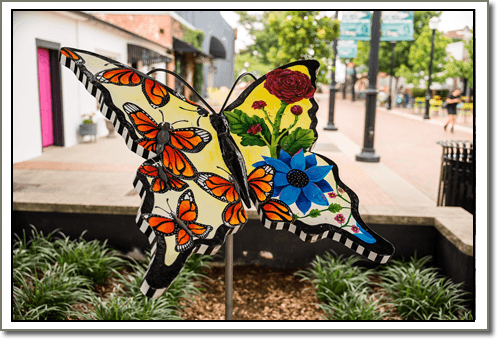
The clearest sign that Rockwall sees public art as more than decoration is where the work sits: at the center of downtown life, beside the Historic County Courthouse square and inside the city’s broader Main Street system. The Art in Public Places program is built to represent Rockwall’s past, present, and future through works that are communal, expressive, and lasting, and the city has organized it as a formal civic process rather than a one-off mural effort. That matters in a city founded in 1854, now more than 45,000 strong, about 22 miles east of downtown Dallas on Interstate 30, where civic identity and visitor traffic increasingly overlap.
How Rockwall’s art program is structured
Rockwall’s program is not handled casually. City materials say it can include selection, purchase, commission, placement, funding, maintenance, and insurance, which makes the work feel closer to public works planning than to simple beautification. The city also ties the program to a dedicated Art Commission and a staff liaison, placing public art inside the same institutional framework that manages downtown priorities.
That structure gives the city a way to decide not just what gets built, but where it belongs and how it will be cared for over time. Recent commission records show that the panel has been working through master plan writing, project pipeline discussion, and future phases of #PictureThisRockwall, along with possible sidewalk art, mural ideas, and metal and wire art pieces. The staff liaison role, held by Kate Sitzenstatter, adds another layer of continuity so the program can move between ideas, approvals, and implementation without losing momentum.
Why downtown is the focal point
Public art in Rockwall is linked to the same downtown framework that shapes preservation, walkability, and retail traffic. Rockwall Main Street’s advisory board says its vision is to maintain a safe, attractive, and thriving historic downtown district, language that makes clear the city sees downtown as a civic asset as much as a commercial corridor. Rockwall became an official Texas Main Street City in 2008, reinforcing that downtown is meant to function as the community’s public face.
The city’s preservation history runs deeper still. The Historic Preservation Advisory Board dates to June 17, 1991, and the Historic Overlay District Ordinance was adopted into the Unified Development Code on December 5, 2005. That long planning timeline helps explain why Rockwall’s public art can be read as part of a larger pattern: the city is using design, history, and streetscape improvements to reinforce a downtown that can hold both local memory and foot traffic.
That approach fits Rockwall’s position in the county and the region. A downtown that can draw residents, restaurant customers, and visitors from outside the city becomes more valuable when it offers something people want to photograph, linger near, and talk about later. In that sense, the public art program functions as placemaking investment, not just civic ornament.
The Discovery Statue set the template
The strongest example of that approach is the Discovery Statue, unveiled in Historic Downtown Rockwall in May 2023. The sculpture honors Terry Utley Wade, Benjamin Boydstun, and William Clay Stevenson, the three pioneers who dug a well in 1852 and found the rock wall beneath the city. That story sits at the center of Rockwall’s origin narrative, and the statue gives it a permanent public form at the southeast corner of the Historic County Courthouse square.
The project had been nearly 20 years in the making, which gives the statue a different weight than a fast-turnaround beautification project. Jim Bryant created the original smaller model and directed the completion of the larger piece, and the city council approved $324,800 for the sculpture in 2021. Bryant also worked with Schaefer Art Bronze Casting in Arlington to build the statues, showing that the city was willing to make a substantial investment and follow through on a complex fabrication process.
The scale is part of what makes the statue function as an anchor in downtown. The figures stand at about 150 percent scale and are roughly 9 feet tall, so the piece reads from a distance and holds its place in the square as a landmark rather than a background accent. In practical terms, that kind of installation creates a visual reason to stop, look around, and spend time downtown.
What the next phase looks like
Rockwall’s commission materials suggest the city is not treating Discovery as a finish line. The current project pipeline includes ideas for sidewalk art, murals, and metal or wire installations, along with locations such as Ted Cain’s Corner Park and The Harbor. Those sites matter because they show the city thinking beyond a single courthouse-square centerpiece and toward a connected public-art network that can reach more corners of downtown and other visible gathering places.
That shift is important for local economic development. A single monument can mark an origin story, but a broader system of artworks can widen the area where people walk, pause, and take photos. That is the difference between a one-time attraction and a downtown experience that supports restaurants, storefront visibility, and repeat visits.
The city’s own language reinforces that public art is being used to enrich the public environment while celebrating Rockwall’s cultural, topographic, and historical character. Taken together with the Main Street vision, the preservation board’s long history, and the Discovery Statue’s long gestation, the program shows a city investing in civic identity with the same seriousness it brings to downtown planning. In Rockwall, public art is becoming part of the built environment that tells people where they are and why downtown still matters.
This article was produced by Prism’s automated news system from verified source data, official records, and press releases, then run through automated quality and moderation checks before publishing. The system is built and supervised by the people who set the standards it runs under. Read our full AI policy.
Did this article answer your question?