Bath-built USS Michael Murphy joins Hormuz mine-clearing mission
A Bath-built destroyer is helping clear mines in the Strait of Hormuz, where disruptions can ripple through global trade and energy costs.
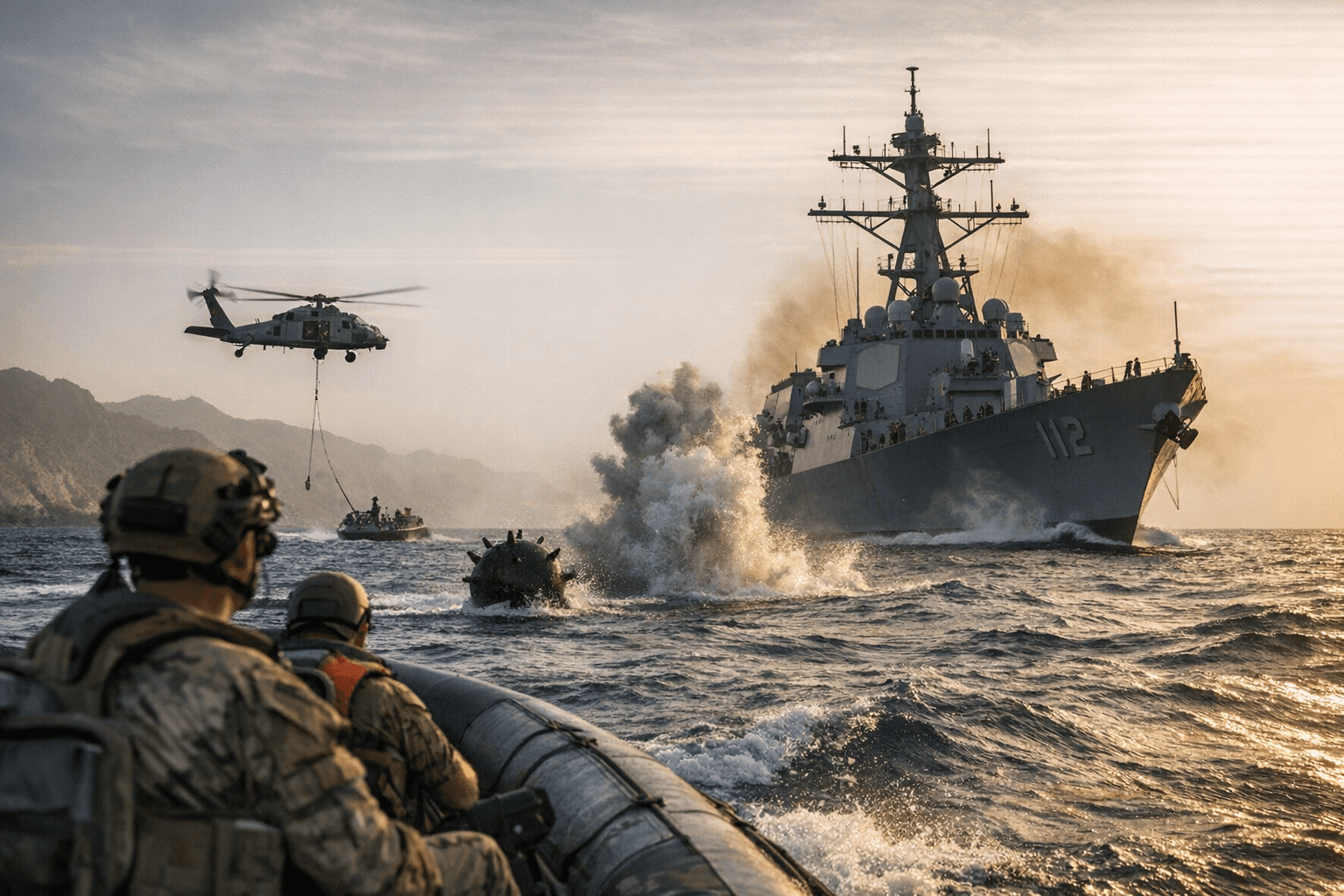
A Bath-built warship is now helping clear sea mines in the Strait of Hormuz, one of the world’s most important shipping lanes, putting Sagadahoc County’s shipyard back into the center of a global flashpoint.
The USS Michael Murphy, a guided-missile destroyer launched at Bath Iron Works on May 8, 2011, and commissioned on October 6, 2012, transited the strait and operated in the Arabian Gulf with the USS Frank E. Petersen Jr. as U.S. Central Command began setting conditions for a mine-clearing effort on April 11. CENTCOM said the mission was aimed at clearing sea mines previously laid by Iran’s Islamic Revolutionary Guards Corps, with additional U.S. forces, including underwater drones, expected to join in the coming days.
For Bath, the ship’s deployment is another reminder that a destroyer built along the Kennebec does not stay local for long. The Michael Murphy’s long service life now stretches from the ways at Bath Iron Works to one of the most closely watched waterways on the planet, where any disruption can threaten the flow of commercial shipping and raise concerns about fuel supplies and broader market stability.
The destroyer carries the name of Lt. Michael P. Murphy, the Navy SEAL and Medal of Honor recipient killed during Operation Red Wings in Afghanistan in June 2005. Murphy was the first person awarded the Medal of Honor for actions in Afghanistan and the first member of the U.S. Navy to receive the medal since Vietnam, giving the ship a name already associated with sacrifice and combat leadership.
The destroyer operating alongside it, USS Frank E. Petersen Jr., was commissioned on May 14, 2022. It honors Marine Corps Lt. Gen. Frank E. Petersen Jr., the first Black Marine Corps aviator and the first Black Marine Corps officer promoted to brigadier general.
For Sagadahoc County, the mission underscores the afterlife of a ship built in Bath: years after launch, the vessel is still part of the Navy’s front line in a region where the Strait of Hormuz remains an essential trade corridor. When a Bath-built destroyer helps keep that passage open, the impact reaches far beyond the yard gates.
This article was produced by Prism’s automated news system from verified source data, official records, and press releases, then run through automated quality and moderation checks before publishing. The system is built and supervised by the people who set the standards it runs under. Read our full AI policy.
Did this article answer your question?