Bath Housing Committee tackles priorities, zoning, homeownership and regional housing
Bath’s housing pipeline is filling fast: zoning 2.0, a housing trust and rental rules could shape who can afford to stay, buy or build.
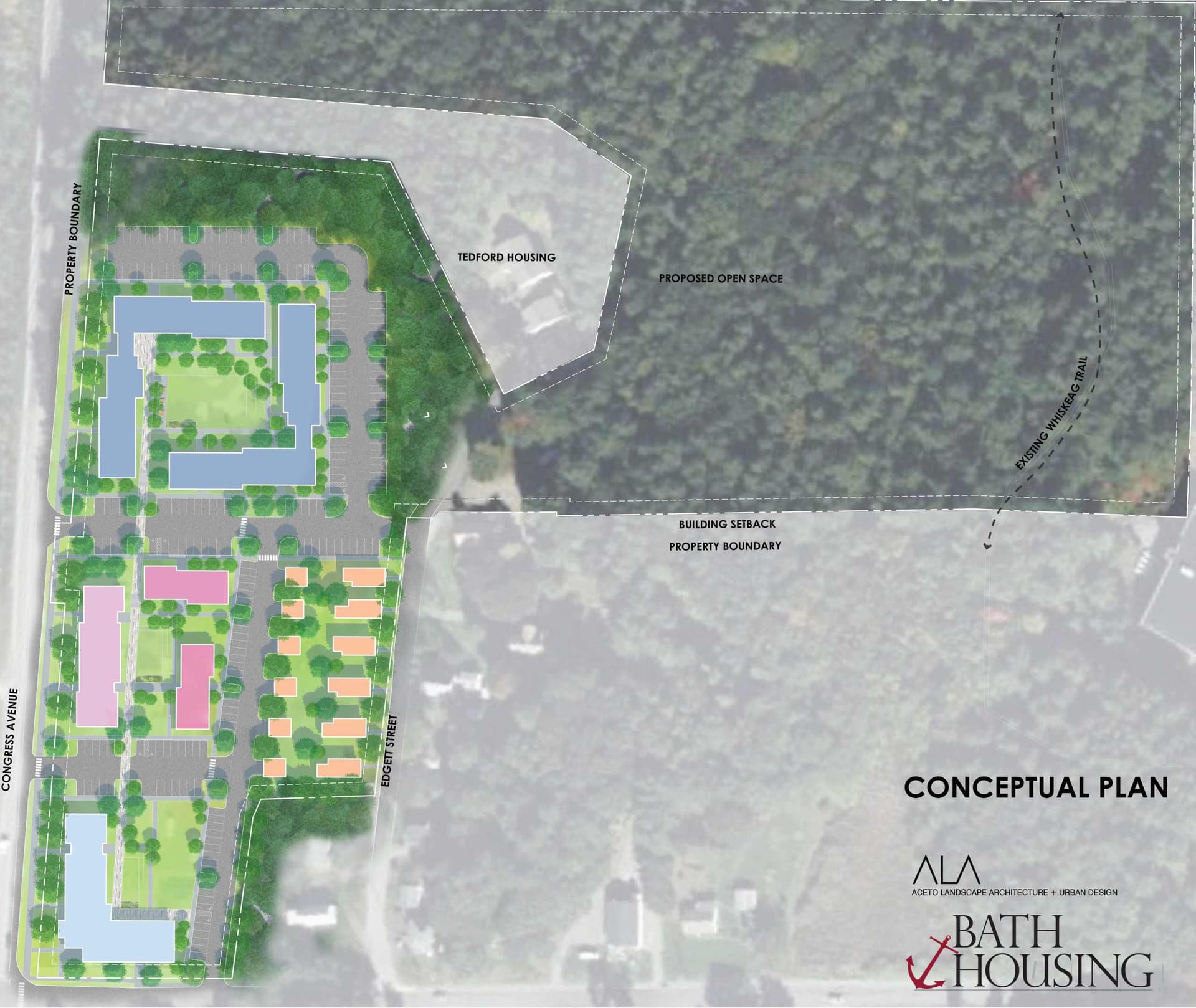
A housing trust, zoning rewrite and short-term-rental data all sat on Bath’s Housing Committee agenda, a sign the city is lining up the tools that could affect rents, ownership and redevelopment across Sagadahoc County.
What Bath is trying to solve
Bath’s Housing Committee was created by City Council resolution in 2024, and its job is broader than one neighborhood or one type of housing. The committee’s mission includes supporting the maintenance and expansion of housing options in Bath and ensuring the production and maintenance of adequate deed-restricted housing. It meets on the first Wednesday of the month at 8:30 a.m. at the Bath Housing Office, which makes it one of the city’s more regular places where housing policy gets turned from concept into action.
That matters because Bath is not dealing with a purely local shortage. Its 2014 housing assessment said the city’s service area includes Bath, Arrowsic, Georgetown, Phippsburg, West Bath and Woolwich, while its wider market area also competes with Brunswick, Topsham, Wiscasset and other nearby communities. The same assessment said Bath’s population fell 13% from 1990 to 2010 even as the broader housing market area grew 15%, a reminder that the city has been trying to catch up for years.
The items closest to becoming policy
The clearest near-term policy track is zoning 2.0. Bath’s land-use update began with Maine State Housing Authority grant funding in early 2022 and a contract with Camiros in fall 2022, then moved through city tours, stakeholder interviews and public engagement. The public review draft opened for comment in July 2025 for three months, and Bath says the rewrite is meant to align zoning with the 2023 Comprehensive Plan while modernizing the code to support housing and economic growth.
That makes zoning one of the most powerful levers on the table because it can change what can be built, where it can be built and how quickly projects move. If Bath loosens or clarifies rules for missing-middle housing, accessory units or redevelopment, the effects could show up in more rental options, more small-scale infill and less friction for builders. If the rewrite stays too restrictive, it could keep new housing scarce and prices high. The committee’s agenda suggests Bath is still in the middle of that choice, not at the end of it.
The short-term-rental issue is also further along than a simple policy conversation. Bath adopted a short-term-rental licensing ordinance after a public hearing and first passage on Oct. 8, 2025, with final council consideration scheduled for Nov. 5, 2025. The city’s application requires a safety checklist, guest information and reporting of total nights rented in the prior calendar year, which gives officials a better picture of how much housing stock is being used for visitor lodging instead of year-round residents.
That data matters because short-term rentals can help property owners earn income, but they can also tighten the long-term rental market if too many homes leave the full-time supply. Bath’s committee had already agreed in late 2024 to focus on short-term-rental registration and the housing trust, and by January 2025 it was asking for an STR subgroup report and public input from operators and other stakeholders. The current registry review shows the city still wants more evidence before making its next move.
The housing trust and homeownership question
The housing trust is another piece that could become real policy, but it is still being shaped. The committee’s May 6 agenda included review of goals for a June workshop tied to the trust, which puts it squarely in the pipeline rather than in finished form. If Bath uses the trust well, it could become a practical way to preserve affordability, assemble land, or back projects that the private market is unlikely to produce on its own.
The homeownership discussion sits in the same category. Bath is considering options to support homeownership, which is important in a city where the path from renting to owning can be narrow and expensive. The biggest question is whether those options end up helping first-time buyers, working households or the middle-income families most likely to be squeezed out by higher prices. That answer will depend on how much money the city can put behind the idea and how narrowly it targets assistance.
The committee’s membership review is a small but telling detail here: it still needs both a banker and a renter. That gap matters because the city is trying to hear from the people who know credit, mortgage risk and lending rules, as well as the people most exposed to rent pressure. In a housing debate, those voices can determine whether a good idea stays abstract or turns into something that can actually be financed and used.
Vacant buildings, reuse and neighborhood change
Bath’s vacant-building discussion also carries more weight than a routine ordinance review. The current ordinance defines a vacant building as one that has been unoccupied for more than 30 days when the owner or mortgage holder has no specific plan or timeframe for it to become occupied. Its stated purpose is to address or prevent the negative effects that vacant buildings can cause through lack of maintenance.
That puts the issue directly in the realm of neighborhood stabilization. Bath’s Community Development Committee advises the City Council on community development goals and serves as the review committee for Community Development Block Grant and Brownfields programs, including neighborhood stabilization and abandoned properties. In plain terms, that means the city already has a structure for deciding whether a blighted or empty building gets repaired, repurposed or pushed toward enforcement.
There is also history behind the current attention. A 2018 story reported Bath was moving to crack down on abandoned buildings, and a 2022 letter said neighbors were urging officials to expedite review and revision of the vacant-building ordinance. If Bath strengthens enforcement or revises the ordinance now, the biggest winners are likely to be blocks where old, neglected structures have dragged down surrounding property values and confidence in reinvestment.
Why regional housing is part of the same fight
Alexis Mann of the Midcoast Council of Governments presented on regional housing work, and that wider lens is essential. The Midcoast Council of Governments describes itself as a nonprofit, municipally driven regional planning and economic development district, which is a reminder that housing demand does not stop at Bath’s city line. People who work in Bath often look for housing in neighboring towns, and people in those towns often depend on Bath jobs, schools and services.
That regional connection is also showing up in concrete programs. Brunswick’s city website says Midcoast Council of Governments is running an ADU Boost pilot in Bath, Brunswick and Rockland, with $10,000 incentive grants to encourage homeowners to build accessory dwelling units and help address rental housing needs. For Bath, that is one of the clearest examples of a policy that can add supply without waiting for a large development project. It benefits homeowners who have space to add an apartment and renters who need smaller, more affordable units.
Bath’s planning department is already tying housing to resilience, infrastructure and the city’s aging building stock through the 2024 Resilient Bath climate plan and other studies. That fits the 2023 Comprehensive Plan, which is built around keeping Bath welcoming, diverse and livable, supporting Downtown Bath as a destination, reinvesting in legacy assets and making the city climate resilient. The city’s housing choices now will decide how those goals show up on the ground, from how many units can be added to how many older buildings can be saved.
What Bath has on its desk is not one housing fix but a sequence of decisions. Zoning 2.0, STR licensing, the housing trust, vacant-building enforcement and regional ADU support could all move the market in different ways. Taken together, they will tell residents whether Bath is building a system that preserves homes, creates new ones and keeps the city accessible as Sagadahoc County keeps changing.
This article was produced by Prism’s automated news system from verified source data, official records, and press releases, then run through automated quality and moderation checks before publishing. The system is built and supervised by the people who set the standards it runs under. Read our full AI policy.
Did this article answer your question?