Bath Iron Works Drives Jobs, Taxes, and Economic Life in Sagadahoc County
BIW's 6,700 workers earn $447M in annual payroll and anchor a $2.5B economic engine, making the Bath shipyard the number that explains Sagadahoc County's financial health.
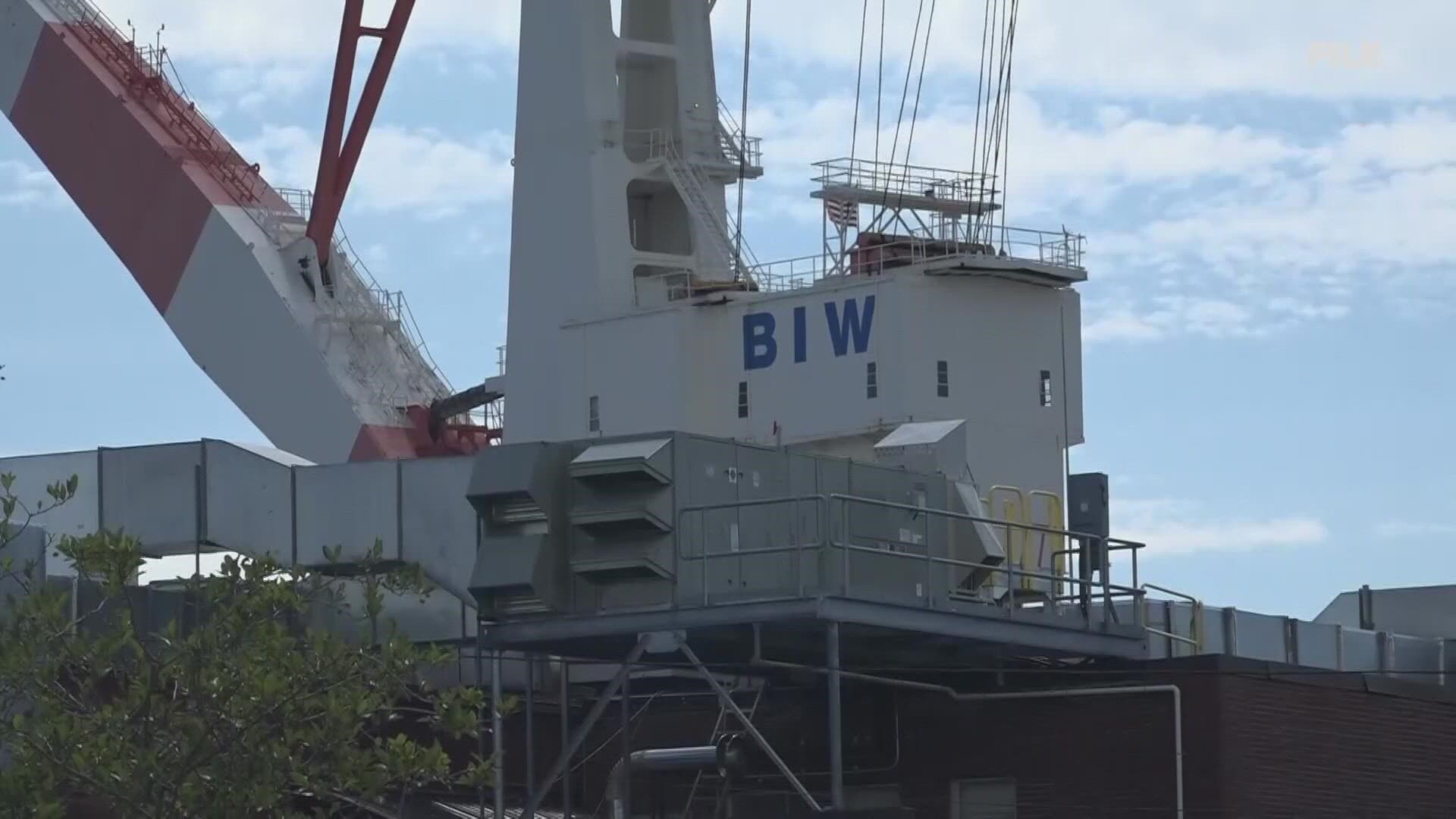
Six thousand seven hundred workers report to the banks of the Kennebec River in Bath every workday, and their collective paychecks total $447 million a year. That single figure makes Bath Iron Works the largest manufacturer in Maine by employment, but it only captures the first layer of the shipyard's economic reach. A 2024 independent analysis found that BIW's operations, supply-chain activity, and the downstream spending of its workforce together generate $2.5 billion in total economic output and support more than 14,200 jobs statewide. In Sagadahoc County, there is no comparable force.
The payroll anchoring Bath, Topsham, and Brunswick
BIW employed 6,722 workers as of its 2023 payroll count, up from 6,500 in 2021. The average annual wage of $66,473 exceeds Maine's statewide average of $58,372 and tracks closely with the state's broader manufacturing benchmark of $65,284. That is not a marginal difference: a BIW trade job pays roughly $8,000 more per year than the typical Maine job, a gap that translates directly into stronger housing demand, higher retail receipts, and a wider tax base across the three communities closest to the yard.
The workforce skews newer than it once did. More than half of BIW's employees have fewer than five years on the job, reflecting a surge in hiring over the past several years, with starting wages rising an average of 15 percent per year between 2021 and 2023. That competition for workers has had a visible effect on wages up and down the Midcoast labor market, as other employers adjust to retain people who might otherwise choose the shipyard.
The multiplier: 7,500 additional jobs beyond the gate
Every dollar of BIW payroll spent locally generates further activity. Ryan Wallace of Wallace Economic Advisors, who also served as director of the Center for Business and Economic Research at the University of Southern Maine, conducted the independent analysis that underpins these figures. His methodology separates BIW's direct employment from two additional layers of impact.
The first layer is supply-chain spending: BIW's purchases from Maine-based vendors support 2,490 additional jobs and $133 million in wages. The second layer is induced activity, meaning the purchases BIW workers and supplier employees make at grocery stores, restaurants, auto dealers, and service businesses across the region. That induced spending supports a further 4,367 jobs and $186 million in wages statewide. Add in the 635 jobs tied to SUPSHIP-Bath, the Navy's on-site oversight office, and BIW's total statewide employment footprint reaches well above 14,000.
The Sagadahoc-Cumberland region captures roughly 80 percent of that impact, and within that region, BIW contributed approximately $2 billion in economic output, with $1.1 billion counted as direct value-added contribution to state GDP.
What it means for Bath's city budget and neighboring towns
BIW's industrial footprint on the Kennebec generates property tax revenue for Bath and fuels income and sales tax flows throughout Sagadahoc County. The 2024 analysis valued BIW's five-year cumulative economic activity at $8.4 billion, with $4.4 billion added to Maine's gross domestic product. At that scale, BIW's production calendar and hiring trajectory are effectively municipal finance issues, not just labor market statistics.
That dynamic puts BIW's infrastructure constraints squarely on the agenda at Bath City Hall. The shipyard has publicly identified housing affordability, childcare access, and transportation gaps as the primary barriers to further workforce growth. BIW formally broke ground on a workforce housing development at 150 Congress Avenue in Bath, a direct investment in solving the bottleneck that most immediately limits its own hiring. For neighboring Topsham and Brunswick residents, the pressure on Bath's rental and for-sale housing market from BIW's recruiting activity is already a lived reality.
Training pipelines: SMCC Brunswick and the apprenticeship ladder
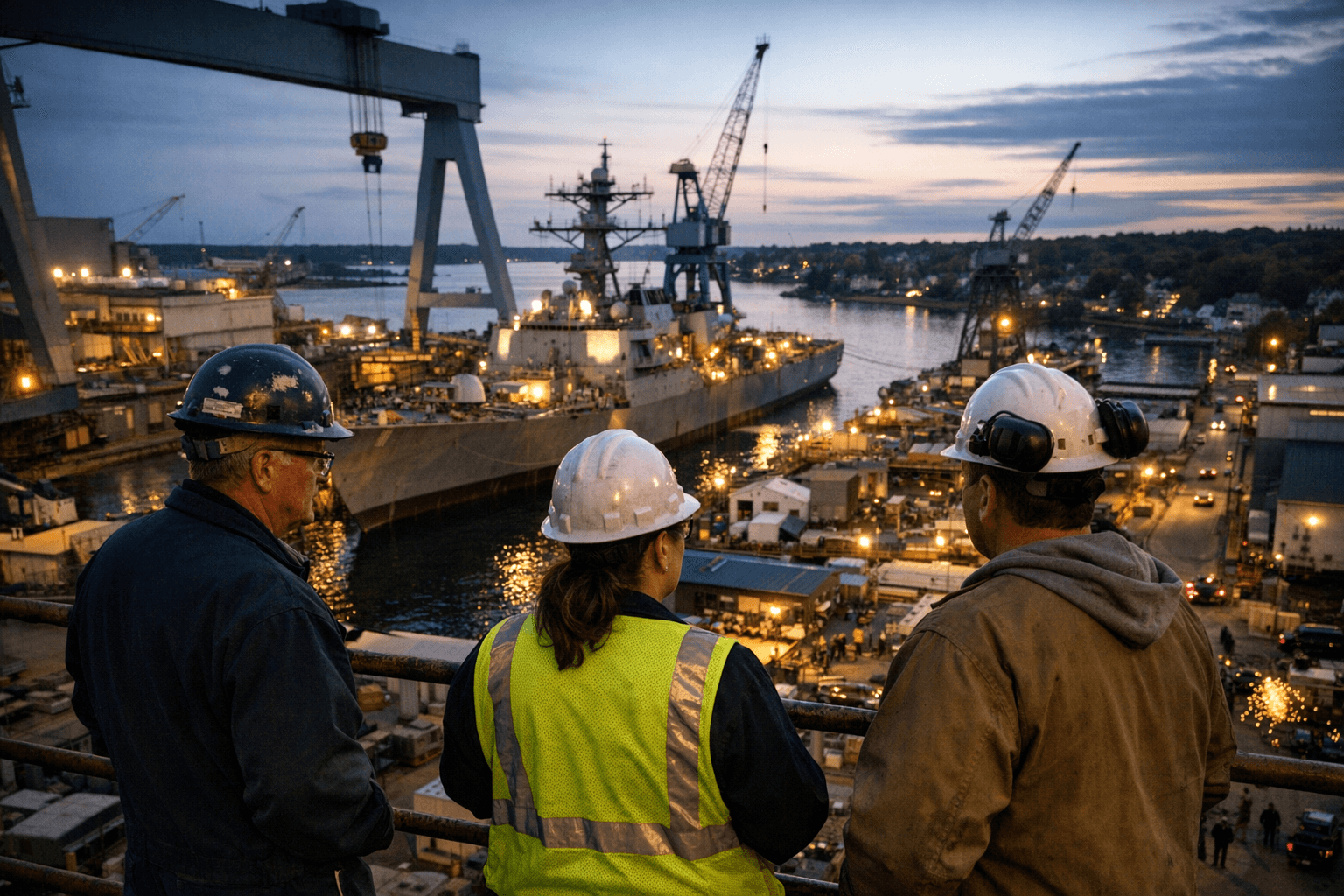
BIW has built formal partnerships with the Maine Community College System and Maine Quality Centers to develop its hiring pipeline, with courses currently offered at the SMCC Midcoast Campus in Brunswick. Manufacturing technician and marine designer programs are free to qualified applicants and lead directly to a shipyard interview upon completion. The University of Maine has also partnered with BIW, with business students developing enhanced apprenticeship frameworks and earlier outreach strategies aimed at reaching tradespeople before competitors do.
For younger Sagadahoc County residents weighing a career path, the calculus is straightforward: above-average wages from day one, employer-supported trade training, and a four-decade-old apprenticeship culture at a company that has operated on the Kennebec since 1884.
The March 2026 strike and what the new contract means for Main Street
In late March 2026, members of the Bath Marine Draftsmen's Association walked off the job after three weeks of stalled negotiations. The strike lasted approximately a week before workers ratified a new four-year collective bargaining agreement. BIW responded with a statement that captured the urgency felt on both sides: "We look forward to working together once again to deliver the Navy's ships on time to protect our nation and our families."
For local business owners, the resolution carries direct financial meaning. A four-year contract stabilizes BIW's production schedule and labor costs through at least 2030, which in turn stabilizes the spending patterns of the county's largest workforce. Every month of labor peace is a month of predictable BIW payroll flowing into Bath-area bank accounts and through the registers of Midcoast businesses that depend on shipyard employees as customers.
Federal contracts and what to watch next
BIW's long-term economic footprint is ultimately a function of the U.S. Navy's demand for Arleigh Burke-class destroyers, the warships Bath has built for decades under the "Bath built is best built" standard. Congressional decisions about destroyer production rates and Navy appropriations translate directly into BIW's hiring trajectory, which translates into job openings, housing demand, and sales tax receipts in Sagadahoc County. The county's identity as a "City of Ships" is not merely a marketing phrase; it is a precise description of the relationship between federal defense spending and the economic life of every household within commuting distance of the Kennebec.
The new four-year labor agreement removes one significant variable from the near-term outlook. The next pivotal milestones to watch: Navy budget submissions each spring, destroyer contract award announcements, and BIW's annual workforce count, which has risen steadily from 6,500 to 6,722 since 2021 and is a leading indicator of where the county's economy is heading.
This article was produced by Prism’s automated news system from verified source data, official records, and press releases, then run through automated quality and moderation checks before publishing. The system is built and supervised by the people who set the standards it runs under. Read our full AI policy.
Did this article answer your question?