Bath's Maritime Heritage Offers Shipbuilding History and Waterfront Culture for All
Bath, Maine earned the nickname "City of Ships" for good reason, and its maritime heritage remains one of the most immersive history experiences in New England.

Few American cities wear their industrial identity as proudly as Bath, Maine. The Kennebec River city has been launching vessels into the water since the late 17th century, and that tradition is not simply preserved here; it is lived. From the thunderous activity at Bath Iron Works to the meticulously curated galleries of the Maine Maritime Museum, the city offers a depth of maritime experience that goes well beyond a casual afternoon stop.
The Maine Maritime Museum: The Heart of It All
No visit to Bath's waterfront is complete without time at the Maine Maritime Museum, located on Washington Street along the Kennebec River. The museum sits on the former grounds of the Percy & Small Shipyard, the last surviving large wooden shipbuilding facility in the United States, and that physical connection to history is palpable the moment you walk the grounds. The Percy & Small complex dates to the late 19th century and produced some of the largest wooden sailing vessels ever built in America, including multi-masted schooners that carried cargo along the Atlantic coast and beyond.
Inside, the museum's galleries trace the full arc of Maine's shipbuilding story, from the earliest colonial-era construction techniques to the steel vessels being assembled just down the river today. Exhibits cover navigation, fishing, trade, and the daily lives of the men and women whose livelihoods depended on the sea. The collection includes ship models, maritime paintings, tools, and artifacts that bring the technical and human dimensions of the industry into clear focus. For families, the museum's programming is designed to engage children and adults alike, with hands-on activities that make centuries-old crafts accessible and genuinely fun.
The museum also operates seasonal boat tours on the Kennebec, offering views of Bath Iron Works from the water. Watching a modern guided missile destroyer take shape at the shipyard while standing on a vessel sailing the same river where 19th-century schooners were built creates a remarkable sense of historical continuity.
Bath Iron Works and the Living Tradition
Bath Iron Works, known locally as BIW, is not a museum exhibit; it is one of the most productive naval shipyards in the United States, and its massive cranes are visible from much of downtown Bath. The shipyard has been building vessels on the Kennebec since 1884 and today constructs Arleigh Burke-class destroyers for the U.S. Navy. The facility employs thousands of workers from across Sagadahoc County and the surrounding region, making it both a historic institution and an active economic anchor.
While the shipyard itself is a working military facility and not open for public tours, its presence shapes the character of the entire city. The rhythms of BIW inform daily life in Bath, from the shift-change traffic on Washington Street to the civic pride visible in local storefronts and community conversations. The Maine Maritime Museum's boat tours offer the closest public view of the facility, and the museum's exhibits provide important context for understanding what is being built there and why it matters.
The Waterfront and Downtown Bath
The city's waterfront along the Kennebec is worth exploring on its own terms. Waterfront Park provides open green space and direct river views, and it serves as a gathering point for community events throughout the warmer months. The park connects naturally to Bath's compact and walkable downtown, where Federal-era architecture reflects the prosperity that shipbuilding generated in the 18th and 19th centuries. The commercial district on Front Street and the surrounding blocks contains locally owned shops, restaurants, and galleries that give the city a distinctive sense of place.
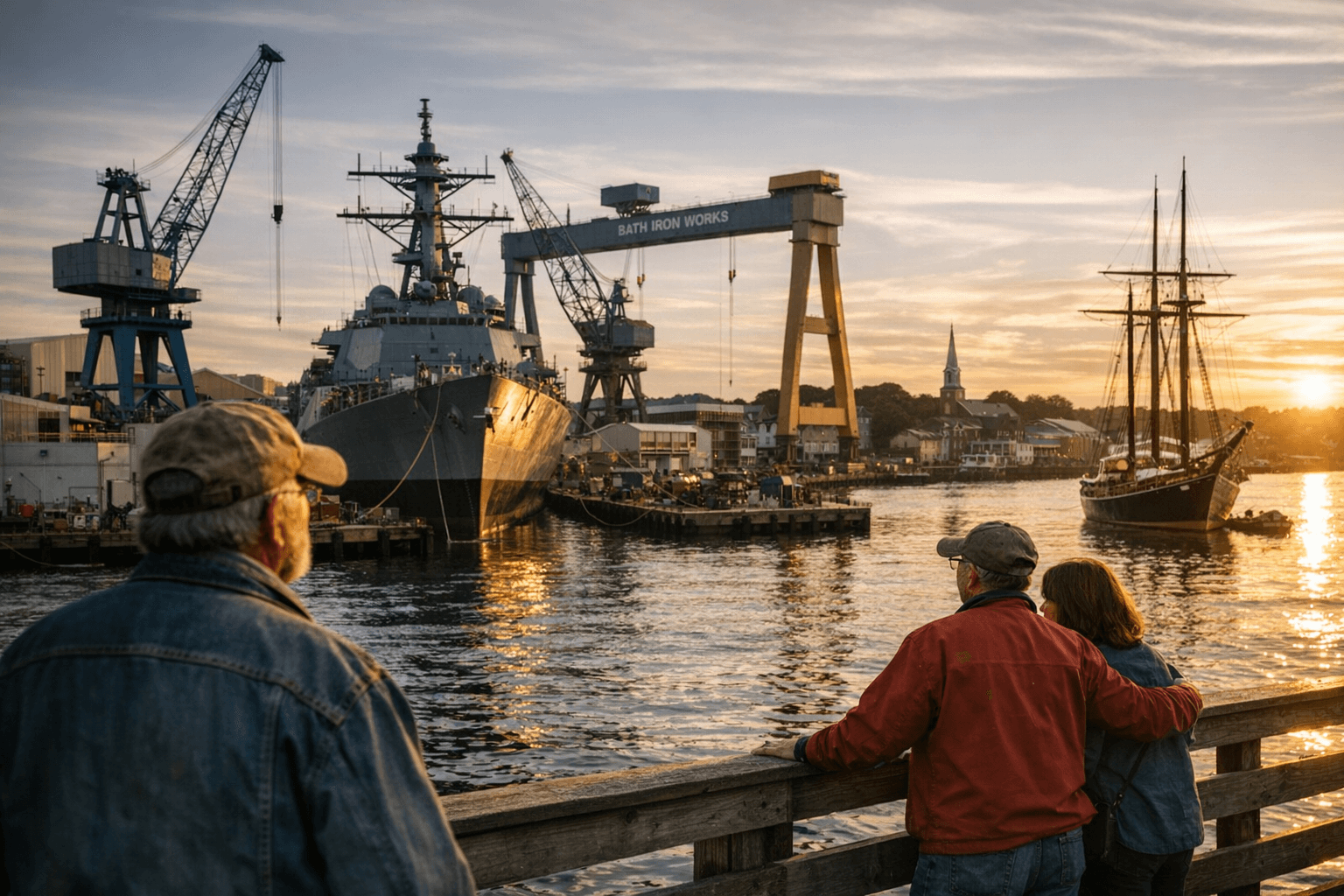
The historic district preserves a remarkable concentration of homes built by sea captains, merchants, and shipyard owners during Bath's peak years of wooden shipbuilding. Walking through these neighborhoods, particularly along Washington Street and the side streets near the river, offers an architectural record of the wealth and ambition that maritime commerce produced here. Many of the homes feature the Federal and Greek Revival styles popular among prosperous New Englanders of the era.
Planning a Visit
Bath is easily accessible from Portland, roughly 35 miles to the south, and from Brunswick, just across the Androscoggin River to the west via the Carlton Bridge. The Maine Maritime Museum is open year-round, though summer and early fall offer the fullest programming calendar, including boat tours, special exhibitions, and family events. The museum's grounds alone, with historic shipyard buildings and river views, justify an extended visit.
A few practical points worth keeping in mind:
- The Maine Maritime Museum charges admission; members of the Museums for All program may be eligible for reduced pricing.
- Boat tours on the Kennebec operate seasonally and require separate tickets; booking ahead is advisable in peak summer months.
- Downtown Bath's parking is generally manageable, with municipal lots near the waterfront and street parking throughout the commercial district.
- The city is highly walkable once you arrive; the museum, waterfront park, and downtown are all within reasonable walking distance of each other.
Why Bath's Story Endures
What makes Bath genuinely distinctive among Maine's many historic communities is the unbroken thread between past and present. The same river that floated wooden schooners in the 1880s now carries naval destroyers past the same hills and the same tidal flats. The craftspeople who bend steel at Bath Iron Works today are heirs to a tradition that stretches back through generations of Sagadahoc County workers who defined what it meant to build a ship in America.
That continuity is Bath's most compelling offering, and the Maine Maritime Museum tells that story with the rigor and care it deserves. Whether you are a first-time visitor drawn by curiosity or a longtime resident looking to share the city's heritage with family, Bath rewards the time you give it.
This article was produced by Prism’s automated news system from verified source data, official records, and press releases, then run through automated quality and moderation checks before publishing. The system is built and supervised by the people who set the standards it runs under. Read our full AI policy.
Did this article answer your question?