Bowdoin festival concert draws crowd into intense listening in Brunswick
A July 1 concert in Studzinski Hall drew about 250 listeners into Bartók and Schubert, showing how Bowdoin’s summer festival keeps Brunswick’s cultural season alive.
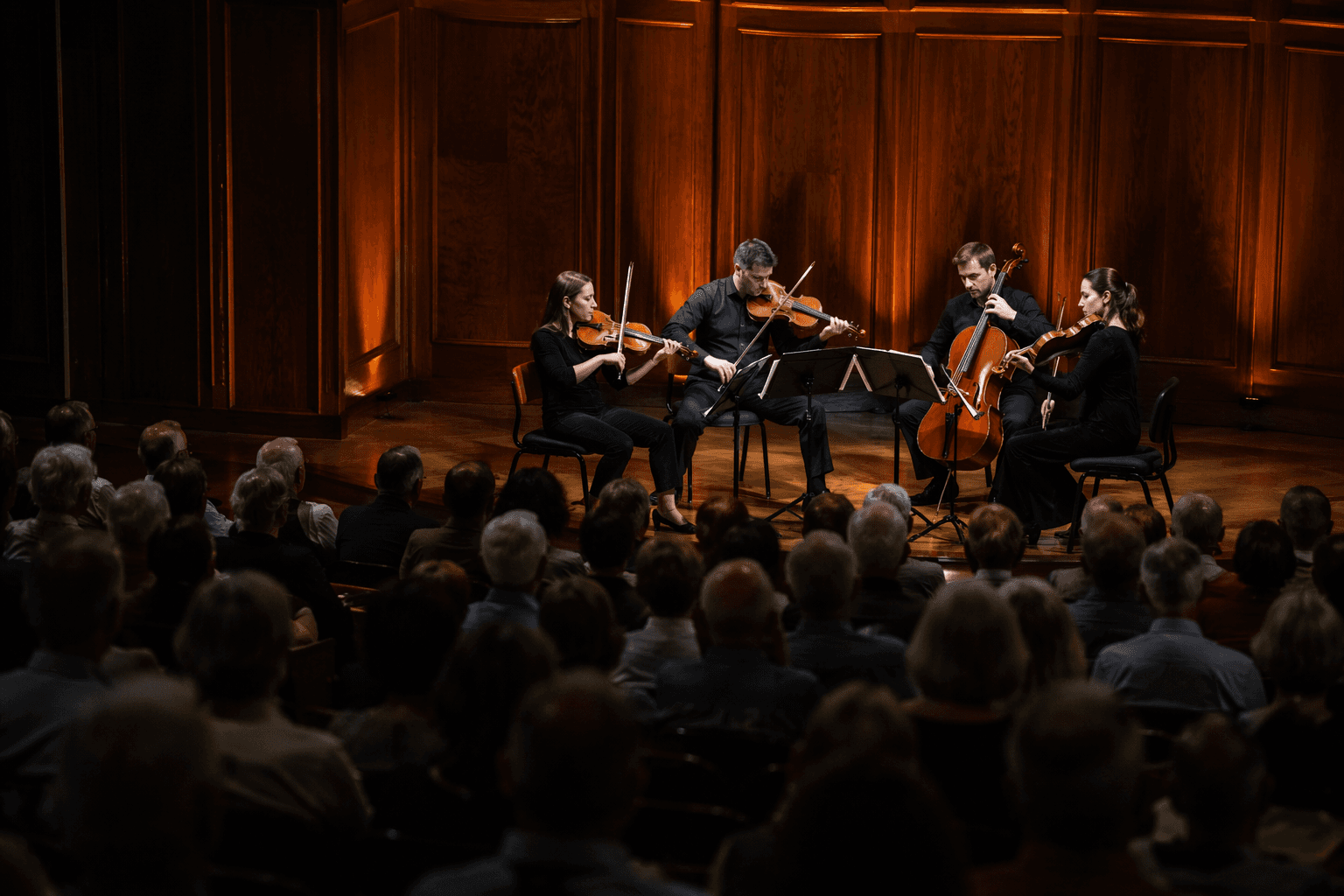
A Bartók world premiere in Bowdoin College’s Studzinski Recital Hall turned into one of those Brunswick nights when a room full of people stopped treating a concert like background and started listening with their whole bodies. About 250 people gathered on the Bowdoin campus for a program that moved from Schubert to Elizabeth Ogonek and then into a two-piano Bartók arrangement that had the audience leaning forward as the music tightened its grip.
A summer institution with roots in Brunswick
The Bowdoin International Music Festival has been part of summer life on the campus since 1964, when it began as a seasonal music school and concert series in Brunswick, Maine. It became an independent nonprofit in 1997 and took the Bowdoin International Music Festival name in 2004, but the core idea has stayed the same: bring serious music-making to the Midcoast and make the college feel busy, open, and alive during the warm months.
For 2026, the festival’s public season runs from June 29 through August 7, while its summer institute runs June 27 through August 8. The festival says about 250 students come each summer from more than 20 countries and nearly every U.S. state, and more than 70% receive some form of financial aid each year. Its 2026 applications page also says 275 students work closely with 80 distinguished faculty and guest artists, underscoring how large the operation has become while still keeping a teaching-and-performance model at its center.
That scale matters in Brunswick. It means Bowdoin is not just hosting a few concerts, but sustaining weeks of rehearsals, lessons, ticketed events, free performances, and campus traffic that help define the town’s summer cultural rhythm. The festival’s mix of chamber music, contemporary works, and larger ensemble projects gives local audiences a reason to keep returning to campus as the season unfolds.
A program built for alert listening
The July 1 concert was not designed to flatter a sleepy crowd. It began with the Schubert String Trio in B-flat Major, then moved to Elizabeth Ogonek’s Running at Still Life, performed by the Dōnum String Quartet, before finishing with the second half of the evening: Logan Skelton’s two-piano arrangement of Béla Bartók’s Concerto for Orchestra, played by Soyeon Kate Lee and Ran Dank.
That sequence mattered because it pushed the audience from familiar classical language into newer and more experimental territory, then into a fresh reworking of a major orchestral score. The concert listing identified the Bartók arrangement as a world premiere, which gave the final work an added sense of occasion even before a single note was played.
The room’s reaction became part of the story. The performance was described as athletic, urgent, and tightly coordinated, with the musicians and audience locked into the same momentum. Instead of treating Bartók as a museum piece, the concert made the score feel immediate, demanding, and alive in a chamber setting.
The performers gave the evening its particular charge
Soyeon Kate Lee brought more than technical authority to the final work. She serves on the Bowdoin International Music Festival piano faculty during the summer, and her appearance with Ran Dank added a personal dimension to the program because he is her husband and performing partner. Their two-piano collaboration gave the Bartók adaptation a sense of intimacy even as the music kept its scale and force.
The Dōnum String Quartet added another layer of energy to the evening. Formed in 2019 at Seoul National University, the ensemble represents the kind of international young talent Bowdoin is able to showcase alongside more established artists. That pairing of newer voices with veteran musicians is part of what keeps the festival from feeling static, even when the repertoire reaches deep into the classical canon.
The Bartók itself carries heavy historical weight. Composed in 1943, the five-movement Concerto for Orchestra premiered in Boston on December 1, 1944, and it remains one of Bartók’s best-known works. Its reputation for vivid orchestral color and tight argument helps explain why a two-piano version could land so forcefully in Studzinski Hall, where the focus was less on spectacle than on concentration.
Why this concert still matters in Brunswick
The festival’s own identity helps explain why the July 1 evening felt so consequential. Bowdoin describes the festival as an annual summer music school and concert series in Brunswick, and this concert showed the two sides of that mission working together: a teaching institution producing polished performances, and a public event drawing a sizable audience into serious listening.
That blend is one reason the festival remains a civic draw. Brunswick gets weeks of activity on the Bowdoin campus through early August, along with a calendar that includes free or ticketed concerts and visiting artists from around the world. In a summer season full of competing events, the festival keeps giving the town a reliable place where classical and contemporary music share the same stage and the same crowd.
The July 1 performance also showed how a difficult composer can become a local attraction when the programming is alive to the moment. Bartók’s Concerto for Orchestra, filtered through Logan Skelton’s new two-piano setting and played by Lee and Dank, became more than repertory. It became the kind of concert that reminds Brunswick why the festival still feels central to the season: not as a decorative add-on, but as one of the places where the town’s cultural and campus life keeps gathering force.
This article was produced by Prism’s automated news system from verified source data, official records, and press releases, then run through automated quality and moderation checks before publishing. The system is built and supervised by the people who set the standards it runs under. Read our full AI policy.
Did this article answer your question?