Brunswick PFAS Foam Spill Contaminates Lower Casco Bay, Study Finds
Mussels and clams near Harpswell Cove hit 25 parts per billion — seven times Maine's safety limit — after 51,450 gallons of PFAS foam flooded Brunswick Landing in August 2024.
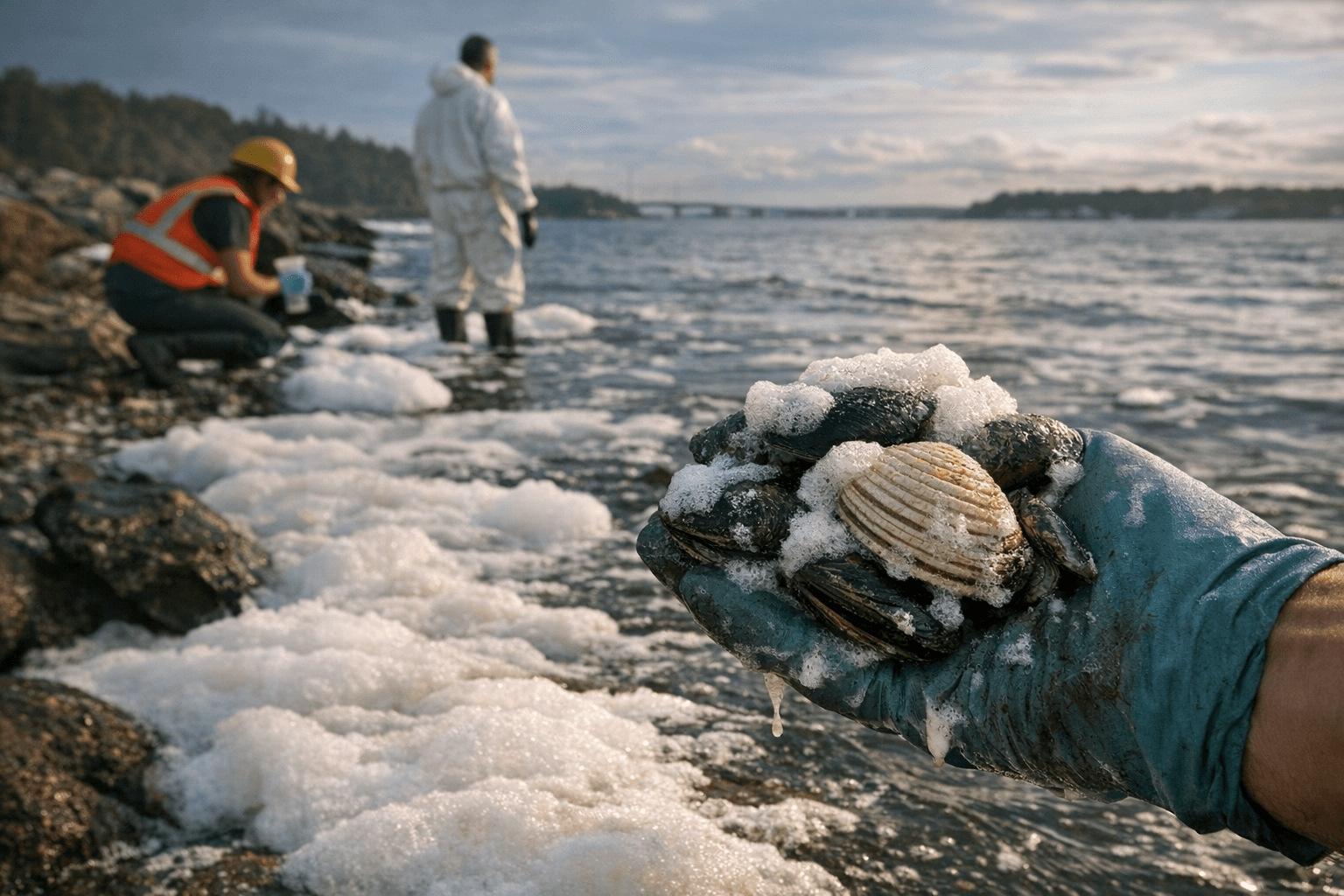
When the fire suppression system in Hangar 4 at Brunswick Landing malfunctioned on August 19, 2024, it discharged 1,450 gallons of aqueous film-forming foam concentrate mixed with roughly 50,000 gallons of water, sending a total of 51,450 gallons of PFAS-laden liquid through the stormwater system, into drainage ponds, and ultimately toward Harpswell Cove. Levels of forever chemicals in local mussels and soft-shell clams spiked to 25 parts per billion, more than seven times the state's safety threshold, prompting an emergency closure of shellfish harvesting in Harpswell Cove.
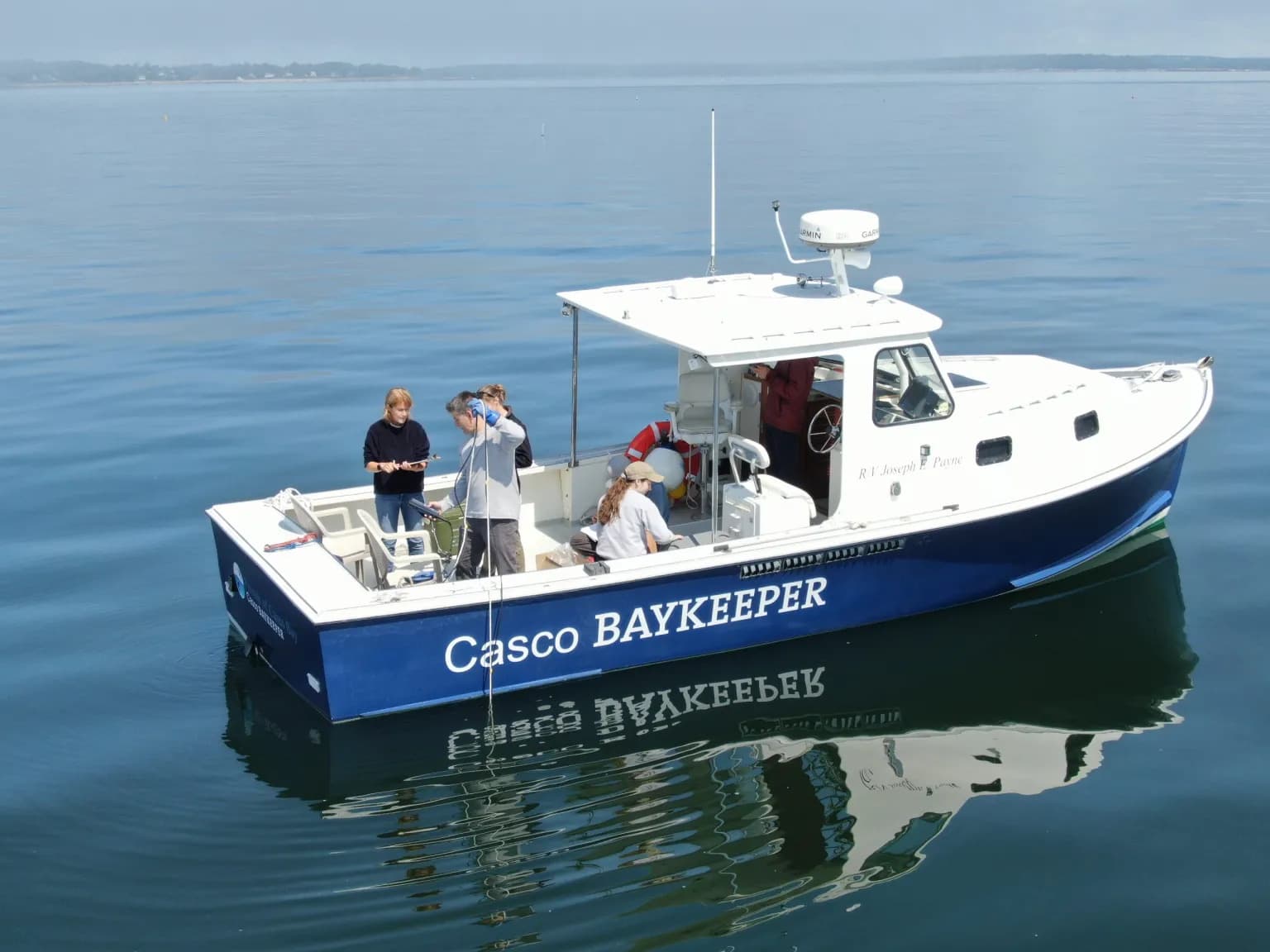
A two-year study released this week by Friends of Casco Bay details just how far that contamination traveled. It is the first study of forever chemical levels in an estuary in Maine. Authored by Casco Baykeeper Ivy Frignoca and Science and Advocacy Associate Heather Kenyon, with data from Bigelow Laboratory for Ocean Sciences, the report drew on an extensive sampling campaign: the team collected and analyzed more than 456 water samples at 76 sites over three sampling events, and sampled sediment at 45 sites in the Casco Bay watershed, finding PFAS in every water sample collected.
Using chemical "fingerprinting" to isolate the foam's unique signature, environmental chemist Christoph Aeppli from Bigelow Lab tracked the spilled PFAS as they drifted up to 10 miles from Brunswick Landing, lingering in the waters long after the initial accident. It took about 10 weeks for PFAS levels in the water to return to pre-spill conditions. One site still registered levels above federal aquatic health thresholds five months after the discharge. The researchers had the rare advantage of baseline data already in hand: baseline data collected before the spill through this project were invaluable for helping reveal the impacts of the spill on PFAS levels.
The state reopened shellfish harvesting in Harpswell Cove in the fall of 2025 after tissue tests in November 2024 and May 2025 confirmed levels below the state's 3.5 parts per billion action level. But the study's broader findings underscore that the Brunswick spill was not the only source of contamination. The study identified the Kennebec River as a significant contributor to Casco Bay's chemical burden, acting as a primary conveyor belt that funnels PFAS from upstream industrial and farm sources into the bay and accounts for a substantial portion of its total chemical load. The sheer volume of the Gulf of Maine provides a degree of dilution that keeps concentrations in most of the bay below federal safety benchmarks, but the study warns that dilution doesn't equal disappearance: PFAS don't break down naturally; instead, they move into the food web.
Standard environmental testing in Maine tracks about 40 of the thousands of known forever chemicals, researchers warned, which makes it impossible to assess the cumulative impact of the remaining chemicals.
The policy response to the Brunswick spill has moved through Augusta, though not without complications. Rep. Dan Ankeles (D-Brunswick) called the August 2024 discharge "a wake up call" and said, "This is like a 'Silent Spring' moment for my district." In response to the spill, Maine lawmakers passed laws in 2025 to create a statewide inventory of firefighting foam and a voluntary collection program, but the program is not funded and some fear it won't happen unless Maine wins a lawsuit against PFAS manufacturers.
Researchers say the science needs to keep pace with the policy gaps. The next step, they argue, should be to pair continuous water monitoring with more frequent tissue sampling of fish and other marine life, including clams, mussels, and lobster, to better understand the long-term health of the estuary. Casco Baykeeper Ivy Frignoca noted that PFAS levels measured in the Presumpscot River fell below EPA guidelines, yet Maine's Department of Environmental Protection separately found higher levels in fish tissues, prompting a state consumption advisory; she said future research should examine how these chemicals build up in fish and what that could mean for both human and ecosystem health.
Frignoca noted that the study's data helped shape PFAS policies at the statehouse, protecting Casco Bay from future spills and giving the community a stronger voice. Whether that voice translates into funded, enforceable action now depends on the outcome of litigation that state officials have yet to fully resolve.
This article was produced by Prism’s automated news system from verified source data, official records, and press releases, then run through automated quality and moderation checks before publishing. The system is built and supervised by the people who set the standards it runs under. Read our full AI policy.
Did this article answer your question?