Brunswick Schools Deploy Therapy Dogs to Support Students' Emotional Well-Being
Ru, a 5-year-old miniature schnauzer, joined Brunswick's junior high school staff in September 2025 and already knows "the kids who need the most attention."
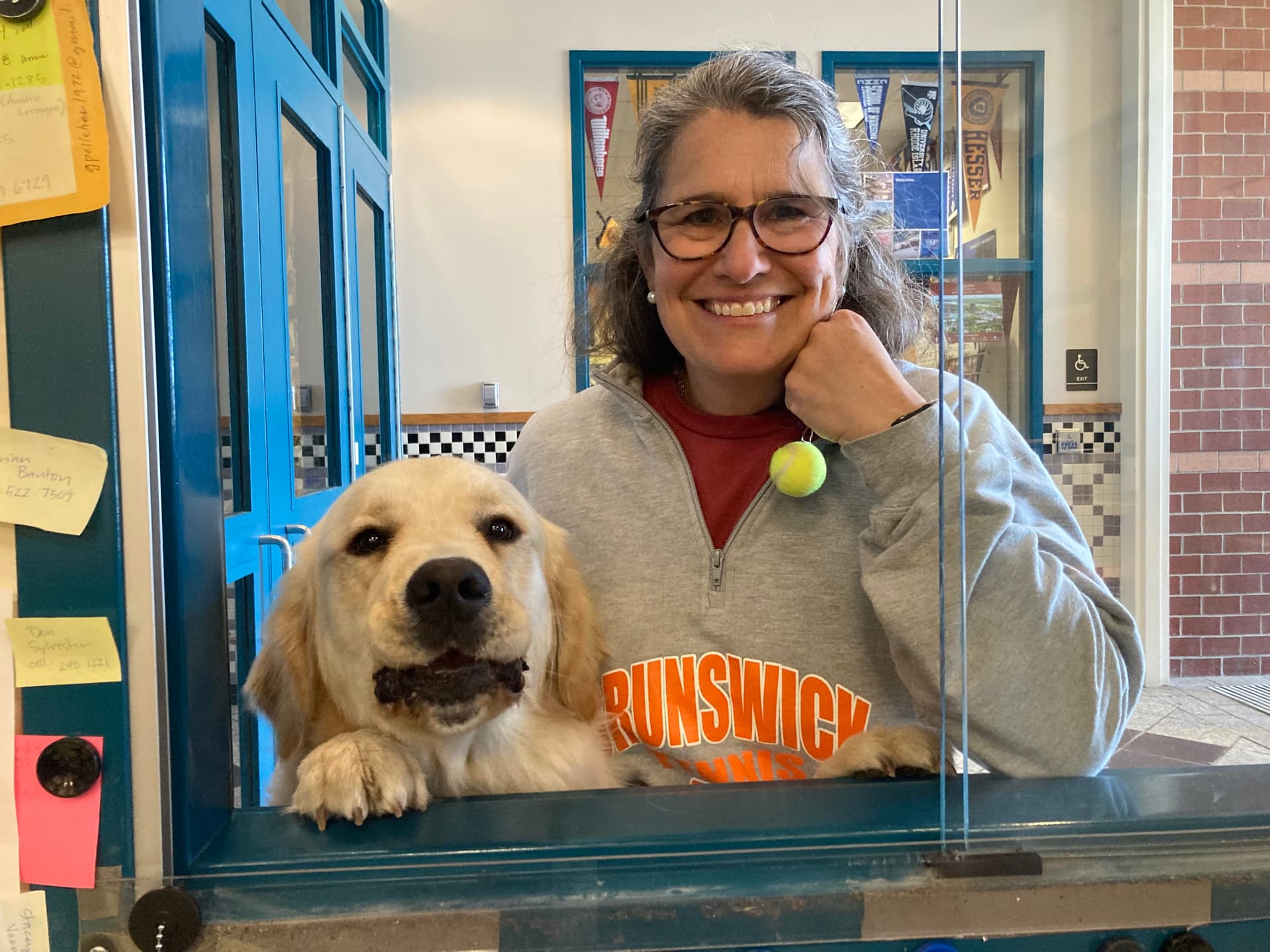
Three certified therapy dogs are woven into the Brunswick School Department's student support network, working alongside social workers and special education staff to help children manage stress, process difficult emotions, and show up ready to learn.
Ru, a 5-year-old miniature schnauzer whose full name is Arugula, is the newest member of the team. He joined the junior high school in September 2025 after completing Canine Good Citizenship classes and earning his therapy dog certification. His owner and handler is Deb Belaire, a special education teacher at the school. Elmer Glue and Greta round out the trio of named therapy dogs in the district, though details about their breeds, handlers, and assignments have not been made public.
The program is designed to do more than offer a moment of comfort. Therapy dogs are positioned as structured tools for supporting student mental health, emotional regulation, and academic readiness, embedded within the district's broader special education and counseling framework rather than operating as a standalone novelty.
Belaire has seen that structure pay off in concrete ways. She described one student who is able to get through difficult days because they are permitted to visit Ru when upset. The effect, she said, extends beyond students who are openly struggling. "Ru seems to know the kids who need the most attention," Belaire said, adding that he is particularly comforting to those who don't make friends easily.
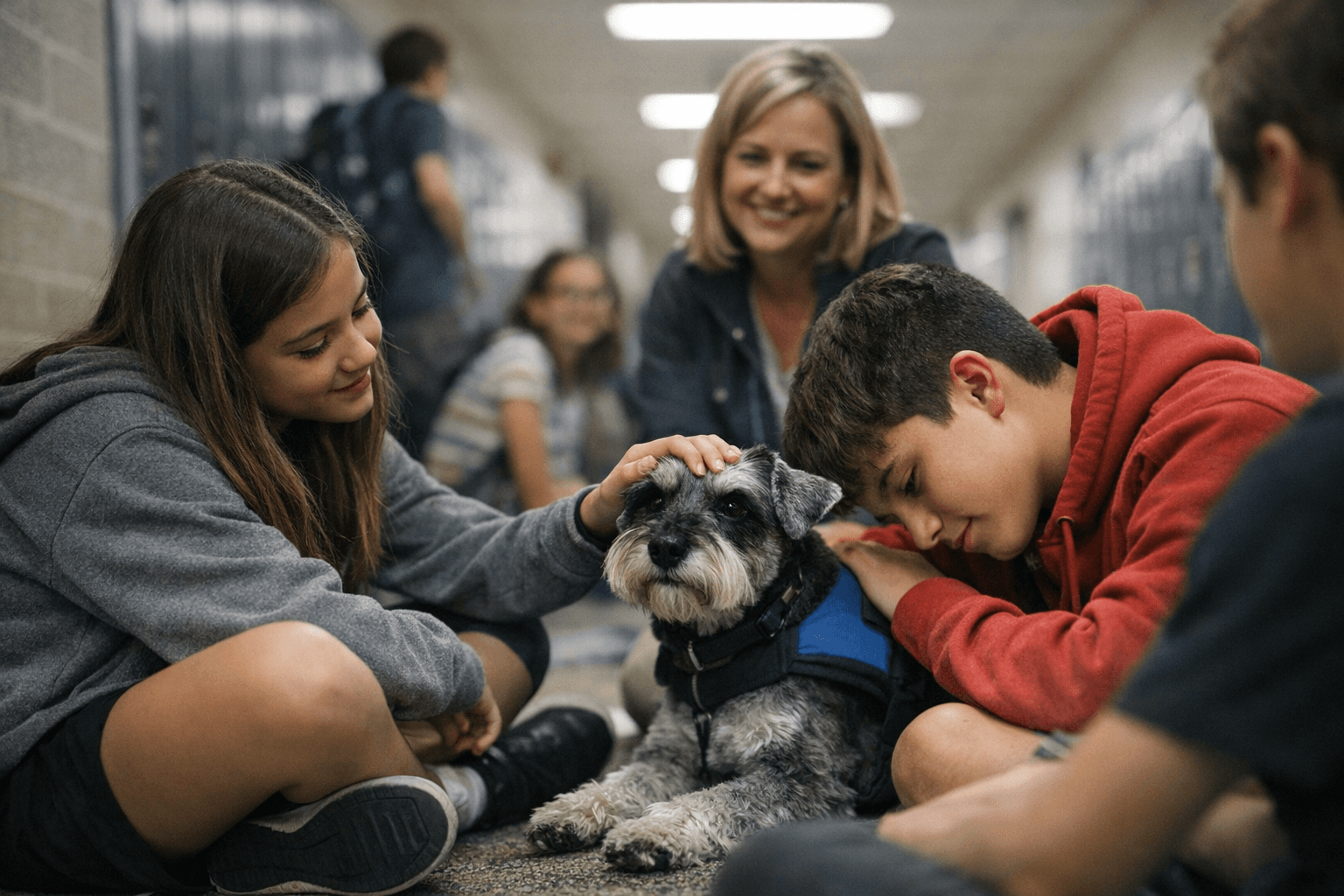
Research cited by the American Kennel Club and Pet Partners supports the approach. Structured animal-assisted interventions have been shown to reduce stress and anxiety, improve social connection, and foster well-being among students. At the physiological level, interactions with therapy dogs have been linked to lower cortisol, the body's primary stress hormone, and higher oxytocin, the chemical associated with bonding and calm.
The goal, according to the department, is to make Brunswick schools feel like genuinely safe and nurturing spaces, particularly for students navigating anxiety, grief, trauma, or the everyday pressures of adolescence. Whether the program extends beyond the junior high school, how many additional dogs may be involved, and how interactions are scheduled or approved are details the district has not yet detailed publicly.
This article was produced by Prism’s automated news system from verified source data, official records, and press releases, then run through automated quality and moderation checks before publishing. The system is built and supervised by the people who set the standards it runs under. Read our full AI policy.
Did this article answer your question?