Mills Signs Child Care Affordability Bill, Making Cost Protections Permanent
Gov. Mills signed LD 1728 on March 23, dropping Maine's child care copay cap from 10% to 7% of household income for families earning up to 85% of the state median.

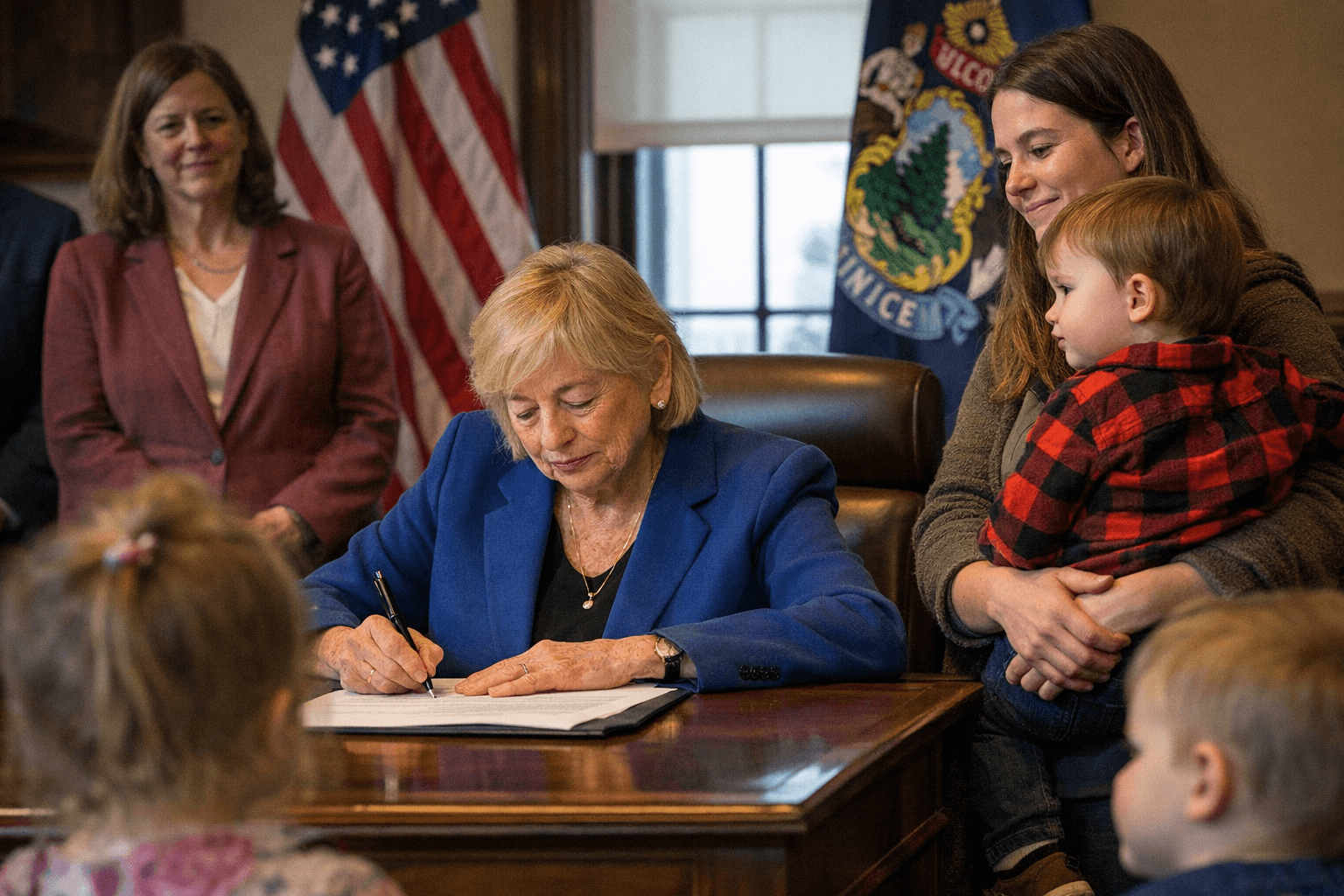
Governor Janet Mills signed LD 1728 into law Monday at the St. Louis Child Development Center in Biddeford, cutting the maximum child care copayment for thousands of Maine families and locking a series of affordability measures into statute that her administration had previously maintained through policy alone.
Under the new law, Maine's Child Care Affordability Program will align with federal practices, requiring that qualifying families earning up to 85% of the state's median income pay no more than 7% of their household income on child care. The previous cap stood at 10%. For a family earning close to that threshold, the difference can translate to hundreds of dollars per year returned to household budgets.
"Every family in Maine deserves access to safe, high-quality child care, and every parent deserves to know that cost won't stand in the way," Mills said. "With this law, we are locking in the protections we have fought for and ensuring that thousands of Maine children and families can count on the affordable care they need to thrive."
The law goes further than the copay cap. The bill allows the Maine Department of Health and Human Services to further reduce or waive copayments entirely for families with income up to 30% of the state median, children in foster or kinship care, families experiencing homelessness, and families with a child with a disability. DHHS will also be required to post copayment information publicly on its website.
At St. Louis Child Development Center, director Bill Hager oversees about 90 children, including 30 enrolled in the Child Care Affordability Program. Previously, if one of those children was absent, the center could not bill for that time, leaving gaps in revenue. With the governor's signature, providers like Hager will now be reimbursed based on enrollment rather than attendance, meaning centers receive consistent funding even if a child is temporarily absent.
Hager described the bind the old system created: "I can't fill that empty slot," he said. "So, I have to raise my rates across the board for our private fee clients to cover the cost."
Hager also pointed to a population that rarely gets mentioned in child care policy debates. "We're always worried about that tier of families," he said. "I'm not poor enough for public assistance, but I can't afford everything I'm being charged." These households are sometimes called the "forgotten middle."
Senator Henry Ingwersen, the bill's sponsor, said the legislation grew out of something personal. The issue became personal after seeing his own daughter and son-in-law struggle to afford child care. "It really hurt them. About 25% of their total income was going toward child care," he said. As a father of three and grandfather of 12, Ingwersen said he knows firsthand the importance of access to quality, affordable child care.
Senate President Mattie Daughtry, who joined Mills at the signing, said the bill "reflects what we've been hearing from families and providers across Maine," calling it "especially meaningful" to sign at a center visited during the legislature's statewide child care tour. "By reducing what families are asked to pay and bringing more stability to providers, this bill takes a meaningful step toward a system that is more affordable, more sustainable, and better able to serve our communities," Daughtry said.
The new law builds on seven years of investment. Since taking office in 2019, the Mills administration has prioritized expanding high-quality early learning options. Maine has created more than 6,100 new child care slots and is working to retain staff by providing salary supplements to an average of 7,742 early childhood educators per month. A statement from the governor's office says LD 1728 locks in a state subsidy that helps defray costs for families by paying providers directly and limiting out-of-pocket expenses based on income. The Child Care Affordability Program currently serves more than 3,000 children statewide, backed by more than $145 million in state and federal investment since 2019.
The bill is scheduled to become law after the legislative session ends, which is marked to end April 15, though that timeline could be delayed.
This article was produced by Prism’s automated news system from verified source data, official records, and press releases, then run through automated quality and moderation checks before publishing. The system is built and supervised by the people who set the standards it runs under. Read our full AI policy.
Did this article answer your question?