Police Drop Harriman's Harassment Orders Against Critics at City Meetings
Lewiston police dropped harassment notices Councilor Scott Harriman sought against Andrew and Lisa Jones for criticizing him at meetings.
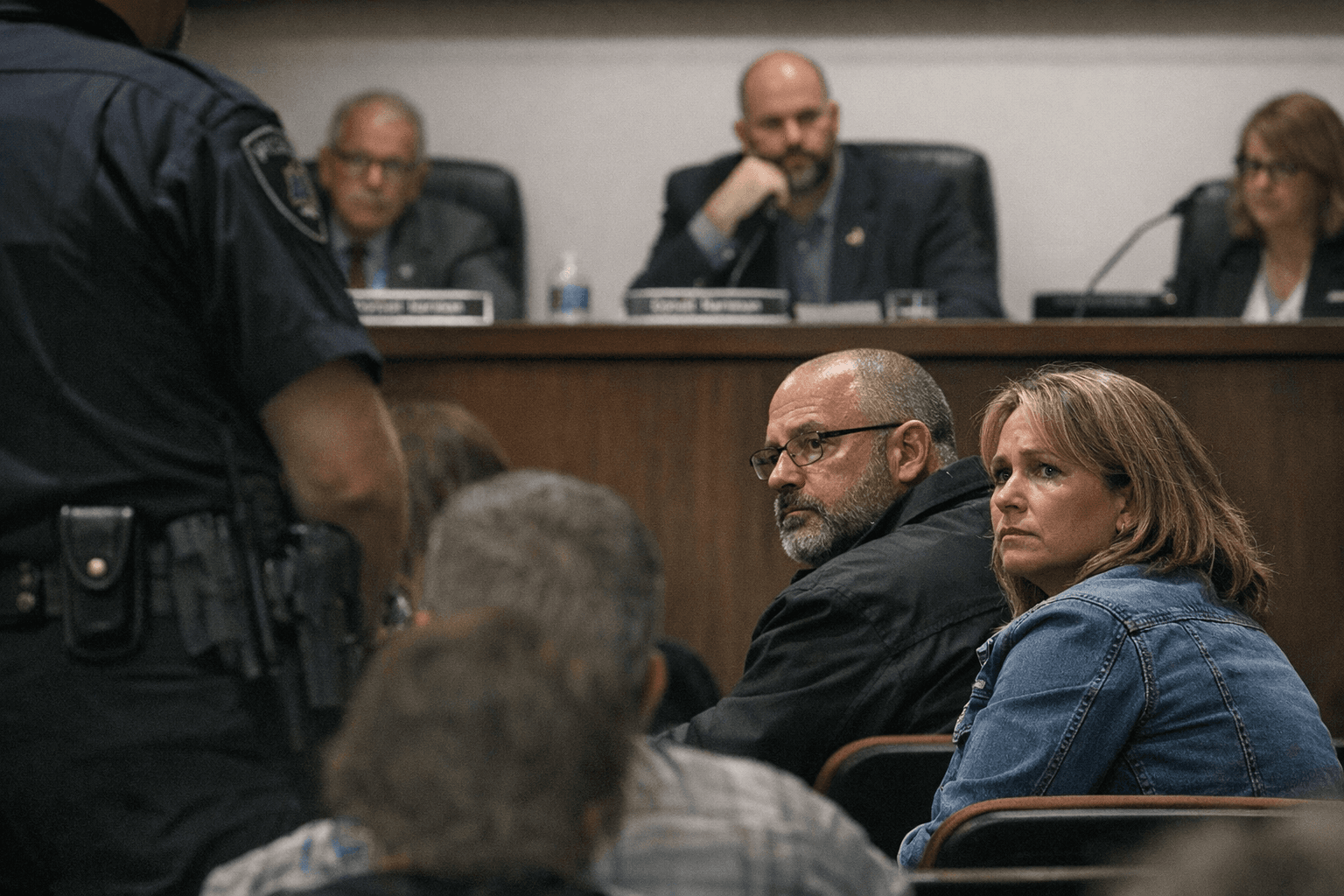
Lewiston police rescinded cease harassment notices that City Councilor Scott Harriman sought against Andrew and Lisa Jones, two Ward 2 residents who had regularly criticized him during public comment. The ruling set a standard that applies at every public meeting table in Maine: criticism of an elected official's official conduct, including photographing materials on the council dais, falls outside the reach of the state's harassment statute.
Harriman, who represents Ward 3 and also holds a seat on the Lewiston School Committee, walked into the Lewiston Police Department lobby on March 23, 2026, at approximately 3:57 p.m. to file his complaint. He alleged the Joneses harassed him through public comments at council meetings, follow-up emails, and criticism of where he looked during sessions and his hand movements. One incident he cited involved a February 17 council meeting: he briefly left the chamber to use the restroom, returned to find papers beneath his laptop appeared disturbed, and that evening received an email from Andrew Jones containing a photograph of those materials.
Officers initially issued cease harassment notices to Andrew and Lisa Jones. After review, police voided them, determining every interaction the Joneses had with Harriman occurred while he was acting in his official capacity as an elected official. Prosecutors separately declined to pursue charges, ruling that speech directed at a public official performing official duties is protected unless it includes credible threats.
Under Maine Title 5, Chapter 337-A, a cease harassment notice from law enforcement is a required first step before a complainant can petition a court for a full protection order. Police rescinding the notice closed any path to court.
Jones characterized the episode as a misuse of police services and planned to speak about it at the April 7 Lewiston City Council meeting. He and his wife also filed a Freedom of Access Act request with both the city and the Lewiston Police Department seeking all records tied to the notices.
For residents in Bath, Topsham, West Bath, and Georgetown, the case makes the legal line concrete: publicly criticizing a councilor or select board member at a meeting, emailing officials about their conduct in office, and photographing open documents at a public session are all protected activities under Maine law. Criminal harassment under Title 17-A requires conduct intended to cause fear or credible threats to a person. It is the responding police department, not the complainant, that decides at the notice stage whether that threshold has been crossed.
Harriman brought a well-documented record of controversy into the March complaint. The Lewiston City Council censured him in October 2025, along with Councilor Joshua Nagine, by a 6-0 vote for using the encrypted messaging app Signal to communicate with former police Detective Joe Philippon about city matters in a thread set to automatically delete messages, violating public records requirements. He subsequently won the Maine House District 94 special election in February 2026.
This article was produced by Prism’s automated news system from verified source data, official records, and press releases, then run through automated quality and moderation checks before publishing. The system is built and supervised by the people who set the standards it runs under. Read our full AI policy.
Did this article answer your question?