Sagadahoc County Beekeepers Launch Six-Session Beekeeping Course Jan. 15
The Sagadahoc County Beekeepers will begin a six-session Beekeeping Fundamentals course on Jan. 15, 2026, aimed at residents who want to start keeping honeybees or sharpen early-season colony management skills. The program offers classroom instruction plus hands-on club apiary meetups, a timely local resource for pollinator health, small-scale honey production, and neighborhood-compatible beekeeping practices.
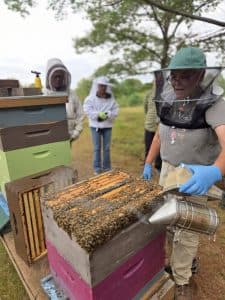
The Sagadahoc County Beekeepers are offering a Beekeeping Fundamentals adult-education course that begins Jan. 15, 2026. Structured as six sessions, the class covers bee biology, equipment and setup, seasonal management practices, disease and pest management including varroa mite checks, honey-harvesting basics, and local regulations and best practices. The local chapter will pair the classroom curriculum with hands-on meetups at the club apiary and ongoing member support.
This program is intended for Sagadahoc residents who want to launch backyard hives, improve early-season management, or explore beekeeping as a hobby or modest supplemental income. By combining classroom lessons with practical apiary time, the course aims to shorten the learning curve for new keepers and reduce risks that can lead to colony losses. Disease and pest management, specifically attention to varroa mites, is an explicit module, reflecting the central role mite control plays in apiary success and in protecting neighboring operations.
Beyond individual hobbyists, the course has implications for local food systems and property-level agriculture. Healthy honeybee colonies support pollination of gardens, orchards, and small farms; residents who manage bees responsibly can help maintain pollinator services that contribute to local crop yields. The inclusion of local regulations and best practices is intended to help new beekeepers comply with zoning, nuisance, and animal-health expectations, lowering the chance of conflicts with neighbors and municipal authorities.

For households considering beekeeping, the course offers practical preparation on equipment choices and seasonal timing that can reduce upfront mistakes and unexpected costs. Club apiary meetups provide ongoing peer-to-peer knowledge transfer, which can be especially valuable in a region where weather, forage availability, and local disease pressures shape hive outcomes.
Registration details, information on any course fees or required materials, and a contact email for questions are posted on the Sagadahoc County Beekeepers events page at sagadahoccountybeekeepers.mainebeekeepers.org/events/. Residents interested in starting hive projects, supporting pollinator resilience, or producing small quantities of honey locally can register there to secure a place in the January sessions. The course represents a practical, community-based approach to strengthening pollinator health and informed beekeeping across Sagadahoc County.
Know something we missed? Have a correction or additional information?
Submit a Tip