Sagadahoc pond hockey keeps longtime players active and connected
Longtime Sagadahoc pond hockey players continued weekly winter games, preserving local traditions and keeping older residents active and socially connected.

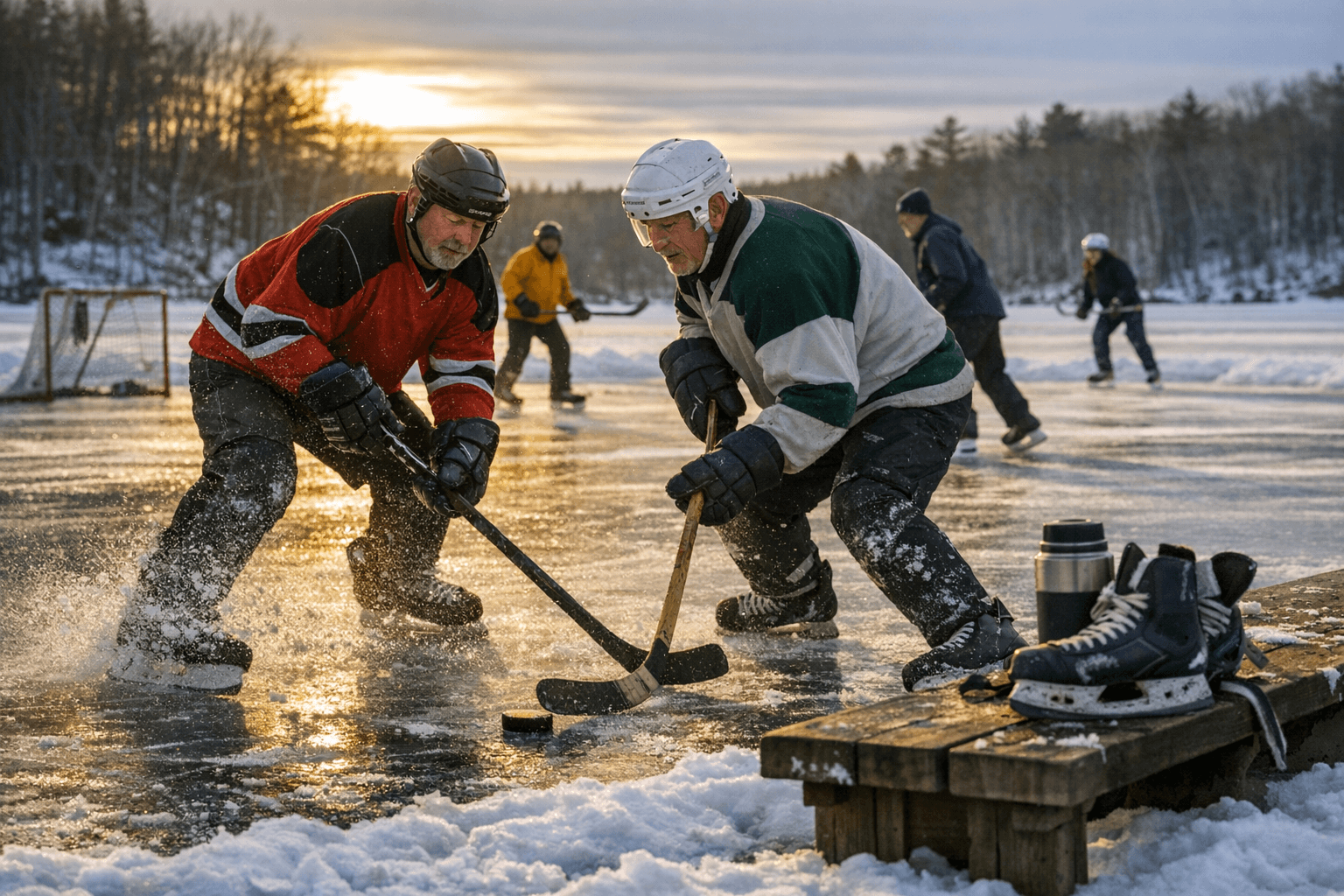
A multi-decade tradition of pond hockey in Sagadahoc County resurfaced this winter as a group of players in their 60s and 70s laced up skates and gathered on local outdoor ice. The regular games, played on ponds around Bath, Brunswick and neighboring towns, serve as a winter ritual that combines exercise, social connection and volunteer-led maintenance of public outdoor spaces.
The group has played together for decades, passing down an informal rule set and a culture of mutual care to newer participants. Players maintain their own equipment, keep spare sticks and blades on hand, and take turns preparing the ice by clearing snow and checking thickness before skates hit the surface. Community photos from recent games show players trading pickups, joking on the bench and keeping the pace steady despite the winters. For many, the routine of skating and socializing provides physical activity and a weekly rhythm through Maine’s long cold months.
Beyond the immediate camaraderie, the gatherings highlight local policy and community governance issues. Outdoor ice play depends on safe public access, consistent parking and municipal tolerance for volunteer maintenance. Town officials and residents face practical questions about liability, signage for ice safety, and how to support low-cost outdoor recreation without diverting municipal budgets. The informal stewardship model used by these players reduces direct public costs, but it also relies on an aging cohort of volunteers to sustain tasks such as ice preparation and equipment repairs.
Public health and senior services are implicated as well. Regular outdoor activity contributes to mobility and social well-being among older adults, potentially easing pressure on local health resources. At the same time, variable winter temperatures and thinner ice seasons driven by climate variability increase the need for clear guidance from emergency services and resources for safe play.
The social fabric this group maintains also feeds civic engagement. Intergenerational play draws younger neighbors into longstanding local customs, creating informal networks that can translate into volunteerism at town meetings, trail work or community events. Residents who value these winter traditions can influence municipal priorities through budget votes and community committees that set policies on public land use and safety.
As winter continues, the future of Sagadahoc’s pond hockey will hinge on how towns balance support for free, volunteer-driven recreation with safety and infrastructure needs. For readers, the season is a reminder that small, sustained community activities contribute to public health and local identity, and that preserving them often requires attention at the municipal level as much as on the ice.
Know something we missed? Have a correction or additional information?
Submit a Tip