Sagadahoc Residents Face Holiday Trash Surge, Practical Disposal Options
Local waste managers reported a sharp rise in trash and recycling volumes after Christmas, mirroring a national pattern of increased holiday waste. Sagadahoc residents should know safe, equitable disposal and reuse options for trees, lights, packaging, and food to reduce health risks and municipal costs.
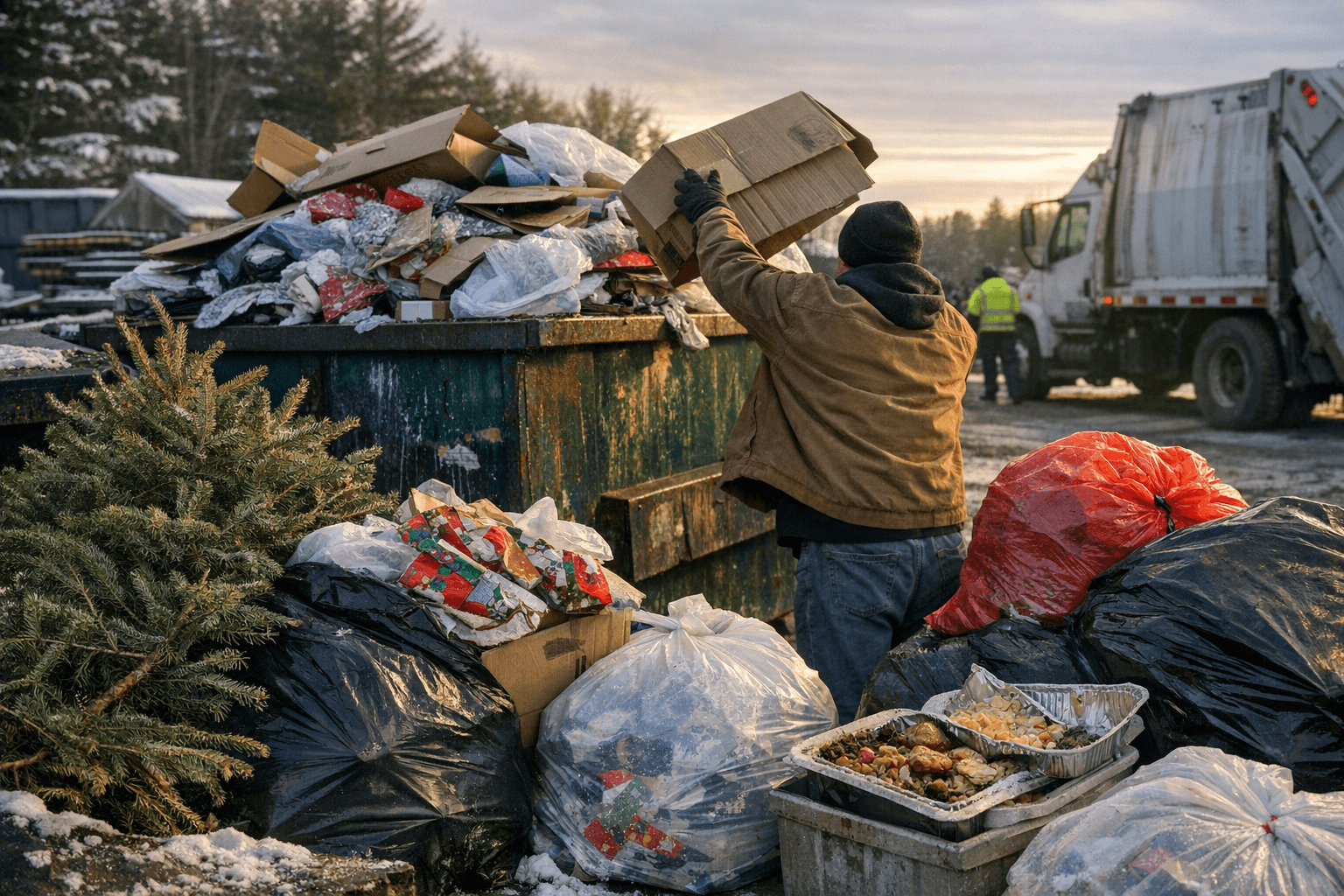
Sagadahoc County communities saw a noticeable increase in household waste following the December 24 holiday period, reflecting a broader American trend of substantially more trash around the holidays. Ecomaine, the Portland area waste management nonprofit that serves many southern Maine towns, reported a major spike in both trash and recycling immediately after Christmas, putting pressure on municipal collection systems and transfer facilities.
The immediate impact is practical and financial. Higher volumes can lead to overloaded curbside carts, collection delays, contaminated recycling loads, and higher disposal costs that strain small town budgets. Public health risks rise when food waste and uncovered refuse attract pests or when residents try to discard electronics and wiring improperly. These burdens often fall heaviest on lower income households and smaller municipalities with limited hauling capacity.
Residents can take several specific steps to reduce waste and protect local services. Real Christmas trees have multiple reuse paths instead of landfill disposal. Trees can be offered to beach dune stabilization projects, delivered to farms for mulch, or placed in town curbside tree collection programs where available. Bath offers curbside tree pickup in some neighborhoods, so residents should check municipal guidance for dates and rules.
Holiday string lights and other electronics should not go in curbside recycling. Use retailer take back programs such as Staples or local collection points that accept cords and small electronics. Packaging reduction matters as well. Flatten boxes, remove food residue, separate materials according to your town rules, and avoid bagging recyclables unless your municipality explicitly allows it. Contaminated or improperly sorted recycling often ends up in the trash, increasing costs and emissions.
Food waste reduction lowers health risks and landfill burden. Home composting is a feasible option for many households. Where available, community compost drop off sites and local curbside organics programs provide alternatives for residents who cannot compost at home.
Recycling rules vary by town, so verify municipal guidance before placing items at the curb. Clear, equitable municipal policies and accessible take back options reduce illegal dumping, protect public health, and keep costs down for all residents. Community leaders should consider expanding convenient drop off and collection services to ensure low income and mobility limited households can manage holiday cleanup safely and sustainably.
Know something we missed? Have a correction or additional information?
Submit a Tip