Skijoring pulls new winter interest across Sagadahoc County
Topsham hosted an equine skijoring event Jan. 12 that highlighted a growing winter sport and raised trail access and animal welfare questions for locals.
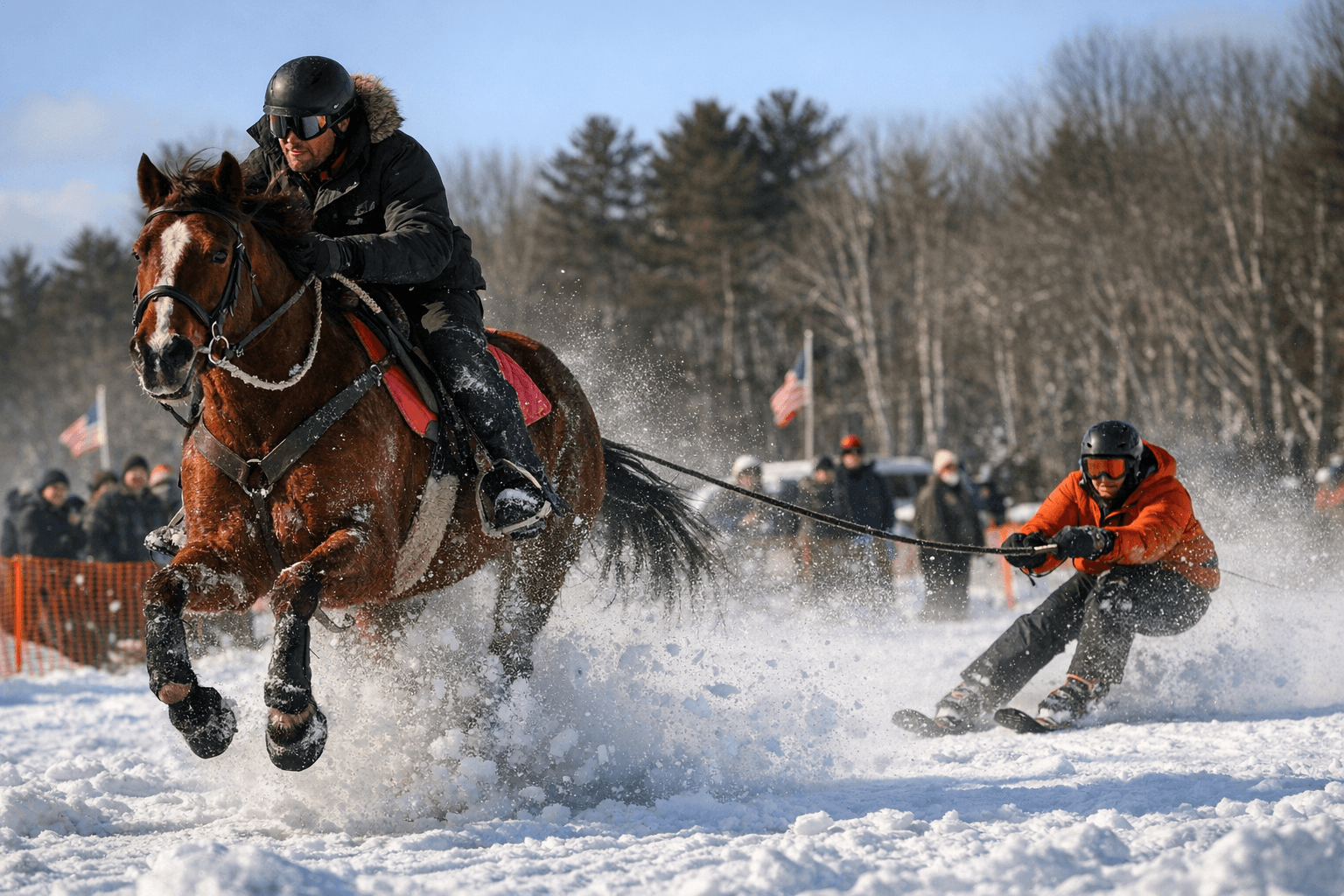
Skijoring, the winter sport in which a skier is pulled by an animal, is gaining traction in Maine and drew attention locally when Topsham hosted an equine skijoring competition on Jan. 12. Participants and spectators used the event to underline that the activity depends on shared effort and mutual trust between skier and animal, and to press local leaders to clarify trail access and animal welfare expectations as the sport expands.
At the Topsham fairgrounds, horses pulled skiers across a packed course designed for short bursts of speed and jumping. Elsewhere around the state, dog-powered skijoring continues on Nordic trails, where smaller rigs and single or pairs of dogs offer a different dynamic and set of trail needs. Enthusiasts say the sport appeals to people who want animal-powered winter recreation without the logistics of full sled-dog teams, and that skiers must contribute physically rather than become passive passengers.
Safety and training emerged as central themes in conversations at the event. Competitors described progressive conditioning for both animals and skiers, appropriate harness and attachment equipment, and staged practice sessions to build communication and responsiveness. Organizers also discussed the need for clear course design, marshaled spectator areas, and contingency plans for injuries to humans or animals. As skijoring moves from isolated exhibitions to organized circuits, those operational details will determine how well towns balance recreation with public safety.
Trail access and land use are practical concerns for Sagadahoc County residents. Dog-powered skijoring relies on groomed Nordic sledding routes and multi-use corridors that are often maintained by volunteer clubs, municipalities, and private landowners. Equine events more commonly use fairgrounds, fields, or groomed lanes that can be closed or adapted for competitions. The growth of skijoring places new pressure on winter trail budgets and on agreements between landowners, clubs, and towns over permissible uses and liability coverage.
Animal welfare and stewardship featured in participant discussions. Competitors emphasized conditioning, humane handling, and limits on duration and load as part of responsible practice. Local conservation-minded skiers and land stewards framed skijoring as part of a winter recreation mix that can reinforce care for groomed trails when users contribute to maintenance and respect seasonal wildlife needs.
Organized skijoring events are scheduled throughout Maine this winter, with the Topsham equine event occurring Jan. 12. As interest spreads, municipalities, trail managers, and event hosts will need to write clear operating guidelines and coordinate on grooming budgets, signage, and emergency plans.
The takeaway? Skijoring is more than a novelty pull - it is a community activity that requires planning, shared responsibility, and ongoing conversations about trails and animals. Our two cents? If you want to try it, connect with local clubs, ask about training and safety, and be ready to pitch in on trail care so the sport can pull together rather than pull apart local resources.
Know something we missed? Have a correction or additional information?
Submit a Tip