University of Maine launches ReuseME pilot in Bath and coastal towns
The University of Maine will launch ReuseME, a pilot program to test reusable takeout systems at restaurants in Bath, Bar Harbor and South Portland, with data collection running through September 2026. The project responds to local restaurants facing high monthly packaging costs and aims to reduce single use plastic waste, support local climate goals, and inform policy and business practices in Sagadahoc County.

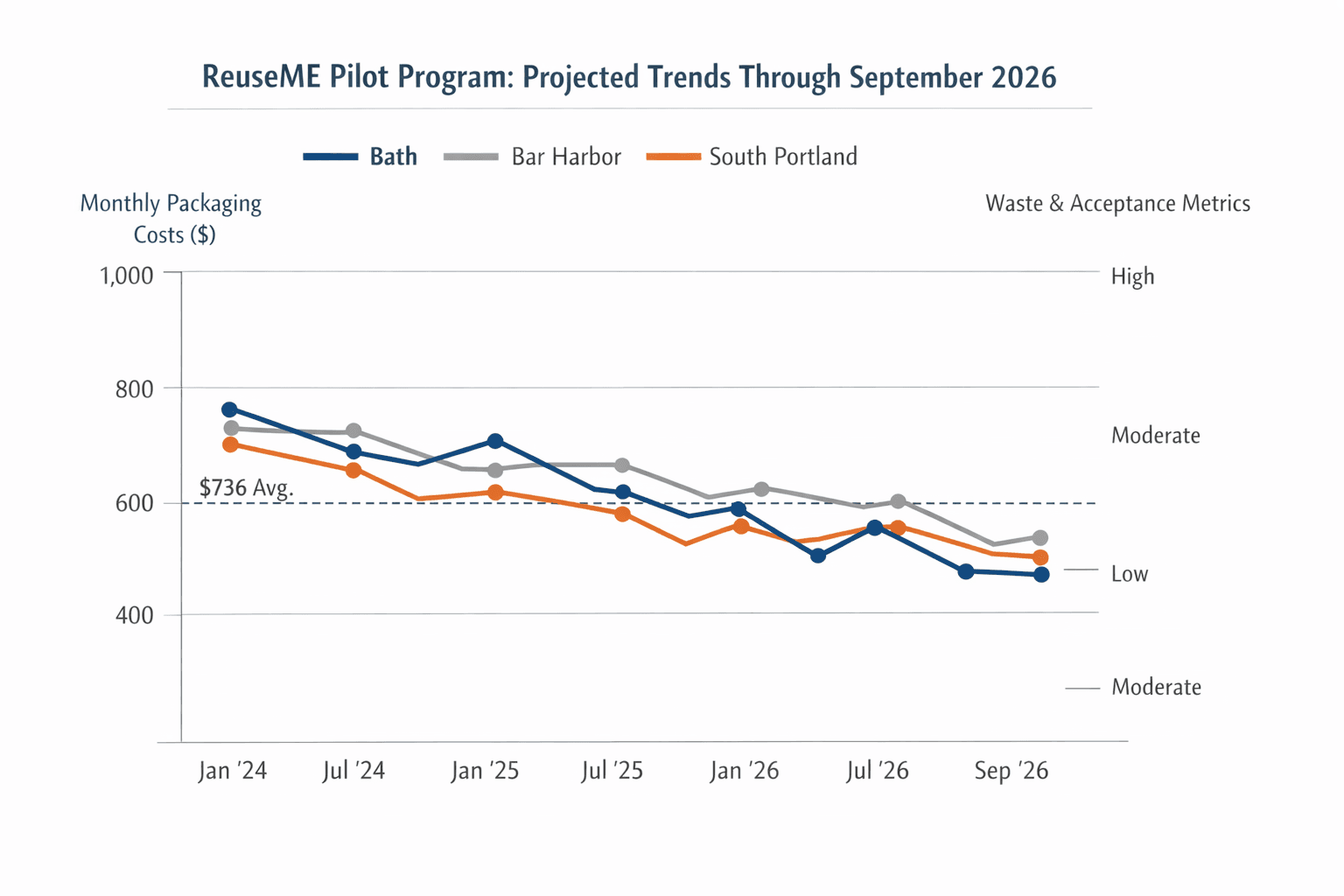
The University of Maine announced a pilot program called ReuseME that will partner with coastal communities to test reusable takeout systems at restaurants, beginning in January and collecting data through September 2026. Bath is one of three pilot communities selected alongside Bar Harbor and South Portland after a university survey showed local food service businesses pay substantial monthly costs for disposable containers and generate large volumes of single use plastic waste. The survey found Bath restaurants paid about $736 per month on average for food packaging.
The project is led by University of Maine professor Cindy Isenhour in collaboration with Maine Sea Grant and is funded by a federal grant to design alternatives to disposable containers. Organizers hope to recruit several restaurants in each community to track cost, logistics, customer acceptance, and waste outcomes. The pilot will test different reusable container models while collecting data to measure whether reusables can cut costs over time and reduce marine debris at the source.
For Sagadahoc County and the city of Bath, the pilot ties directly into local planning priorities. Bath included waste reduction strategies in its Climate Action and Resiliency Plan, and city sustainability staff have framed the ReuseME work as aligned with those goals. Local restaurateurs will be watching closely as the pilot balances potential savings against operational realities. Restaurants have expressed concerns about upfront cost, additional staff time to manage returns and cleaning logistics, and whether alternative containers will meet quality and food safety expectations.
Public health and environmental equity are central considerations. Reducing single use packaging can lower pollution that ultimately affects coastal ecosystems which support local fisheries and recreation. At the same time, program design must consider financial strain on small businesses and ensure equitable access to reusable systems for establishments of different sizes.
If the pilot demonstrates cost savings and feasible logistics, the collected evidence could inform municipal policy, waste reduction programs, and regional efforts to limit marine debris. For Bath residents and business owners, the study offers an opportunity to pilot practical alternatives, shape local rules, and reduce waste while protecting the Gulf of Maine coastline.
This article was produced by Prism’s automated news system from verified source data, official records, and press releases, then run through automated quality and moderation checks before publishing. The system is built and supervised by the people who set the standards it runs under. Read our full AI policy.
Did this article answer your question?