22nd Walk for Life West Coast Draws Tens of Thousands in SF
Tens of thousands marched from Civic Center Plaza down Market Street to the Embarcadero for the 22nd Walk for Life West Coast, a large anti-abortion rally that disrupted downtown traffic and spotlighted calls for more support for mothers.
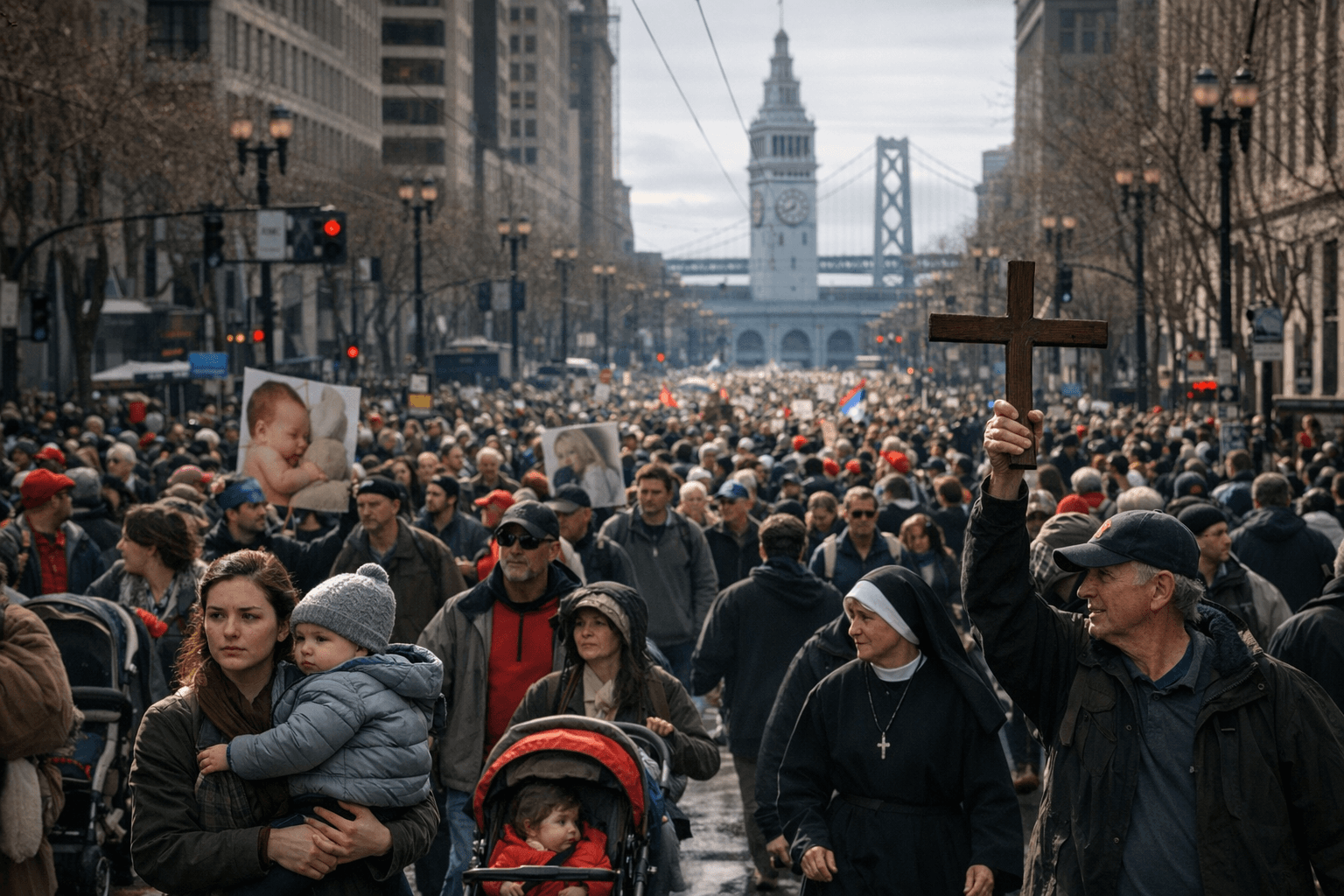
Tens of thousands of people converged on downtown San Francisco Saturday for the 22nd annual Walk for Life West Coast, one of the nation’s largest anti-abortion gatherings. The march began with a rally at Civic Center Plaza and proceeded down Market Street to the Embarcadero, with attendees carrying banners reading "Abortion hurts women ... life heals."
Organizers brought together Catholic college students, families and activists from across California, and speakers at the Civic Center rally shared personal stories, framed their message as a moral and community issue, and emphasized alternatives and resources for mothers. Counterprotesters also gathered along the route and voiced pro-choice messages, creating a visible clash of perspectives on city streets.
The demonstration had immediate local impacts. Street closures and bus reroutes caused traffic delays downtown, affecting commute times and transit schedules during peak hours. For a city that relies heavily on pedestrian traffic and transit-dependent commerce, such disruptions can ripple through restaurants, retail outlets and service providers in the Civic Center and Embarcadero corridors. Municipal operations also absorb added police staffing and traffic management costs during large demonstrations, a recurring budgetary consideration for San Francisco officials.
Beyond the logistics, the march underscores ongoing policy debates that touch on county services and social spending. Organizers’ calls for increased supports for mothers - including financial assistance, housing and health services - translate into programmatic demands on local government if taken up by policymakers. San Francisco County leaders face competing pressures: expanding social supports would require either reallocated funds or new revenue sources, while opponents of publicly funded programs may press for different priorities. The Walk for Life West Coast, now in its 22nd year, demonstrates persistent, organized advocacy that can influence the tone and content of these local policy conversations.
The event also reflects broader trends in civic engagement in San Francisco, where issue-driven marches regularly intersect with downtown commerce and transit. For residents and businesses, the immediate takeaway is practical: expect expanded police presence and transit adjustments during major rallies, and plan travel accordingly. For policymakers, the gathering signals continued public energy around reproductive policy and family supports, a dynamic likely to feed into next year’s budget debates and community planning.
For San Francisco commuters and downtown workers, the march was a reminder that public demonstrations reshape daily life and local priorities; for advocates on both sides, it reaffirmed the city as a prominent stage for sustained political organizing and a testing ground for how social policy demands meet municipal budgets and services.
This article was produced by Prism’s automated news system from verified source data, official records, and press releases, then run through automated quality and moderation checks before publishing. The system is built and supervised by the people who set the standards it runs under. Read our full AI policy.
Did this article answer your question?