Aquatic Park’s WPA-era design shaped San Francisco’s waterfront retreat
Aquatic Park still reads like a living shoreline, where WPA design, open swimming and the old bathhouse reveal San Francisco’s working waterfront past.
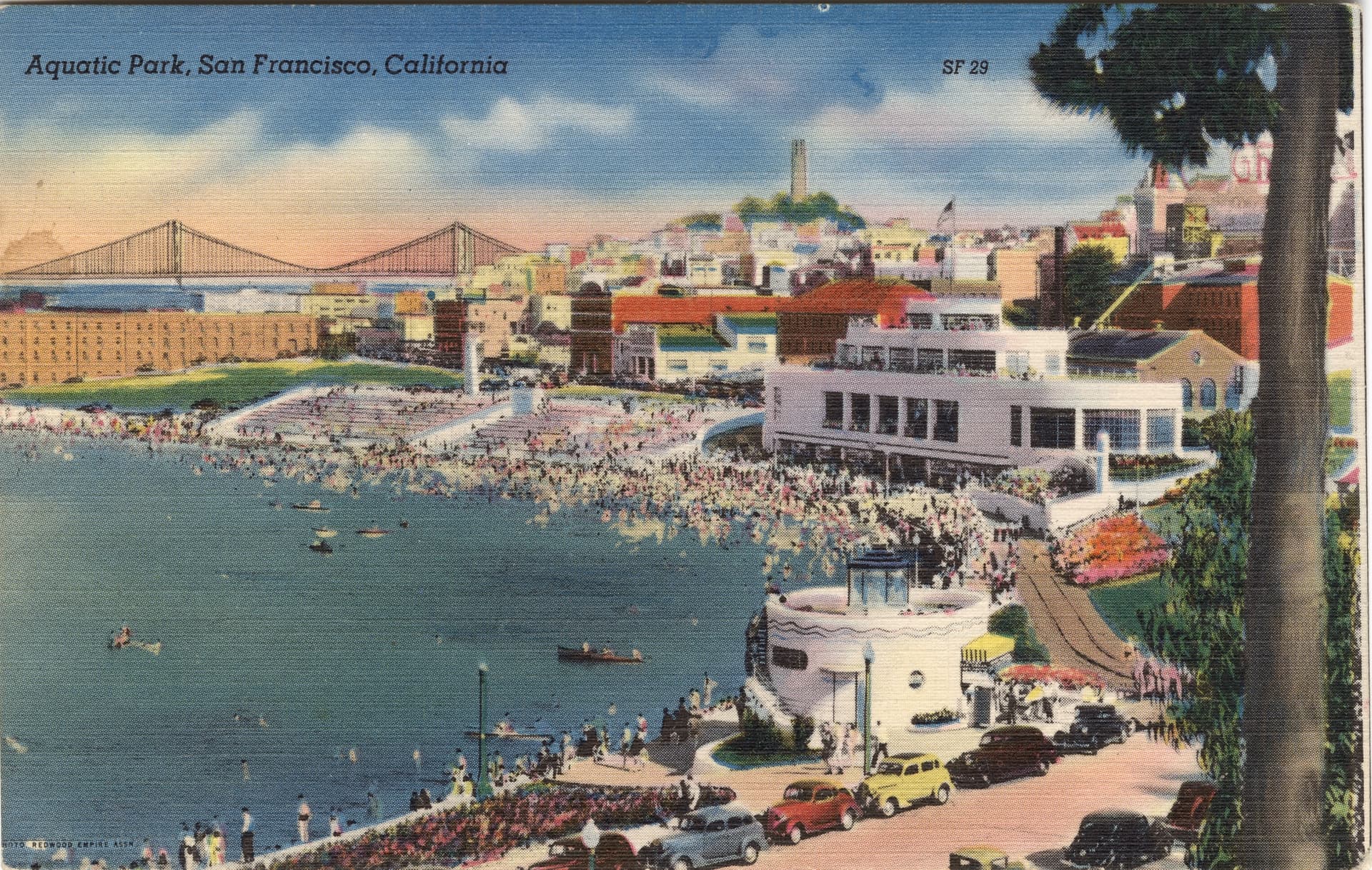
Aquatic Park is one of San Francisco’s clearest examples of how a shoreline can be remade for public life without losing the traces of what came before. The cove, the promenade, the bathhouse and the nearby Maritime Museum make the place feel less like a monument than a working part of the city, used by swimmers, walkers and people who come for the bay itself.
A shoreline built in layers
The National Park Service’s 2010 cultural landscape report treats Aquatic Park as a site with several overlapping histories, not a single origin story. Its phases move from the pre-contact landscape to the Spanish and Mexican period, then through 19th-century site development, park design and development, Works Progress Administration work, construction of Aquatic Park, military use, multiple-use public park status and National Park Service stewardship.
That layered chronology matters because the park sits at a place where San Francisco kept changing the shoreline to match its needs. What is now a sheltered public cove once reflected other uses of the waterfront, from maritime activity to urban development, and the park’s design preserves that tension between nature, engineering and access. Aquatic Park is part of San Francisco Maritime National Historical Park, which gives the site a formal preservation framework while still keeping it open as an everyday city space.
The WPA left its mark in concrete and curves
The most visible turn came in the 1930s, when the Works Progress Administration and the City of San Francisco joined to build Aquatic Park as an urban coastal retreat. The Aquatic Park Bathhouse was completed in 1939, and NPS-linked materials describe it as a Streamline Moderne and Art Deco landmark designed by William Mooser III. Its style is unmistakably of its era, all clean lines and civic confidence, but it was built for use, not display.
A 1939 San Francisco Chronicle article preserved in National Park Service primary-source materials described Aquatic Park as a new recreation center and said the main building stood roughly at the center of an 1,800-foot promenade. That detail still helps explain the site today: the park was planned as a sequence of movement and pause, where the long edge of the waterfront was meant to be walked, not simply looked at.
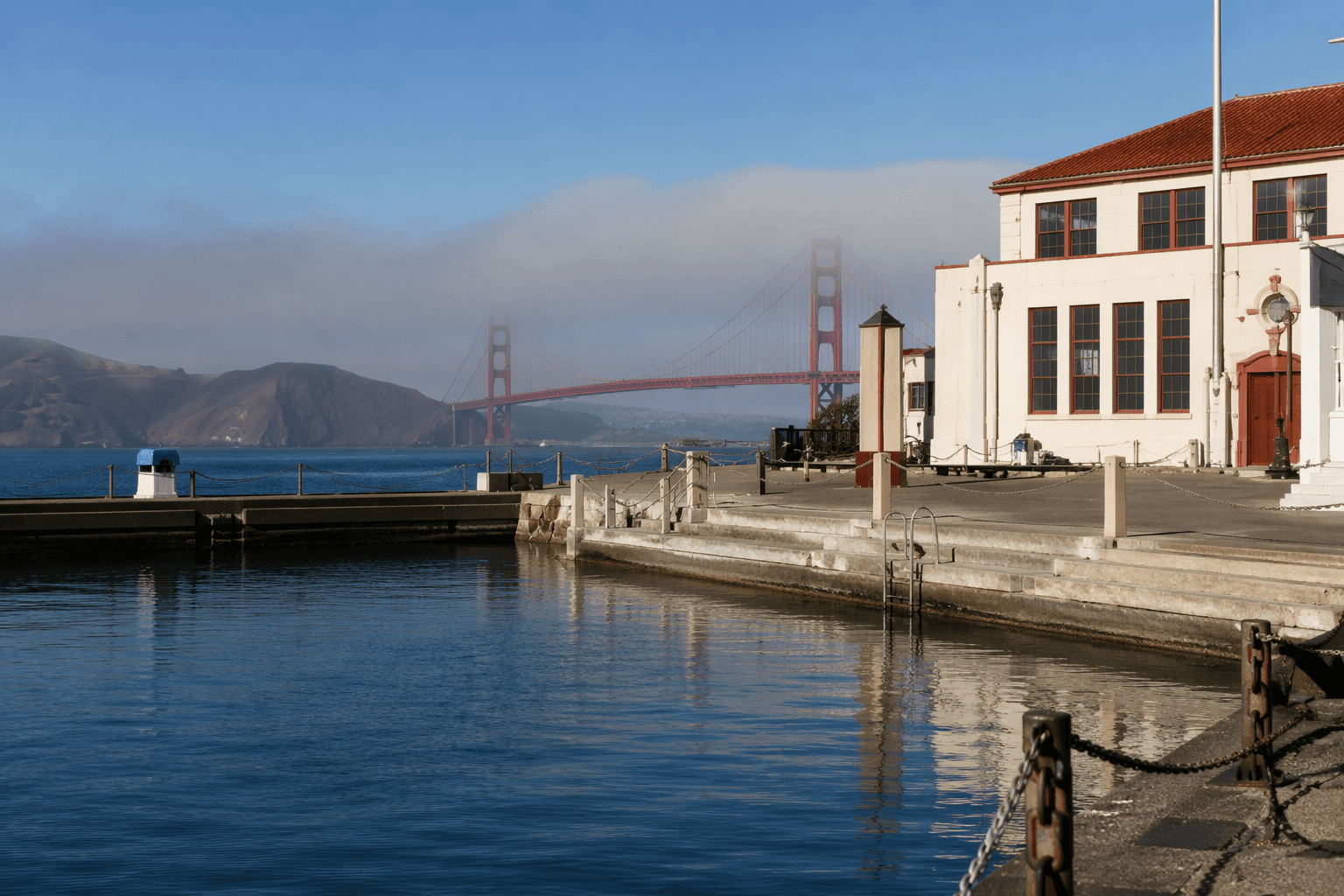
The bathhouse also shows how civic and federal labor projects changed San Francisco’s shoreline during the New Deal era. It was a joint project of the City of San Francisco and the WPA, part of the broader effort to turn public works into public spaces. In Aquatic Park, that meant a sheltered cove, a broad promenade and a beach setting that gave the city a rare built-in seaside room inside an urban district.
What to look for on the ground
The park’s architecture and art are as important as its setting. National Park Service materials identify artists Sargent Johnson and Hilaire Hiler as central to the Aquatic Park murals and art program, which gives the bathhouse a cultural layer beyond its role as a recreation facility. Their work ties the building to the wider Bay Area arts scene and helps explain why the site reads as both civic infrastructure and public art.
If you are walking the park now, the key reference points are easy to find:
- Aquatic Park Cove, which National Park Service materials identify as open for swimming
- Aquatic Park Bathhouse, the 1939 Streamline Moderne building that anchors the landscape
- The long promenade, a reminder that the site was designed as a place to move along the water’s edge
- The neighboring maritime institutions that connect the park to the city’s waterfront history
The cove’s swimming use is especially important. Aquatic Park is not a sealed-off historic setting, it remains a place where the public enters the water, crosses the promenade and uses the shoreline as a daily civic resource. That active use is one reason the park still feels like part of the city rather than a preserved backdrop.
The neighboring landmarks widen the story
Aquatic Park becomes easier to read when you place it alongside Hyde Street Pier, the Maritime Museum and the rest of San Francisco Maritime National Historical Park. The historic district location is identified in federal records at the foot of Hyde Street, Polk Street and Van Ness Avenue, which shows how tightly the park is woven into the city grid. It is not tucked away on a separate scenic strip; it sits where major streets meet the bay.
The Maritime Museum adds another layer. National Park Service records show that it opened in the old Aquatic Park Casino building in 1951, extending the site’s public-history life after the bathhouse and promenade were already in place. That later reuse underscores the park’s basic pattern: buildings and shoreline features adapted over time, but the public purpose stayed intact.
Seen this way, Aquatic Park is not just a nostalgic remnant of old San Francisco. It is a place where the city’s shoreline planning, federal labor programs, public art and maritime identity still meet in view of people who swim, walk and gather there. The cove remains one of the clearest places in San Francisco to see how a working waterfront was transformed into a public retreat without erasing the history that shaped it.
This article was produced by Prism’s automated news system from verified source data, official records, and press releases, then run through automated quality and moderation checks before publishing. The system is built and supervised by the people who set the standards it runs under. Read our full AI policy.
Did this article answer your question?